
 Oluwatobi Adu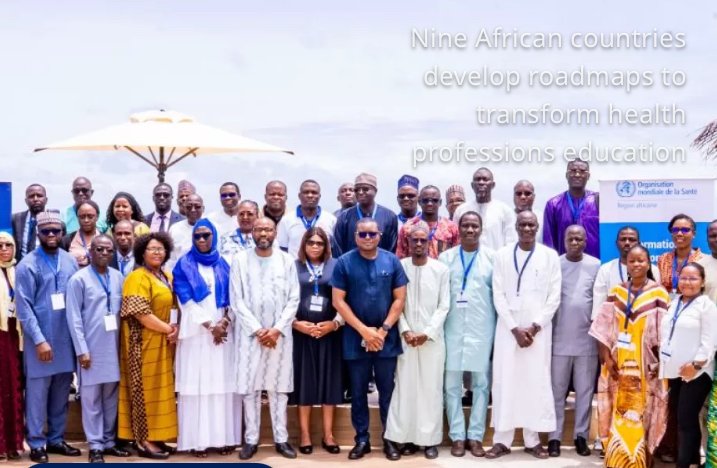
ABUJA, Nigeria — The World Health Organization (WHO) is supporting nine African countries, including Nigeria, to fast-track competency-based health training reforms aimed at producing a better-equipped health workforce capable of responding to emerging healthcare challenges across the continent.
The WHO Regional Office for Africa announced the initiative on Friday after a five-day workshop in Dakar, Senegal, where health workforce leaders, education regulators and technical experts developed cost national roadmaps to transform health professions education.
The participating countries are Benin, Chad, Lesotho, Nigeria, Senegal, South Africa, Uganda, Zambia and Zimbabwe. They are the first to adopt the WHO Africa Prototype Competency-Based Curricula designed to strengthen pre-service health training.
According to WHO, the national roadmaps outline policy, governance, regulatory and institutional reforms required to adapt the regional competency-based curricula into nationally approved reference curricula. The reforms are expected to help countries address expanding primary healthcare needs, digital health, health emergencies and persistent shortages of skilled health workers.
Dr James Avoka Asamani, Team Lead for Health Workforce at the WHO Regional Office for Africa, said: “The competency-based education roadmap provides countries with a costed and structured pathway to institutionalise competency-based health professions education, develop national reference curricula and strengthen the quality of health professions education. As part of the Africa Health Professions Education Transformation and Harmonisation Initiative, it supports the development of a health workforce equipped with the competencies needed to respond to Africa’s evolving health needs.”
Participants also reviewed the WHO Africa Prototype Competency-Based Curricula, shared experiences on curriculum reform, accreditation and quality assurance, and produced country-specific implementation plans.
Uganda’s Commissioner for Health Services Institutional Capacity Building and Human Resources for Health Development, Dr Alfred Driwale, said: “This workshop has bridged a critical gap in our transformation journey. While we have long recognised that competency-based education is the direction we must take, WHO has provided the practical guidance and technical know-how needed to translate this vision into action.”
Director of Cabinet at Senegal’s Ministry of Health and Social Action, Honourable Ndeye Maguette Ndiaye, urged participating countries to fully implement their roadmaps to ensure sustainable reforms and provide a model for other African nations.
About the Author


 Mirian Gom
 Korede Abdullah