
 Mirian Gom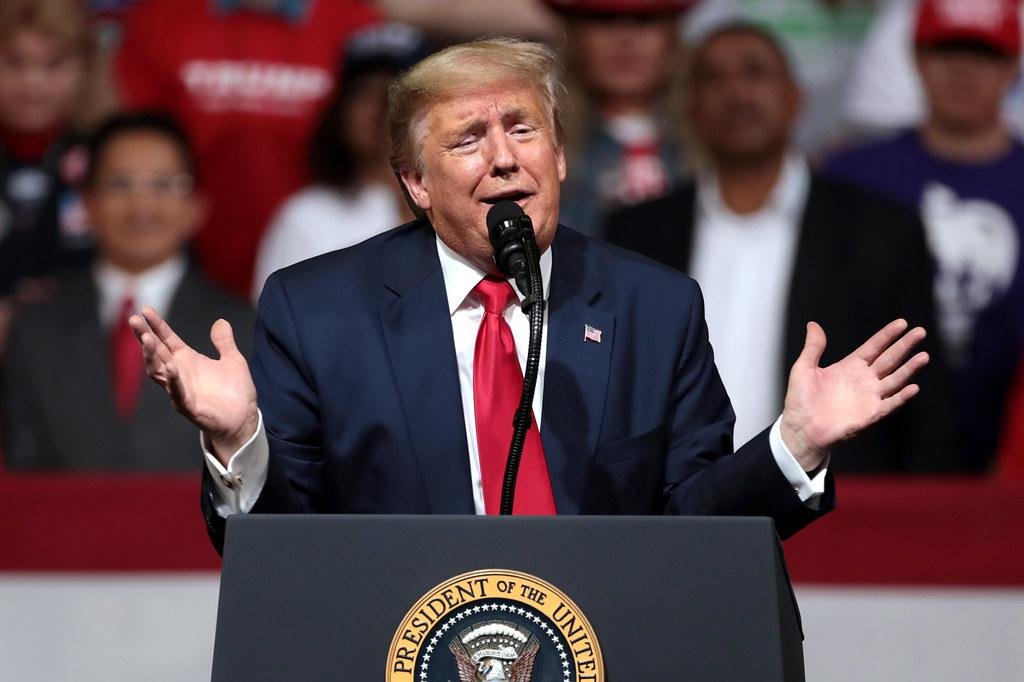
US President, Donald Trump
ABUJA, Nigeria – US President Donald Trump has signed an executive order urging states to reconsider school vaccination requirements and directing the federal government to explore separating the combined measles, mumps and rubella vaccine into individual shots.
The US vaccine policy move comes as children prepare to return to school and the country experiences its worst measles outbreak in 35 years.
The executive order, signed on Monday, does not directly give the federal government power to change state school vaccination requirements. Instead, it advises states and territories to review the Trump administration’s recommendations on immunisation requirements for school enrolment and attendance.
The order also directs the US Department of Health and Human Services to establish a task force to work towards making individual measles, mumps and rubella vaccines available, while maintaining access to the combined MMR vaccine.
The administration says the move is part of a broader effort to rethink the country’s vaccine policy.
However, public health experts say decades of scientific evidence supports the safety and effectiveness of the combined MMR vaccine. They also argue that the combined shot protects children faster and reduces the logistical burden on parents who might otherwise need to arrange multiple appointments.
During the signing, Trump made unsupported claims about the potential dangers of vaccines, saying: “Together, there could be a possibility they are quite lethal.”
Andrew Racine, president of the American Academy of Pediatrics, says developing separately approved vaccines in the US could take more than a decade.
Aaron M. Milstone, a member of the AAP Committee on Infectious Diseases, advises parents to continue using the combined vaccine.
“We’re advising that you continue to give children a vaccine that has decades of safety data,” Milstone says.
The administration’s latest move follows legal battles over earlier attempts to overhaul US vaccine policy. A federal judge previously blocked parts of the administration’s proposed changes while litigation continues, siding with major medical organisations that challenged the measures.
Health Secretary Robert F. Kennedy Jr, a longtime critic of vaccination policies, has made vaccine reform a central part of his health agenda. His past promotion of claims linking vaccines to autism has been rejected by extensive scientific research.
Despite the renewed policy push, polling indicates that most Americans continue to support vaccination.
Jeffrey Singer of the Cato Institute says the proposed changes could raise concerns about the role of government in medical decision-making.
“The Trump administration’s proposed changes to the childhood vaccine schedule illustrate the risks of allowing government recommendations to occupy a privileged position in medical decision-making,” Singer says.
The latest executive order is likely to intensify the debate over vaccination policy as US schools prepare to reopen and health authorities continue responding to the measles outbreak.
About the Author


 Korede Abdullah

 Oluwatobi Adu