


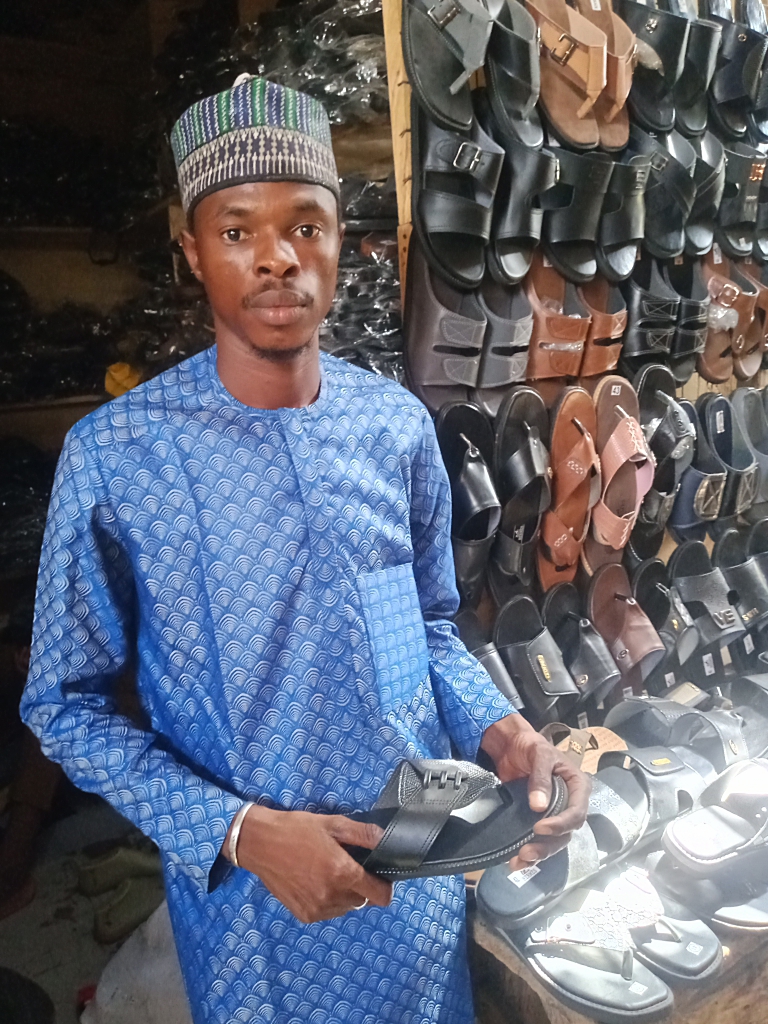
KANO, Nigeria – They survived war in Yemen, detention in Libya and failed journeys across North Africa, only to return home with nothing. In Kano State, Oluwafunbi Bello finds that for many returned Nigerian migrants, coming back to Nigeria marks the beginning of another struggle — one against poverty, trauma and the difficult task of rebuilding lives from scratch.
Home Again, But Starting from Zero
When Kahu Alpha returned from Yemen in April 2025, he arrived in Nigeria with little certainty about what lay ahead.
Years of hardship abroad had yielded neither prosperity nor security. Instead, he found himself back home, attempting to rebuild his life from the beginning.
Yet despite the uncertainty, Alpha says he was relieved to return.
“I feel better here in my country Nigeria,” he said.
After arriving home, Alpha received reintegration support from the International Organisation for Migration (IOM), which enabled him to establish a handmade shoe business.
“I came back from Yemen in April 2025, and the International Organisation for Migration (IOM) has helped a lot and even helped me start making handmade shoes,” he said.
His experience reflects the reality confronting many Nigerian returnees who return home after losing their savings, belongings and opportunities abroad.
For many, reintegration support becomes the first step towards rebuilding a livelihood.
Surviving Nigeria’s Economic Reality
Returning home, however, does not always mean returning to stability.
Nigeria’s rising inflation, high living costs and uncertain business environment continue to test the resilience of returnees trying to establish themselves.
Abba Adam, who returned from Algeria in 2023, now sells mobile phones in Kano.
While grateful for the assistance he received, he says the economic situation remains difficult.
“I am doing better but the economy of the country is hard, but I thank IOM for giving me assistance which is helping my life,” he said.
Adam says access to healthcare has not been a challenge since his return.
“I came back to Nigeria from Algeria in 2023 and now I sell phones. The access to healthcare has been good too and I’ve never been outcasted at any health center,” he added.
He believes the reintegration programme fulfilled its promises.
“IOM promised to give us reintegration assistance to self-reliance. IOM fulfilled the promise.”
Yet many returnees continue to struggle with rising operational costs and declining purchasing power.
For some, the fear of business failure remains constant.
Small Businesses, Second Chances
For several returnees, entrepreneurship has become both an economic necessity and a means of restoring dignity.
Maryam Yusuf, who returned from Yemen in April 2025, says her life has improved considerably since returning home.
“Life in Nigeria is much better than when I was in Yemen,” she said.
With support from IOM, she established a textile business in Kano.
“I have a textile business now in Kano with the help of IOM and there is access to a decent way of living and healthcare,” she added.
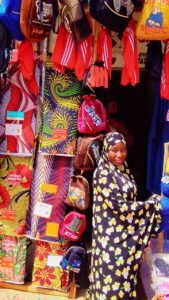
Ali Kabir Abubakar, who returned from Libya in 2025, says financial support helped him open his own textile business.
“I am doing textile business now with the IOM money of almost two million naira for my shop rent and goods to sell,” he said.
According to him, the business has restored some financial stability.
“I am grateful to IOM for their help because I live way better here in Nigeria compared to when I was in Libya and I’m recovering well back to being financially stable.”
Their stories demonstrate the important role reintegration support can play in helping migrants restart their lives.
However, sustaining those gains remains difficult in a fragile economy.
The Wounds That Cannot Be Seen
The impact of failed migration journeys extends beyond economics.
Many returnees come back carrying emotional scars from detention, conflict, exploitation and loss.
A Mental Health and Psychosocial Support mentor with IOM, Mr Sani Sarki, says counselling and mentorship are essential parts of the reintegration process.
“I can say that I’m very happy to be part of those that reduce or eliminate worries from the minds of returnees,” he said.
According to him, mentoring provides opportunities for emotional recovery.
“Being a mentor is a large spectrum of experience sharing which is always considered a learning space for both mentors and mentees.”
Sarki says many migrants struggle to adjust after returning to Nigeria.
“They are really adjusting, especially while getting information on the current economic situation. Prior to their past experience of having all their properties taken away in the countries they went to, they ended up with nothing and were deported.”
For many, returning home means confronting feelings of disappointment, anxiety and uncertainty.
The expectations they carried abroad often collide with the realities they encounter after returning.
Preventing Another Journey
Sarki says beneficiaries are advised to manage their reintegration assistance carefully.
“Reintegration packages advise returnees to hold whatever is given to them as assistance very well.”
He also expressed concerns about migrants who repeatedly undertake irregular migration journeys.
“I really support this method of returning migrants, but I’m insisting on tackling multiple returns through applying thumbprints in the IOM database. This will make receiving assistance once in a lifetime, not the way some returnees utilize it in multiple ways.”
The issue highlights the broader challenges facing migration programmes.
As economic conditions worsen, some returnees may once again view migration as their only opportunity.
A Journey That Does Not End at Home
The experiences of returnees in Kano reveal both the strengths and limitations of reintegration programmes.
Business grants, mentorship and counselling have helped many rebuild their lives and regain their dignity.
Yet economic hardship, emotional trauma and uncertainty continue to shape their future.
For many of these men and women, the plane journey home marked neither victory nor defeat.
It marked another beginning.
They survived the war.
They survived detention.
They survived deportation.
But they came back with nothing.
And now they must rebuild everything.

Join the conversation