
Running on Fumes: Inside the Silent Collapse of Nigeria’s Small Businesses
 Oluwafunbi Bello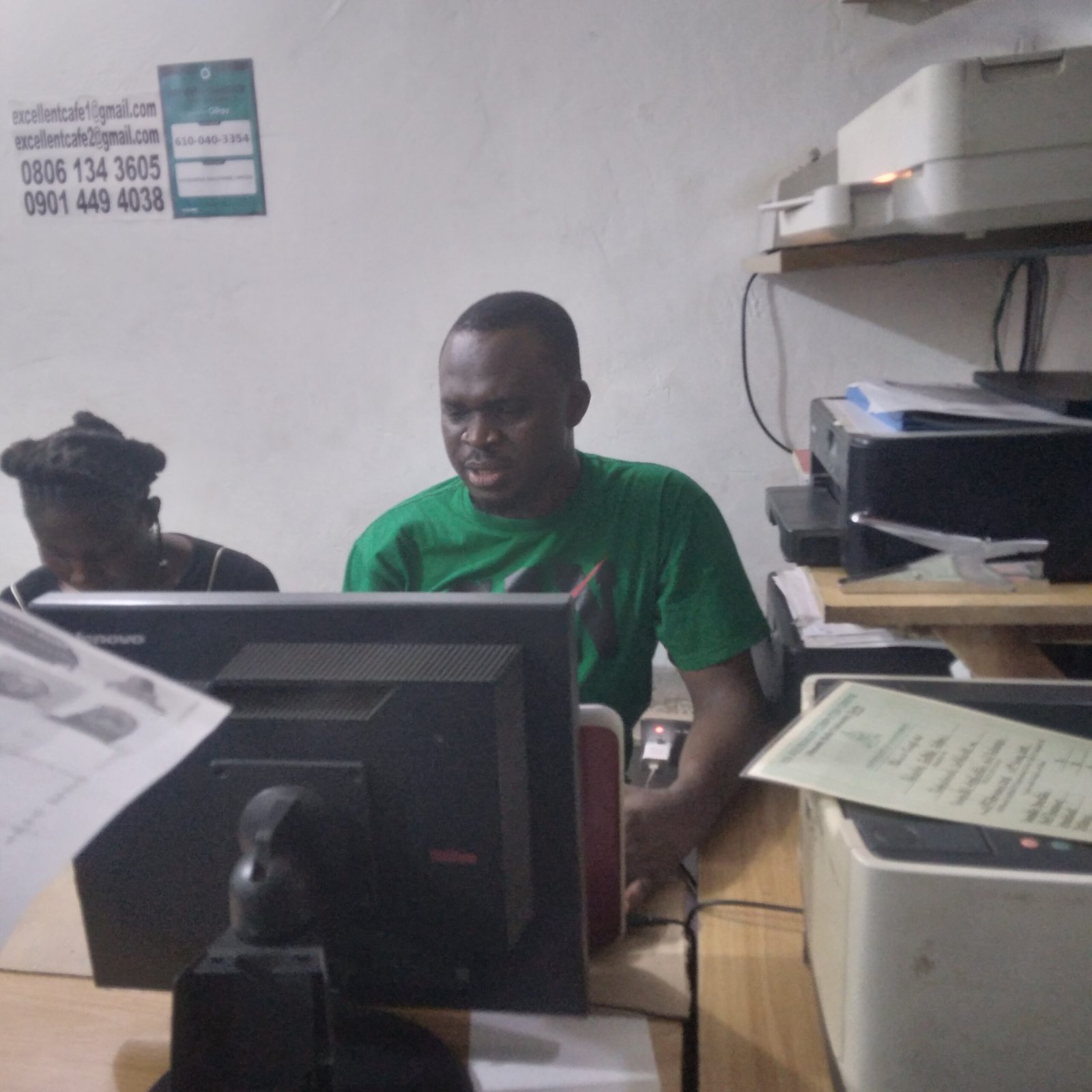
Mr. Excellent Chibuso attends to customers inside his café in Kubwa, Abuja, where rising fuel prices and unstable electricity now threaten daily operations.
ABUJA, Nigeria – From barber shops to cafés and roadside kitchens, rising fuel prices, inflation and power cuts are forcing entrepreneurs into impossible choices — and pushing many to the brink. Oluwafunbi Bello, writes.
Every evening in Kubwa, a sprawling suburb on the outskirts of Nigeria’s capital, the sound arrives before darkness fully settles: the cough of generators sputtering awake, the sharp smell of petrol drifting through narrow streets, and the anxious calculations of small business owners wondering whether today’s earnings can survive another night of power cuts and rising fuel costs. Beneath the fluorescent glow of struggling shops, Nigeria’s informal economy — the fragile backbone sustaining millions of households — is quietly bleeding under the weight of inflation, unstable electricity and a deepening cost-of-living crisis that has turned survival into a daily negotiation.

Inside a modest cybercafé tucked between busy roadside stalls, Mr. Excellent Chibuso watches his generator consume fuel faster than customers can pay for printing, browsing and online services. Each litre poured into the machine chips away at the little profit he once made.
“The increase in fuel price is taking a toll on my financial status,” he said quietly. “I don’t want to increase my prices because I’ll lose my customers. But at this point, it feels like I’m running the business for them, not for myself.”
His café, once a dependable neighbourhood hub for students and job seekers, now survives on fragile margins. The unstable electricity supply means he depends almost entirely on petrol-powered generators to stay operational. But fuel prices have surged dramatically in recent months, following subsidy reforms and inflationary pressures that continue to ripple across the economy.
For Chibuso, the burden is no longer about expanding his business or increasing profits. It is about staying open long enough to see another customer walk through the door.
“Light is not stable and I have to always buy fuel to work for customers,” he explained. “Every day, I’m putting my own money back into the business just to keep it open.”
The consequences are beginning to reshape his ambitions.
“I can’t even take students to train because it will take a lot of fuel, and parents won’t be willing to pay,” he added.
Across Abuja, stories like his are becoming increasingly common. From tailoring shops to salons and roadside food stalls, small business owners are trapped in what economists describe as a dangerous economic cycle: inflation raises operating costs, poor electricity increases dependence on generators, and rising fuel prices make those generators unaffordable.
Economist Niyi Emmanuel calls it a “triple squeeze” choking the survival chances of Nigeria’s small enterprises.
“These pressures reinforce themselves,” he explained. “When electricity fails, businesses turn to generators. Fuel prices make that expensive. At the same time, inflation raises the cost of goods, while customers are earning less in real terms. So, businesses face higher costs and weaker demand at once.”
That pressure is changing relationships between businesses and customers in painful ways.
A few streets away, hairdresser Mrs. Remi Sewa still remembers the customer she lost over the price of electricity.
It happened during a routine appointment when power suddenly went out midway through styling a client’s hair. To finish the work, she switched on her generator — and reluctantly increased the service fee to cover the fuel.
“I had to increase the price since I would be using a generator, and the customer was not happy about it,” she recalled.
The disagreement ended with payment, but the damage lingered.
“She paid that day after we argued, but I’ve not seen her since,” Sewa said. “And she used to be one of my regulars.”
Now, every customer interaction comes with uncertainty. Many still demand elaborate hairstyles requiring dryers, straighteners and constant electricity, yet few are willing to absorb the extra costs.
“They want the styles that need dryers and electricity,” she said, “but they don’t want to pay for what it costs to run them.”
For tailor Emmanuel Abiodun, the crisis reveals itself through missed deadlines and damaged trust.
During the Easter celebration period — typically one of the busiest seasons for Nigerian tailors — he failed to complete customers’ clothing orders on time because of repeated blackouts.
“During Easter, I had to disappoint two customers,” he said. “Not because I didn’t have the skill — but because I didn’t have power.”
Outsourcing the work was not a realistic option.
“If I outsource it, the cost will take everything,” he explained. “I’ll work and still earn nothing.”
His frustration reflects a broader reality facing many Nigerian entrepreneurs: productivity increasingly depends not on talent or customer demand, but on access to electricity and affordable energy.
At a nearby roadside food stall, Onwuka Success has quietly changed the way she operates. Portions are smaller. Supplies are purchased cautiously. Refrigeration is limited to avoid fuel expenses.
“I’ve had to cut down on what I buy,” she said. “There was a time the food spoiled because I couldn’t keep the generator running.”
The adjustments are subtle but devastating. Customers may not immediately notice reduced stock or fewer cold drinks, but for business owners, each compromise represents shrinking resilience.
“Before, I used to put on the generator so customers could at least sit comfortably,” she added. “Now, I can’t afford that anymore.”
Across Kubwa, generators have become symbols of both survival and decline — machines that keep businesses alive while simultaneously draining them dry.
Nigeria’s informal sector accounts for a significant portion of employment and economic activity. Yet many small business owners operate without access to affordable loans, government protection or reliable infrastructure. Most survive on daily earnings, purchasing supplies in small quantities at inflated prices while navigating an economy that offers little stability.
“When purchasing power drops, people prioritise essentials,” Emmanuel explained. “They eat out less, delay spending, and become more price sensitive. So even if businesses manage rising costs, weak demand can still shut them down.”
That economic pressure stretches far beyond individual shops.
As businesses reduce operations or close entirely, workers lose jobs, household incomes shrink and dependence on unstable informal labour grows. The ripple effects are visible in communities where once-busy commercial clusters now fall silent earlier each evening.
“If this continues,” Emmanuel warned, “you will see rising unemployment, slower economic growth, and increased dependence on imports as local production declines.”
Development experts argue that the crisis also exposes deeper structural failures within Nigeria’s economy — particularly the long-standing collapse of public electricity infrastructure and limited support for micro-enterprises that form the backbone of urban survival.
Some analysts say targeted interventions could ease the pressure: affordable solar energy systems for small businesses, tax relief measures, low-interest credit schemes and stronger investment in local manufacturing.
But for entrepreneurs in Kubwa, policy debates feel distant from the realities unfolding each day behind shop counters.
As night falls, the once-deafening chorus of generators begins to thin out across the neighbourhood. One by one, businesses shut their doors early — not because customers have disappeared, but because fuel has.
Shop owners count the day’s earnings against transport costs, fuel purchases and rising food prices at home. For many, the numbers no longer add up.
The tragedy unfolding in places like Kubwa is not merely about economics. It is about exhaustion — the slow erosion of dreams built through years of labour and sacrifice.
And for countless small business owners across Nigeria, what is running out is no longer just electricity or petrol.
It is time.
About the Author


 Korede Abdullah
 Mirian Gom