
“We Can’t Afford Gas Anymore”: The Crisis Driving Nigerians Back to Firewood
 Otamere Gladness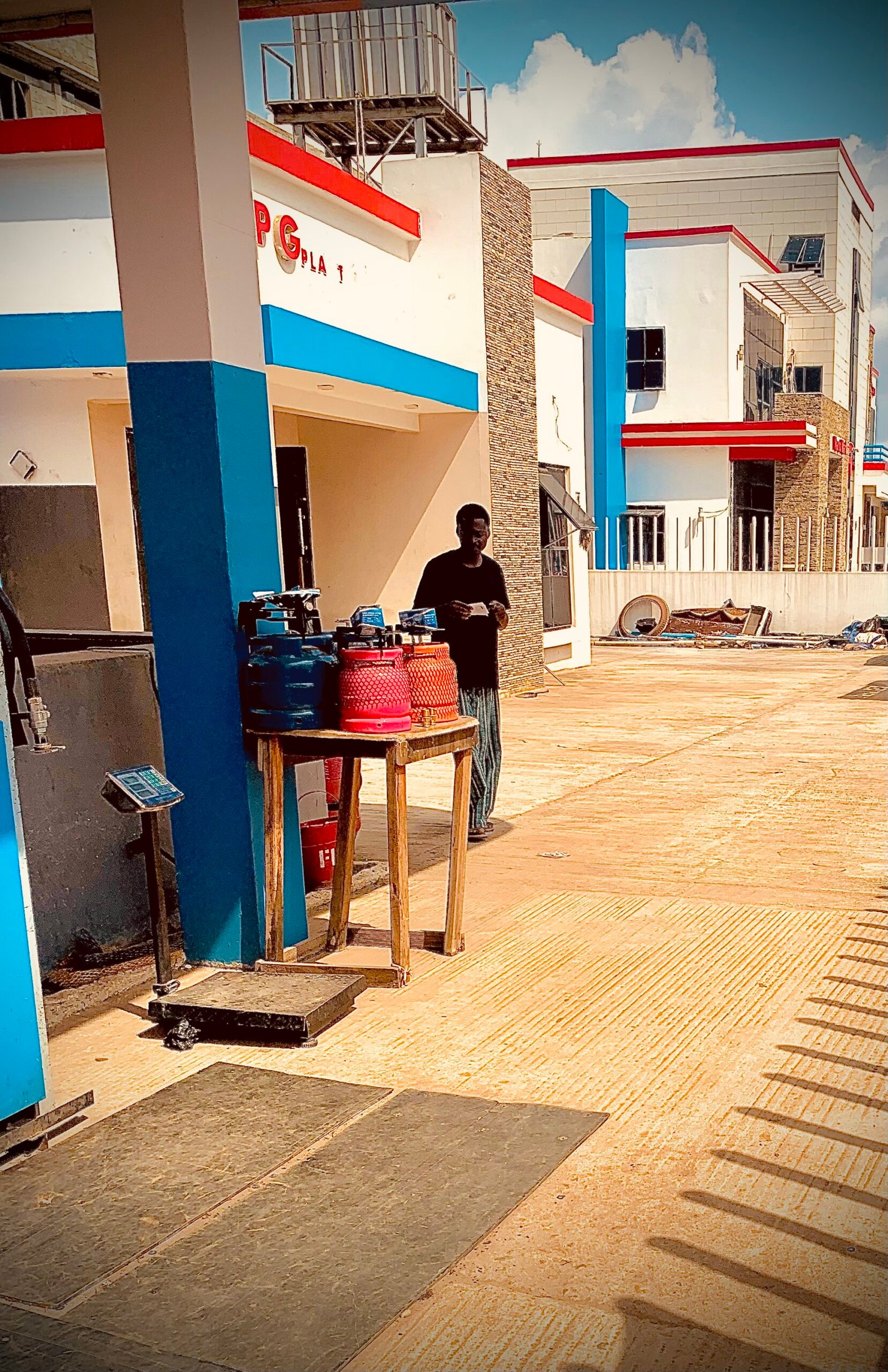
Mike Ayomide refills his cooking gas cylinder at AA Rano Gas Plant, Jabi Garage, Abuja, during an interview with Africa Health Report on the rising cost of LPG. (Photo: Otamere Gladness/AHR.)
ABUJA, Nigeria – For millions of Nigerian families, cooking a daily meal has become another casualty of the country’s deepening cost-of-living crisis. As the price of liquefied petroleum gas (LPG) continues to soar beyond the reach of many households, an increasing number of families are abandoning cleaner cooking fuels for firewood and charcoal—a reversal that health experts warn could trigger a surge in respiratory diseases, worsen deforestation and deepen poverty. In this report, Otamere Gladness examines how rising cooking gas prices are forcing difficult choices in homes across Nigeria and why the consequences extend far beyond the kitchen.
Across Nigeria, cooking gas is fast becoming a luxury rather than a household necessity.
Once promoted as a cleaner and healthier alternative to firewood and charcoal, liquefied petroleum gas (LPG) is increasingly slipping beyond the financial reach of ordinary Nigerians as inflation and rising energy costs continue to squeeze household incomes.
For many families, the decision to return to traditional cooking fuels is not driven by preference but by survival.
‘We Can’t Afford Both Food and Gas’
At a cooking gas retail outlet in Abuja, customers described the difficult decisions they now face each time they refill their cylinders.
Miss Joyce said the sharp increase in the price of LPG has become overwhelming.
“Before it was 13,000 [naira], the difference now is much. The difference is 6,000; now it’s 19,000 for 12.5kg. The difference is much. God will help us.”
For Mike Ayomide, the rising cost is compounded by the feeling that each refill no longer lasts as long as before.
“Omo, what I can say is the increase is a lot, and the gas also doesn’t last as it used to.”
Mrs. Kemi believes many families are being pushed towards dangerous alternatives.
“At this point, it is best to start using a firewood or charcoal stove, else we won’t be able to buy food, before you buy what we will use to cook it, that is the gas.”
Their experiences mirror the reality confronting households nationwide, where the rising cost of energy is forcing families to choose between buying food and paying for the fuel needed to prepare it.
A Dangerous Return to Biomass
Public health experts say the growing reliance on firewood and charcoal carries consequences that extend well beyond household finances.
Dr Francis Salama Stephanie, a medical officer, warned that prolonged exposure to smoke from biomass fuels poses serious health risks.
“The first is health risk that is associated with the respiratory system. As you use these things to cook you are inhaling the smoke and those smokes contain gases like carbon monoxide, nitrogen gases. Those are harmful gases that when you inhale them, they affect your lungs and put you at risk of diseases like chronic obstructive pulmonary disease (COPD), chronic bronchitis and the likes. Those are diseases that are harmful to your respiratory system, your lungs particularly, your nostrils, upper and lower airways.”
According to her, the effects are not limited to the lungs.
“They also put you at risk of cardiovascular diseases that affect your heart… they can also affect your eyes, cause it to be irritated… and there is also a fact that it can put you at risk of having burns when you are exposed to those fires.”
She explained that women and children are among those most vulnerable because they spend more time around cooking areas.
“Being exposed to biomass usually exposes women and children… Anything that usually affects the lungs affects the heart, vice versa.”
Pregnant women, she added, face increased risks during early pregnancy, while children under the age of five may suffer impaired growth and developmental challenges following prolonged exposure to indoor smoke.
Beyond respiratory illnesses, she identified other health complications, including persistent headaches, eye irritation, excessive tearing, fatigue, cataracts, visual impairment and worsening of pre-existing cardiovascular conditions such as hypertension and congenital heart diseases, including Tetralogy of Fallot.
The Hidden Cost to Nigeria’s Health System
The consequences, experts warn, extend beyond individual households.
As more Nigerians abandon clean cooking fuels, hospitals are likely to face increasing numbers of patients suffering from smoke-related illnesses.
Dr Salama Stephanie said:
“More and more people are getting sick, so more and more people are going to the hospital… there’s an increased burden and overwhelming burden of illnesses in the hospital.”
For an already stretched healthcare system, that trend could translate into higher treatment costs, greater pressure on health workers and worsening health outcomes, particularly among low-income families.
An Environmental Setback
The return to firewood is also reversing years of progress towards cleaner household energy.
Greater dependence on biomass fuels increases demand for trees, accelerating deforestation and land degradation.
At the same time, burning wood and charcoal releases harmful pollutants into the atmosphere, contributing to air pollution and climate change.
Environmental experts have long warned that unless cleaner energy remains affordable, economic hardship will continue to undermine conservation efforts and Nigeria’s climate commitments.
Breaking the Cycle
Energy analysts say addressing the problem requires more than temporary price reductions.
Stabilising LPG prices, increasing domestic production, improving distribution networks and expanding access to affordable clean cooking technologies would help reduce dependence on firewood.
Public awareness campaigns are also essential to educate households about the long-term health risks associated with indoor biomass smoke.
Without coordinated intervention, experts fear the country could witness a steady reversal of the gains made in promoting clean household energy.
A Crisis Beyond the Kitchen
Nigeria’s cooking gas crisis is no longer simply an energy story—it is a public health emergency, an environmental challenge and a reflection of the growing economic hardship confronting millions of households.
Every family forced to abandon LPG for firewood represents more than a change in cooking fuel. It signals a difficult compromise between affordability and wellbeing, with women and children bearing the greatest burden.
Unless decisive steps are taken to make clean cooking energy accessible and affordable, more Nigerians may continue to trade cleaner kitchens for smoky fires, placing their health, the environment and future generations at increasing risk.
About the Author


 Hope Ajayi

 Mirian Gom
 Korede Abdullah