
 Hope Ajayi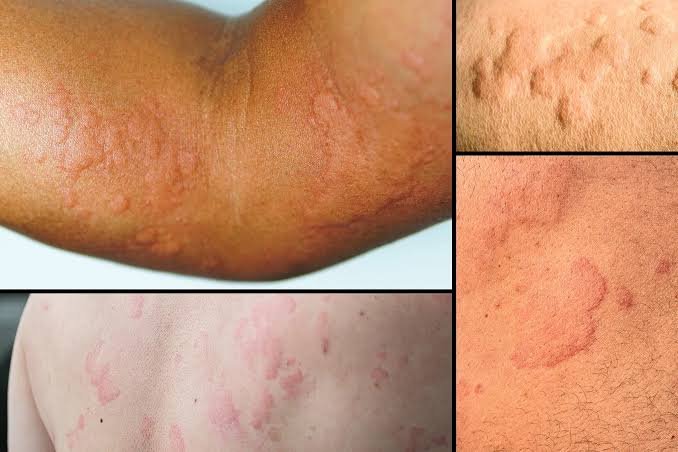
ABUJA, Nigeria — Less than five minutes after eating roadside fried yam earlier this year, Hope Ajayi felt an intense wave of itching spread across her body.
Raised bumps appeared on her skin, reaching her face, lips and hands. She scrambled for relief but had no idea what had triggered the reaction.
“I was just itching everywhere. My face, my hands, my whole body,” she recalled.
Two days later, the symptoms disappeared after she took Piriton. But the cause remained unclear.
Was it the fried yam, the oil, the spices or something else?
Ajayi’s experience reflects the uncertainty faced by many people who develop sudden or recurring hives, also known as urticaria.
Hives are itchy, raised welts that can appear suddenly and disappear within hours. Although food allergies can trigger them, experts say eating shortly before an outbreak does not necessarily mean that food caused the reaction.
“Food can trigger allergic reactions that present with hives, but not every case of hives is caused by food,” nutritionist Yusuf Abiola said.
When Food May Be the Trigger
Food allergies can cause hives, with peanuts and other nuts, milk, eggs, fish, shellfish, soy and wheat among commonly implicated foods.
However, almost any food can trigger an allergic reaction in a susceptible person.
The timing of symptoms can provide useful clues, but it does not establish a cause on its own. This is particularly important for people who develop symptoms after eating several different foods or meals.
For recurring reactions, Yusuf recommends keeping a food and symptom diary.
The record should include what was eaten, the quantity, how the food was prepared, when it was consumed and when symptoms appeared.
Recording medications, physical activities and possible environmental exposures can also help a healthcare professional identify patterns.
This approach is preferable to eliminating multiple foods based only on suspicion.
Food Allergy Is Not Food Intolerance
Another source of confusion is the difference between food allergy and food intolerance.
A food allergy involves the immune system reacting to a substance in food. Food intolerance, on the other hand, can occur when the body has difficulty digesting or processing certain food components.
The distinction matters because treating every unpleasant reaction after eating as an allergy can lead people to unnecessarily remove foods from their diets.
That can have nutritional consequences.
Children, pregnant women, people who are underweight and others with increased nutritional requirements may be particularly vulnerable to inadequate diets if several foods are eliminated without professional guidance.
Where a food allergy is confirmed, avoiding the identified trigger is important. However, appropriate alternatives should be included to maintain a balanced diet.
Yusuf also cautions against deliberately eating a suspected allergen at home to see whether it causes another reaction.
A previous mild reaction does not guarantee that a future reaction will be mild.
When Hives Appear After Surgery
For Collins, food was not the obvious suspect.
He experienced his first episode of hives about a week after undergoing surgery for appendicitis.
Itchy rashes appeared, particularly around his legs, and continued for about three weeks before disappearing.
He did not take medication for the reaction and did not return to the hospital to investigate its cause.
“I had never experienced it before the surgery,” he said.
The timing left Collins wondering whether the reaction was connected to the operation.
But without medical assessment, he could not determine whether the possible trigger was the surgery, medication taken afterwards or another exposure during the same period.
His experience highlights why a person’s medical history is important when investigating unexplained or recurring hives.
Can Heat and Sweating Cause Hives?
Another person interviewed for this report experienced a similar reaction for the first time at about 13.
The episode started while the person was playing and sweating. Their body suddenly became itchy, prompting the person’s mother to apply oil.
The symptoms eventually disappeared.
Decades later, the reaction returned.
This time, the person sought medical care and received an injection and medication. When the symptoms persisted, the person later tried a traditional remedy involving water in a basin and placing a leg in it. The reaction eventually subsided.
The person suspects heat or sweating may have triggered the episodes but has never undergone testing to confirm the cause.
Some forms of urticaria can be associated with heat, sweating or other physical triggers. However, a suspected connection does not establish a diagnosis.
Yusuf said people should therefore avoid assuming that every outbreak has the same cause.
Medications, infections, insect bites, heat and environmental exposures can all be associated with hives or allergic-type reactions.
In some cases, the cause remains unknown even after medical evaluation.
Why Home Remedies Can Be Risky
A sudden skin reaction can prompt people to reach for remedies already available at home.
Yusuf said some people use ginger, garlic, turmeric, honey and various herbal or fruit preparations when they experience allergic-type reactions.
However, he cautioned against relying on such remedies as treatment for potentially serious allergic reactions.
The concern is not only that a remedy may fail to relieve the symptoms. Relying on it can also delay appropriate medical treatment.
People experiencing repeated or unexplained hives should seek professional assessment instead of repeatedly experimenting with home remedies.
When Hives Become an Emergency
Most episodes of hives are uncomfortable but are not life-threatening.
However, an allergic-type reaction can sometimes become a medical emergency.
Difficulty breathing or swallowing, significant swelling of the tongue or throat, dizziness or fainting alongside an allergic-type reaction require urgent medical attention.
Such symptoms should not be managed by waiting to see whether the reaction disappears.
For people experiencing recurring hives, therefore, the challenge goes beyond finding something to stop the itching.
The bigger question is understanding what is causing the reactions.
Beyond the Rash
Hope has not established what caused her reaction after eating fried yam.
Collins remains uncertain about the episode that followed his surgery, while another person associates recurring symptoms with heat and sweating without medical confirmation.
Their experiences demonstrate one of the difficulties of dealing with hives: what happens immediately before an outbreak is not always what caused it.
A meal may trigger an allergic reaction in one person. Heat or sweating may contribute to another person’s symptoms. Medication, infection, insect exposure or another factor may be responsible in a different case.
Sometimes, no definite trigger is identified.
For people experiencing recurring hives, documenting symptoms can provide useful information for healthcare professionals.
A diary can record meals, medications, activities, environmental exposures and the timing of symptoms. Over time, these details may reveal patterns that are difficult to remember otherwise.
Most importantly, people should avoid making major dietary changes based solely on suspicion.
For Hope, the question remains unanswered: what caused her skin to break out that day?
Until the reaction is properly investigated, her experience offers a wider lesson about hives.
The rash may be visible, but the cause is not always obvious.
When hives keep returning, identifying the trigger may require more than another tablet or home remedy. Careful documentation, professional assessment and, where appropriate, medical testing can help distinguish a suspected trigger from a confirmed one.
For people living with recurring hives, understanding the cause is not simply about stopping the next bout of itching. It can help them know what to avoid, when to seek medical care and how to manage recurring reactions with greater certainty.
About the Author


 Mirian Gom
 Korede Abdullah

 Oluwatobi Adu