
Palaces or Priorities? Inside Nigeria’s ₦22.15bn Royal Budget Debate
 Korede Abdullah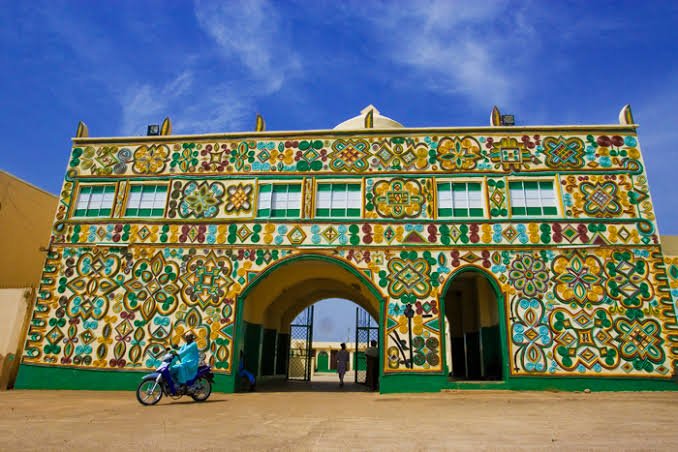
Traditional palace in Nigeria.
LAGOS, Nigeria – As millions of Nigerians struggle with soaring food prices, rising transport costs and shrinking household incomes, one line in the Federal Government’s proposed 2026 budget has ignited a national conversation. The plan to spend ₦22.15 billion on the construction, renovation and furnishing of 106 royal palaces has become more than a budget item—it has become a test of government priorities. In this report, Korede Abdullah examines the spending plan, the questions surrounding its transparency and why critics argue the money could have a greater impact if channeled into sectors that directly improve citizens’ lives.
A Budget Line That Sparked a National Debate
Traditional rulers occupy an important place in Nigeria’s social fabric.
They serve as custodians of culture, mediate community disputes and often support government efforts on security, public health and conflict resolution.
Yet the Federal Government’s proposal to allocate ₦22.15 billion for palace projects has prompted a broader question:
Should palace construction take precedence when many Nigerians are battling inflation, unemployment and rising living costs?
For critics, the issue is not whether traditional institutions deserve support.
It is whether such spending represents the best use of limited public resources during one of the country’s most difficult economic periods.
The Accountability Questions
Beyond the amount allocated, transparency has become another major concern.
According to Tracka, the civic technology platform of the BudgIT Foundation, 11 palace projects worth approximately ₦5.85 billion have no clearly identified locations.
The organisation also raised concerns about vague project descriptions and allocations routed through government institutions whose statutory mandates appear unrelated to palace construction or renovation.
Such gaps, analysts say, make it difficult for citizens, lawmakers and oversight agencies to determine:
where the projects will be located;
who will benefit;
how the costs were determined; and
whether taxpayers are receiving value for money.
Without such details, budget transparency becomes harder to measure and public accountability more difficult to enforce.
The Lagos Entry Raising Eyebrows
One project has attracted particular scrutiny.
The only Lagos palace specifically identified in the proposed budget is the Palace of the Alamuwo of Kuje-Amuwo, with an allocation of ₦280 million under the Ministry of Housing and Urban Development alongside another palace project in Ekiti State.
However, findings by Africa Health Report indicate that the monarch occupying the throne died in June 2023, leaving the stool vacant before the 2026 budget proposal was prepared.
For economist Victor Odeyemi, the issue goes beyond the individual project.
“If the reported information is accurate, it raises a very important question about the quality of due diligence behind the budget proposal.”
The concern, he says, is whether sufficient verification was carried out before projects were included in the national budget.
Billions Without Clear Beneficiaries
Other allocations also raise questions.
One project valued at ₦2.661 billion, under the Ministry of Agriculture and Food Security through the Federal Cooperative College, Ibadan, is described simply as the renovation of community halls and palaces in selected central communities in Lagos.
The budget entry does not specify which communities or palaces will benefit.
Similarly, the Nigerian Building and Road Research Institute (NBRRI) is linked to ₦3.92 billion in heritage palace projects, some of which reportedly lack clearly identified beneficiary communities or physical locations.
For Odeyemi, that level of ambiguity undermines public confidence.
“The public should be able to know the communities benefiting from the expenditure and the specific projects to be undertaken.”
Budget transparency, he argues, is essential if citizens are to assess whether projects represent genuine public value.
Workers Call It a Misplaced Priority
The Federal Workers Forum has also criticised the proposed allocation.
In a statement signed by its Coordinator, Andrew Emelieze, and General Secretary, Ogundele Ayo, the group described the spending as insensitive to the economic realities confronting millions of Nigerians.
“This shocking allocation comes while concerns remain over the reported ₦8 trillion allegedly unaccounted for and said to have been omitted from the 2026 budget, a claim the Federal Government has denied.”
The forum argued that the government should prioritise investments capable of easing economic hardship rather than what it described as luxury projects.
It also called for greater transparency and accountability in public spending.
Should Scarce Resources Be Spent Elsewhere?
The Coalition of United Political Parties (CUPP) has joined the criticism.
Its National Secretary, Chief Peter Ameh, argues that government spending should focus on projects with direct benefits for ordinary Nigerians.
He cited the former Subsidy Reinvestment and Empowerment Programme (SURE-P) as an example of an intervention that supported transport, agriculture, small businesses and grassroots economic development.
“Such an approach would ultimately benefit everyone, including our traditional rulers, who would surely prefer to see their subjects empowered and their communities thriving.”
Ameh also referred to Section 14 of Nigeria’s 1999 Constitution, which states that the security and welfare of the people shall be the primary purpose of government.
His argument reflects a broader debate over how governments should balance cultural investments with urgent social and economic needs.
‘Government Must Distinguish Between What Is Desirable and What Is Urgent’
For Victor Odeyemi, the debate is not about whether royal institutions deserve public support.
It is about priorities.
“The government must distinguish between what is desirable and what is urgent.”
He believes sectors such as healthcare, education, food security, infrastructure and job creation currently demand greater attention because of their direct impact on living standards.
Redirecting ₦22.15 billion, he argues, could generate wider economic and social returns if invested in projects that reduce household costs, improve productivity and create employment.
A Test of Budget Transparency
Odeyemi believes the Federal Government and National Assembly should provide far more information before the allocations receive final approval.
“A public budget should provide sufficient information for citizens, legislators and accountability institutions to determine what is being funded, where it will be implemented, who will benefit and how much it will cost.”
He recommends publishing detailed project locations, beneficiaries, procurement plans, implementation timelines and explanations where projects are assigned to agencies outside their traditional mandates.
Those details, he says, would allow Nigerians to judge whether the projects meet standards of transparency and accountability.
More Than a Palace Debate
The controversy surrounding the palace allocation has evolved into something much larger than a discussion about royal residences.
It has become a broader conversation about governance; accountability and the choices governments make when resources are limited.
Supporters argue that traditional institutions contribute to social stability and deserve investment.
Critics counter that every naira spent on public projects should be measured against competing needs, particularly at a time when many Nigerians struggle to afford food, healthcare, education and transportation.
Ultimately, the debate is less about palaces than about priorities.
In periods of economic hardship, every budget line sends a message about what government considers most urgent.
Whether the ₦22.15 billion allocation survives legislative scrutiny may be decided in the National Assembly.
But the larger question will remain:
Can public spending be justified if citizens cannot clearly see who benefits, what problems it solves and whether the same resources could deliver greater value elsewhere?
As Odeyemi puts it: “Every major expenditure should answer three questions: What problem is it solving? Who will benefit? And is there a more effective way of using the money?”
About the Author


 Oluwatobi Adu
 Hope Ajayi