Ogun Residents Raise Alarm Over Failed Ijoko-Onihale Road, Warn of Healthcare Risks
 Korede Abdullah
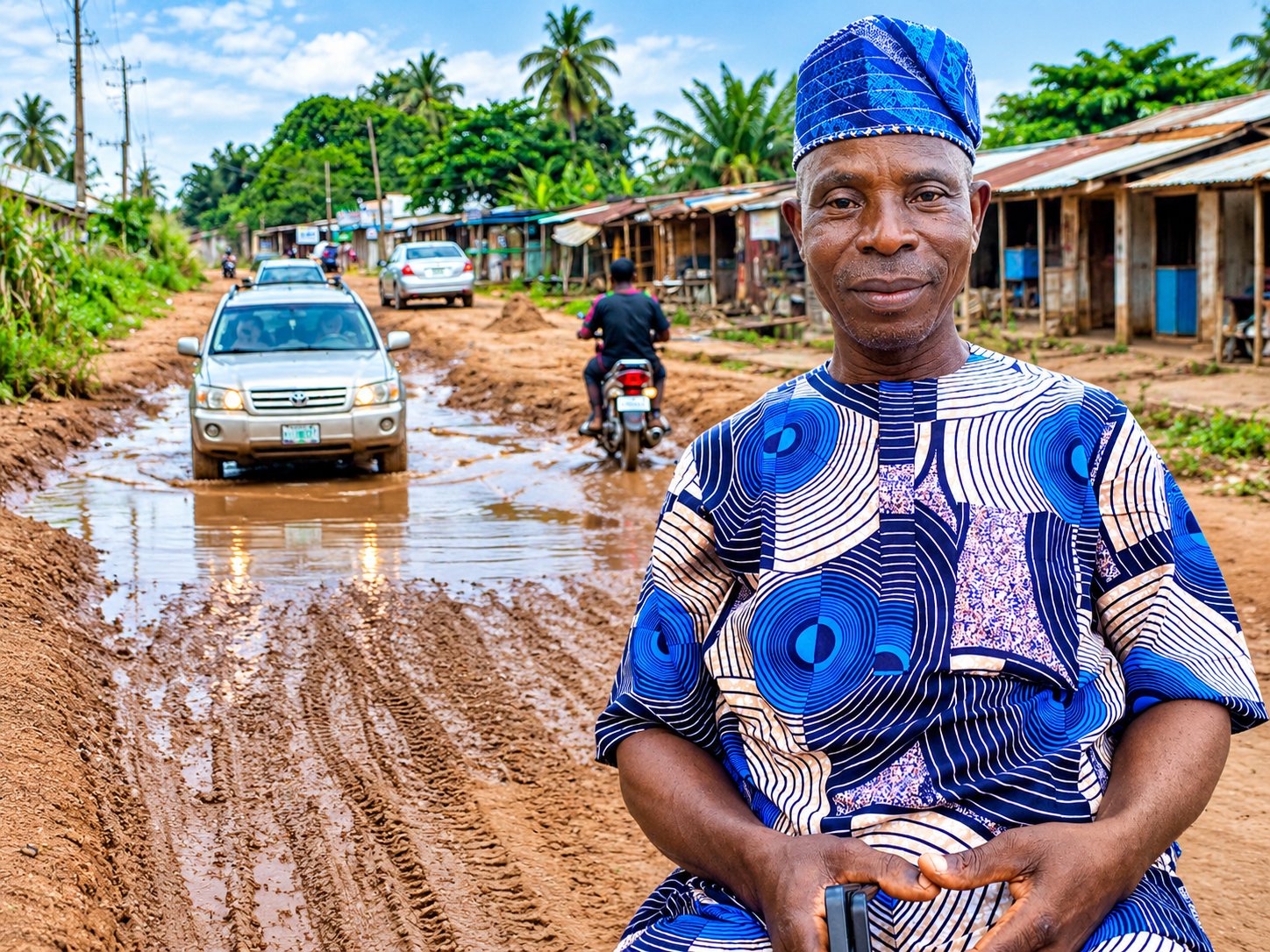
Chairman of the Agoro Area Community Development Committee, Mr Ayinde Olaniyi, pictured against the deplorable condition of the Ogba-Ayo–Agoro–Onihale Road.
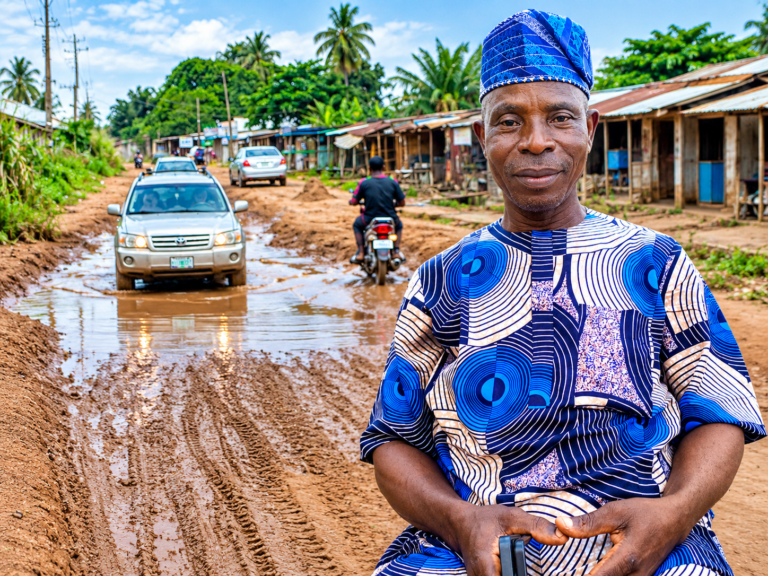
OGUN, Nigeria – Residents of Ijoko (Ogba Iyo), Onihale and adjoining communities in Ogun State have warned that the deplorable condition of the five-kilometre Ijoko-Onihale Road is putting lives at risk, disrupting businesses and making access to hospitals increasingly difficult.
The residents have appealed to Governor Dapo Abiodun to urgently reconstruct the road, warning that its deteriorating condition could delay medical emergencies, particularly involving pregnant women, children, elderly people and accident victims.
Speaking with Africa Health Report on Friday, Chairman of the Agoro Area Community Development Committee (ACDC), Mr. Ayinde Olaniyi, said repeated community-funded repairs had failed to address the problem despite millions of naira spent annually. “The road has cost our communities millions of naira yearly, but there are no traces of reprieve. All our efforts seem to be in vain because the project is certainly beyond communal efforts,” he said.
Olaniyi disclosed that the affected communities had written several letters to Governor Abiodun requesting urgent reconstruction. They had also appealed to Senator Solomon Olamilekan Adeola, who represents Ogun West Senatorial District.
Olaniyi said the deteriorating road had forced commercial tricycle operators to abandon the route because of frequent vehicle damage. Residents now depend largely on commercial motorcycle operators, popularly known as Okada riders, who charge higher fares because of limited transportation alternatives. “Only commercial motorcyclists, popularly known as Okada riders, are still willing to ply the route. The tricycle operators have abandoned it because their vehicles keep getting damaged. The motorcycle operators take advantage of the situation to charge exorbitant fares because passengers have no other choice,” he said.
Another community leader, Chief Oluyemi Egbeyemi of the Afimo Community Development Committee, said residents were struggling to commute because of the road’s condition and rising transportation costs. “Sometimes, getting home becomes a serious problem. We spend more money on transportation, and even when we have the money, finding a motorcycle willing to take us through the road is another challenge. We are tired of this suffering,” he said.
Egbeyemi added that repeated vehicle repairs had forced some motorists to abandon their cars, while traders faced higher costs transporting goods to markets. “People who used to drive through this road have abandoned their vehicles because of the constant repairs. Traders are also suffering because transporting goods has become more expensive. We cannot continue living like this when government intervention is what we need,” he lamented.
The residents said the situation had affected commercial activities and increased the financial burden on households that depend on the road for their daily movement.
Damaged road raises concerns over emergency healthcare access
Beyond transportation and economic challenges, residents are particularly concerned about the implications of the road’s condition for healthcare delivery. They said the absence of regular commercial buses and the difficulty of navigating damaged sections could delay patients seeking urgent medical attention.
Pregnant women experiencing labour complications, sick children, elderly residents and accident victims could face additional difficulties reaching hospitals, particularly when time is critical. Residents also raised concerns about ambulance accessibility, saying deep potholes, damaged sections and waterlogged trenches could obstruct emergency vehicles.
The condition of the road presents other environmental and public health concerns. During the dry season, dust generated by passing vehicles could aggravate respiratory problems, particularly among children, elderly residents and people with existing respiratory conditions. During the rainy season, stagnant water collecting in potholes could create mosquito-breeding sites and increase the risk of mosquito-borne diseases.
Olaniyi also raised security concerns, warning that reduced vehicular movement could expose commuters to criminal attacks, particularly at night. He said residents with medical emergencies could be left stranded because of the limited transportation options available.
Residents demand reconstruction, drainage facilities
Calling for a permanent solution, Olaniyi urged Governor Abiodun to direct the state Ministry of Works and Infrastructure to inspect the road and commence comprehensive reconstruction. He stressed that temporary repairs would not address the persistent problems, particularly without adequate drainage facilities to prevent further deterioration.
Olaniyi also argued that reconstructing the five-kilometre route would improve connectivity and ease pressure on the congested Sango-Abeokuta Road. “When constructed, the road will serve as a major relief for Sango-Abeokuta Road. It will decongest the road from its daily gridlock experience and alleviate the current harrowing experience of residents and commuters who ply the route daily for their economic activities,” he said.
He added that a properly constructed road would encourage commercial activities, create business opportunities and potentially increase government revenue. The community leader maintained that residents could no longer sustain the financial burden of repeatedly repairing a road that requires government intervention.
For communities along the Ijoko-Onihale corridor, the demand for reconstruction goes beyond improved transportation. Residents say a functional road is essential to protecting lives, improving access to healthcare, supporting local businesses and ensuring that patients can reach medical facilities without avoidable delays.
About the Author


 Mirian Gom

 Oluwatobi Adu
 Vincent Ndu