


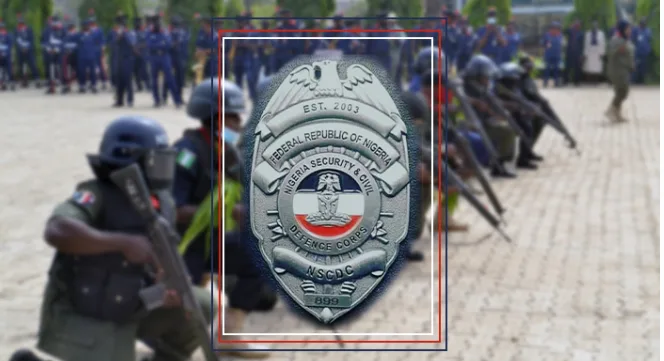
UYO, Nigeria – The Nigeria Security and Civil Defence Corps (NSCDC) has warned its personnel against using the agency to recover private debts, stressing that debt collection does not form part of its core mandate.
The warning was issued on Saturday by the Director of Legal Services at the NSCDC National Headquarters, Aminu Alilu, during a capacity-building workshop at the corps’ command headquarters in Uyo, Akwa Ibom State.
According to a News Agency of Nigeria report published on October 24, Alilu urged officers to carry out their duties in accordance with the Administration of Criminal Justice Act (ACJA) 2015, which provides a legal framework for criminal justice procedures, including arrests and the protection of suspects’ rights. “The ACJA 2015 is the Bible of every player in the criminal justice system. Officers, especially prosecution officers, have to apply the law with a human face,” he said.
Alilu warned personnel against torture, cruel and inhuman treatment, and the practice of arresting one person in place of another individual suspected of an offence. He also stressed the importance of recording arrests and interrogations using cameras, where required, and ensuring that evidence gathered during investigations was properly documented and preserved.
According to him, professionalism in investigations and prosecution helps strengthen cases and improve the prospects of securing convictions.
The warning against private debt recovery underscores the need for security personnel to distinguish between legitimate law-enforcement duties and private disputes that should be handled through appropriate legal channels.
Earlier, the Akwa Ibom State Commandant of the corps, Jonathan Olariche, urged participants to apply the knowledge gained from the workshop in their daily duties. Olariche said a well-trained workforce would improve service delivery and help ensure that personnel treated members of the public with dignity and professionalism.




Join the conversation