
Nigeria’s Ponmo Paradox: Empty Plates, Poisoned Skins, a $5bn Dream Deferred
 Oluwafunbi Bello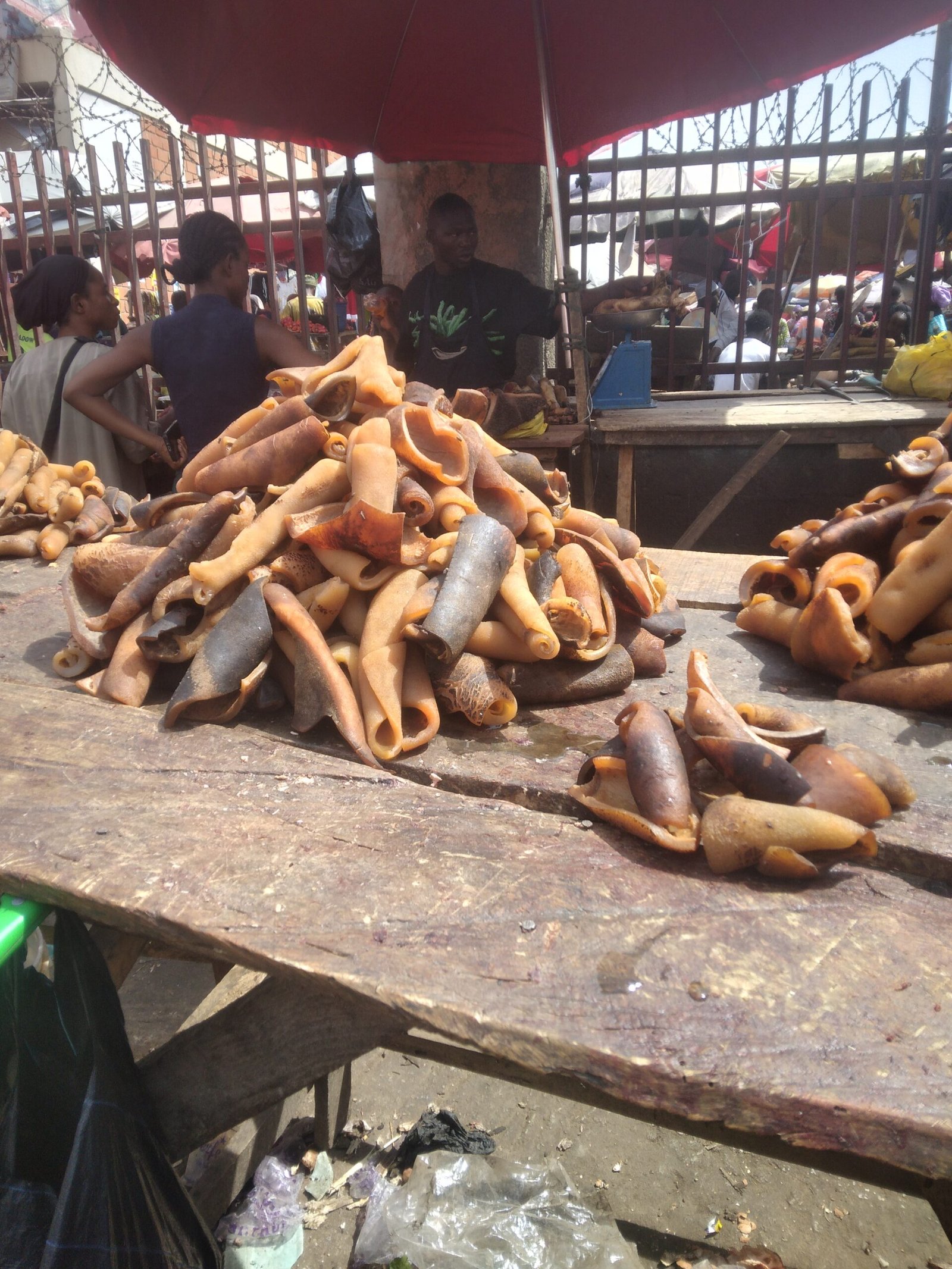
ABUJA, Nigeria – At dawn in Kubwa Centre Market, Abuja, the smell of spice and smoke hangs low as traders unwrap stacks of dried cow skin. For millions of Nigerians, ponmo is comfort food, a budget stretcher and a cultural constant. For policymakers, it is something else entirely: a public-health puzzle and an industrial opportunity slipping through the nation’s fingers.
In this report, Oluwafunbi Bello, Nigeria’s cow-skin economy is examined not as a morality tale but as a human one—where survival choices made today collide with the promise of a healthier, more prosperous tomorrow. The evidence exposes a dilemma at the heart of development: how to protect livelihoods and feed families now without mortgaging health and jobs for the future.
The Arithmetic of Hunger
Miss Fehintola’s calculations are unforgiving. “I can cut ₦500 ponmo into six or seven pieces,” she says at her Kubwa stall, rearranging a small bag of purchases. “But ₦500 only buys two eggs. They don’t even sell ₦500 meat anymore.”
That logic—volume over nutrition—has propelled ponmo from a by-product to a staple as inflation pushes meat beyond reach. Salisu Abdullahi, a long-time trader, nods. “People buy ponmo because it’s cheaper than meat,” he says. “Even when they buy meat, they still add ponmo.”
At Mama Paul’s roadside buka, the hierarchy is clear. “Some customers ask for ponmo first,” she says. “If it finishes, then they go for meat or fish.”
An Economy Woven from Skin
Behind each purchase sits an informal chain of livelihoods. Ayuba, a young hawker, traces his business to family ties. “My father works at an abattoir,” he explains. “He gives me the cow skin. Ponmo was my first business—and it still is.”
For him, the trade is not marginal. “Ponmo is very, very profitable,” Ayuba says. “A lot of people depend on it.”
From abattoir workers and processors to market women and hawkers, thousands earn daily income from a system requiring little capital and leaning on kinship networks. Any abrupt disruption, policymakers know, risks immediate hardship in communities where alternatives are scarce.
Empty Calories, Full Bellies
The nutritional truth, however, is stark. Miss Joy Okwukwe Ogbodo, a food nutritionist, is blunt. “Ponmo is widely consumed, especially among low-income households,” she says. “But we must be honest about what it provides.”
Her verdict: collagen—low-biological-value protein with few essential amino acids. “Studies show ponmo contains minimal fat, negligible carbohydrates and very low micronutrients like iron, zinc and vitamin B12,” Ogbodo explains. “It’s nutritionally inferior to eggs, fish, meat and legumes.”
The result is a cruel illusion. “While it fills plates and stomachs, it offers little nourishment,” she adds. “It should not be classified as a protein source in food-security planning.”
For families trying to survive, the choice is rational. The consequences, over time, are not.
The Toxic Turn
Nutrition is only half the hazard. Processing methods often turn ponmo dangerous. “Singeing with tyres, plastics or waste fuels introduces polycyclic aromatic hydrocarbons and heavy metals like lead and cadmium,” Ogbodo warns. “These are carcinogenic and accumulate in the body.”
Poor hygiene compounds the risk. What begins as a nutritionally weak food becomes a slow-burn public-health threat—borne disproportionately by those with the least access to healthcare.
Ogbodo is especially concerned for children under five, pregnant and lactating women and the elderly. “Ponmo displaces nutrient-dense foods critical for growth, fetal development and immunity,” she says. Poverty drives consumption; poor nutrition perpetuates poverty.
Affordable Alternatives—If Policy Helps
Better options exist, Ogbodo insists. “Legumes—beans, soybeans, groundnuts, bambara nuts—seeds like egusi, small fish such as sardine and bonga, eggs and properly cooked organ meats provide higher-quality protein at comparable or lower cost.”
The barrier is not availability alone but perception, habit and the daily pressure of hunger. Education and price signals matter.
The $5 Billion Opportunity Cost
Economist Ahmed Yusuf frames ponmo as a diversion of value. “The trade-off is between immediate consumption and long-term growth,” he says. “Every hide eaten is raw material lost to manufacturing.”
Nigeria has cattle and demand but lacks a globally competitive leather industry, importing finished goods instead. “A developed leather value chain—tanneries, goods manufacturing—would generate far greater returns and jobs than domestic food consumption of hides,” Yusuf argues. Officials estimate the sector could reach $5 billion, delivering formal employment, skills and export earnings.
Lessons From Elsewhere
Brazil and India resolved similar conflicts, Yusuf notes, by prioritising industry through regulation, incentives and managed transitions. “They discouraged non-industrial use of hides while supporting processing capacity,” he says. The common thread: deliberate policy and social cushioning.
Nigeria’s challenge is not feasibility but resolve.
Bridging Health and Jobs
Both experts caution against bans. “A phased approach is essential,” Yusuf says—public awareness, investment incentives and alternative livelihoods first, levies or restrictions later. Ogbodo agrees. “Improve processing safety, educate consumers and promote affordable alternatives.”
Immediate wins are possible: enforce bans on tyre and plastic singing; promote safer fuels; mandate hygiene; test residues; train vendors. These steps cut risk without destroying incomes.
Longer term, Yusuf urges vocational retraining into leather processing, low-interest finance for entrepreneurs and temporary safety nets. Transitions, he concedes, require patience and funding.
The Cost of Drift
What persists instead is a policy vacuum. Health warnings ignore livelihoods; industrial plans sidestep political resistance. Consumers continue rational choices in irrational systems.
The bill compounds: children miss nutrients; toxins accumulate; hides that could power factories are eaten. If change comes through a crisis, it will be harsher.
Choosing Tomorrow
Nigeria’s ponmo paradox is not a fight between tradition and progress but a test of governance. Evidence is clear. Compassion is required. The path—safer food today, better nutrition, jobs tomorrow—exists.
In Kubwa, trading continues. Salisu weighs portions. Mama Paul prepares lunch. Miss Fehintola counts her cash. They are not obstacles to development; they are its measure. Whether Nigeria chooses a managed transition—or waits for a reckoning—will shape children’s health, workers’ futures and the country’s industrial destiny.
About the Author

 Korede Abdullah
 Otamere Gladness
 Koko Maxwella
 Edino Chubiyo Cornelius