Flushed Promises: How Nigeria’s Sanitation Emergency Keeps Fueling a Preventable Health Crisis
 Chukwu Obinna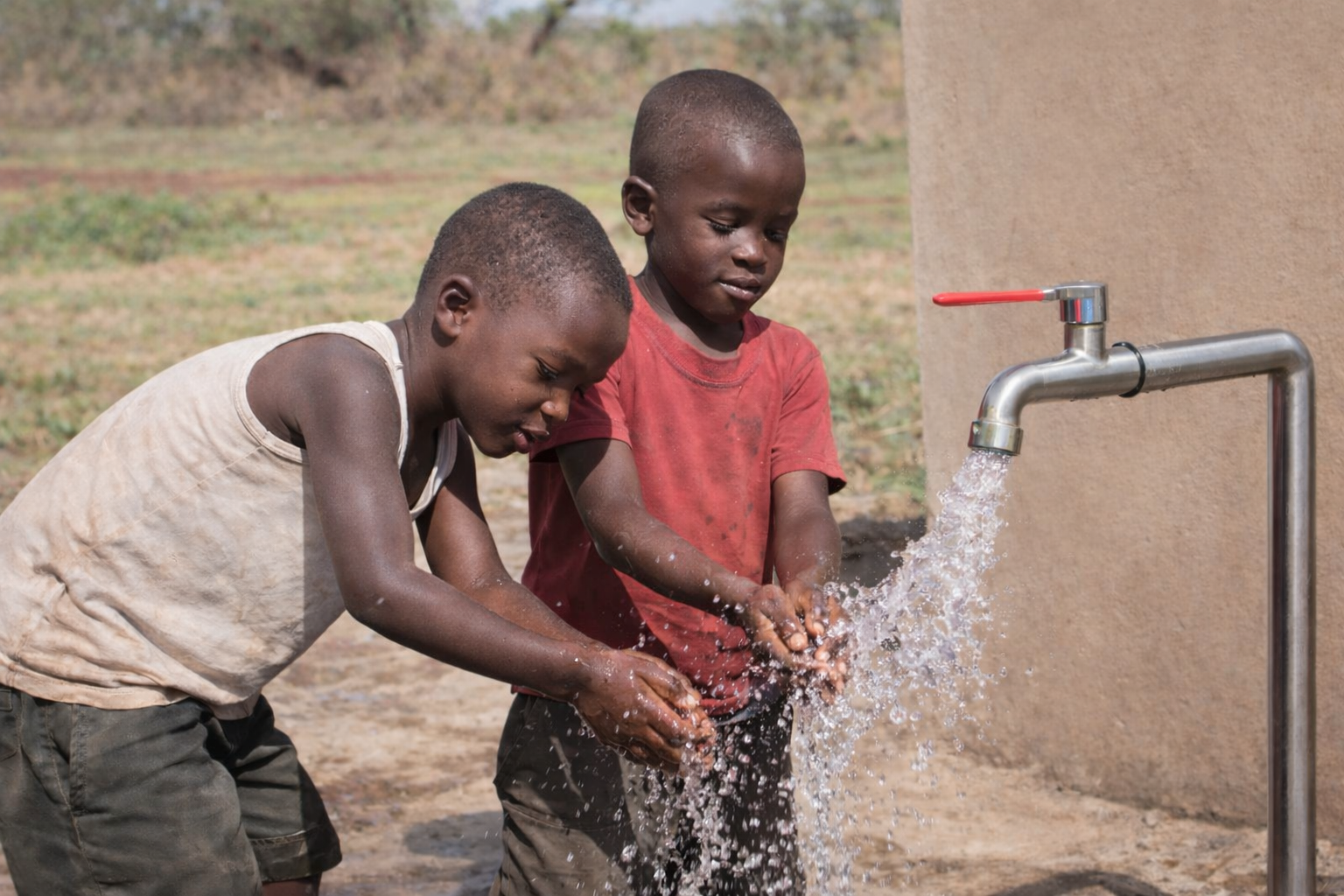
ABUJA, Nigeria – When Nigeria declared a state of emergency in water, sanitation and hygiene (WASH) in 2018, the message was meant to be unmistakable: open defecation would end by 2025, and millions of lives would be protected from diseases that thrive where clean water and toilets are absent. Seven years on, that declaration reads less like a turning point and more like a warning unheeded.
Across Nigeria, cholera continues to surface with deadly regularity, ripping through communities already stretched by poverty, climate stress and weak public services. The outbreaks are not sudden disasters, health experts say, but symptoms of a long-standing failure to turn policy ambition into everyday reality.
By August 2025, about 18 per cent of Nigerians — roughly 48 million people — were still practising open defecation, according to data from the World Health Organisation and UNICEF. The figure marks progress of sorts, but it falls well short of the zero target Nigeria set for itself. In October 2025, the Federal Government quietly shifted the deadline to 2030, aligning it with the global Sustainable Development Goals and acknowledging, implicitly, that the earlier promise had been missed.
The human cost of that delay has been stark. Cholera outbreaks in 2025 affected thousands across several states, placing Nigeria among the most impacted countries in Africa. Dozens died. Thousands more were hospitalised. Behind each statistic is a pattern that health officials insist is predictable — unsafe water, poor sanitation and fragile hygiene systems converging into a public health emergency. Chukwu Obinna, writes.
A Development Goal Slipping Away
Nigeria’s WASH crisis sits at the heart of Sustainable Development Goal 6, which seeks to ensure universal access to clean water and sanitation by 2030. More specifically, it threatens Target 6.2: access to adequate and equitable sanitation and hygiene for all, and an end to open defecation.
Failure here spills into other goals. Unsafe water and sanitation undermine SDG 3 on good health and well-being, fuelling preventable diseases that still kill more than 70,000 Nigerian children under five each year. They also weaken SDG 4 on quality education, as inadequate toilets in schools drive absenteeism, particularly among girls.
The national response, on paper, has been ambitious. The “Clean Nigeria: Use the Toilet” campaign was designed to shift behaviour, expand sanitation infrastructure and protect public health. Yet more than seven years after its launch, only 17 per cent of Nigeria’s local government areas have been certified open defecation-free.
Policy Meets the Ground — and Falters
Public health data underscores the consequences. By mid-2025, Nigeria had recorded more than 3,000 suspected cholera cases, alongside recurrent outbreaks of diarrhoeal diseases linked to unsafe water and sanitation. For many experts, the persistence of these diseases reflects not a lack of plans, but a failure to execute them consistently.
Niyi Emmanuel, a WASH specialist who has worked across multiple Nigerian states, points to systemic weaknesses in governance. Responsibilities for water and sanitation are split across federal, state and local governments, often without clear accountability.
“Many local governments lack trained WASH officers, planning tools and operational budgets,” Emmanuel said. “What you see instead is infrastructure being built without the systems required to keep it functional.”
He described a culture in which projects are sometimes driven by political visibility rather than actual need. Monitoring, he added, is often weak, allowing local governments to declare themselves open defecation-free without sustained verification — a practice widely referred to in the sector as “paper ODF”.
The Build-and-Abandon Trap
Beyond access, Nigeria faces a stubborn crisis of maintenance. UNICEF estimates show that about 38 per cent of improved water points across the country are non-functional, while nearly 30 per cent fail within the first year of installation. Piped water systems, once more common, have steadily declined, forcing households to rely on boreholes, wells and surface water that are frequently unsafe.
Emmanuel calls this the “build-and-abandon” model. “Water systems are treated as projects, not services,” he said. “Once the ribbon is cut, the job is considered done.”
International experience tells a different story. Countries such as Rwanda, Senegal and Ethiopia have shifted towards service delivery models that emphasise routine maintenance, modest user tariffs and professional management. Digital monitoring tools now allow authorities to track water point functionality in real time, reducing downtime and extending system life.
Where Health and Education Suffer Most
The gap between policy and practice is most visible in schools and healthcare facilities. Nigeria’s 2021 WASHNORM survey found that only 11 per cent of schools and just 6 per cent of healthcare facilities had basic water and sanitation services.
The implications are profound. In health centres, poor WASH conditions increase the risk of healthcare-associated infections and accelerate the spread of diseases like cholera. In schools, inadequate toilets contribute to absenteeism, reduced learning outcomes and higher dropout rates, particularly among adolescent girls.
Experts argue that integrating WASH standards into health and education planning is not optional, but essential. Without it, investments in clinics and classrooms are undermined by the very conditions meant to support them.
Financing a Fragile Sector
Money remains a central constraint. Nigeria allocates roughly 0.32 per cent of its GDP to WASH — far below what is required to achieve universal access by 2030. The estimated financing gap, at about ₦1.9 trillion, has left the sector heavily reliant on donor funding.
That dependence, experts warn, is risky. Donor funds are often project-based, time-limited and subject to shifting global priorities.
“Sustainable financing will require a different approach,” Emmanuel said. He advocates blended finance models, results-based funding and carefully regulated private sector participation. “Private capital will not come into a system where risks are unclear and performance cannot be measured.”
Toilets Are Not Enough
While infrastructure is vital, specialists caution against viewing toilets as a silver bullet. Community-Led Total Sanitation (CLTS) programmes have shown results where they are rigorously implemented and followed up, particularly when paired with sanitation marketing and targeted subsidies for the poorest households.
“Behaviour change is not a one-off event,” Emmanuel said. “Without sustained engagement, communities relapse, even when facilities exist.”
Proof That Progress Is Possible
Despite the national picture, some sub-national successes offer hope. Jigawa State’s emergence as Nigeria’s first open defecation-free state was driven by strong political leadership, data-driven monitoring and deep community mobilisation.
The lesson, experts say, is that progress depends less on headline spending and more on governance discipline, accountability and social ownership.
A Crisis Still Unfolding
As Nigeria works towards its revised 2030 target — now aligned with the SDG deadline — the stakes remain high. Unsafe water and poor sanitation continue to fuel cholera outbreaks, child mortality and avoidable healthcare costs.
“Without access to safe water, our progress towards sustainable development remains incomplete,” said Engr. Prof. Joseph Terlumun Utsev, FNSE, the Minister of Water Resources and Sanitation.
“We must invest more in water quality monitoring, enforce standards, and empower communities to be custodians of the very water they drink,” he added.
Without reforms that prioritise sustainable service delivery, integrate WASH into health and education systems, and strengthen accountability at every level of government, the cycle of disease is likely to persist.
For millions of Nigerians, the absence of clean water and safe sanitation is not an abstract development statistic. It is a daily risk to life, health and dignity — and a reminder that unfulfilled promises can be as dangerous as no promises at all.
About the Author

 Otamere Gladness
 Koko Maxwella
 Edino Chubiyo Cornelius