


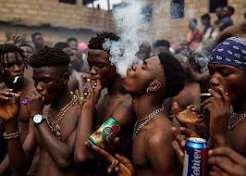
ABUJA, Nigeria – The first drink often comes long before adulthood. Sometimes it is offered by a friend behind a school gate, handed over at a neighbourhood party, or bought without question from a roadside shop. For thousands of Nigerian children, alcohol is no longer an adult indulgence but an increasingly accessible part of adolescence. Behind every bottle lies a dangerous mix of peer pressure, social media influence, weak regulation and easy access to cheap alcoholic beverages. Through voices from the streets, interviews with regulators and public health experts, in this report, Oluwatobi Adu reveals how underage drinking is quietly evolving into one of Nigeria’s most overlooked public health emergencies—and why experts warn that failing to act today could leave an entire generation paying the price.
‘Everyone Else Was Drinking’
For many teenagers, the journey into alcohol does not begin with addiction. It begins with belonging.
Daniel, 15, says fitting in with friends is one of the strongest reasons teenagers experiment with alcohol. Social media platforms have only intensified that pressure by portraying drinking as fashionable and harmless.
“It’s because of friends. When you see your friends drinking, they will tell you to try it too. Some people also see it on TikTok or at parties and feel it’s something cool. If you go to some shops with money, they will just sell it to you. Most of them don’t even ask how old you are.”
His experience points to a troubling reality: age restrictions exist on paper, but enforcement often disappears at the point of sale.
Daniel says he has watched alcohol trigger violent behaviour among young people, leading to fights and reckless decisions. He believes parents, retailers and the government all have responsibilities in preventing children from accessing alcohol.
The Price of Fitting In
Nineteen-year-old Ikechukwu shares similar concerns. Although he admits trying light alcoholic drinks, he says he has never understood why many of his peers associate alcohol with happiness.
“I have many friends that drink alcohol, but for me it’s not really good at all. I don’t see anything there that is making them take it. If you ask them, they will say it gives them joy, but I don’t really understand what joy it is giving them.”
He believes social acceptance has become more powerful than personal judgement.Too Young to Drink: Why More Nigerian Teenagers Are Turning to Alcohol
“It’s friends that push people to take it. If your friends are taking it, you may feel like joining them because you don’t want to be left out. It is also easy to get those sachet drinks, and even if the government wants to ban them, people are still buying them because that is how some sellers make their living.”
His comments expose another difficult dilemma: while public health advocates demand stricter controls, thousands of small retailers rely on alcohol sales for income.

Alcohol Within Easy Reach
Twenty-four-year-old Emmanuel Obi Ekene believes emotional distress also drives some teenagers towards alcohol, but says unrestricted access remains a major problem.
“It does not feel good because some people depend on how they feel or what they are going through. They think alcohol will make them feel alright, but for me it’s not good for my body because I don’t take it. Some people take more than what their body can accept, and that is when you see the person misbehaving after taking it.”
He estimates some children begin drinking from around the age of 15.
According to him, retailers rarely question young buyers.
“Some people are stubborn. You may see your friends drinking and they will tell you, ‘Take this thing now,’ and you feel like joining them. Even if a small child goes to buy alcohol, the seller will not refuse because it is their business. If they can ban sachet whisky, it will help because it is damaging some people’s lives.”
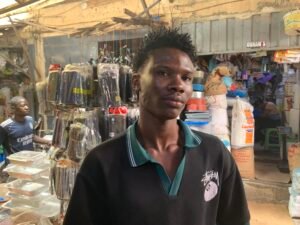
Parents Watch with Alarm
For Oladele Adekunle, a trader and father, watching teenagers drink openly has become disturbingly normal.
He fears many children are entering adulthood with habits that could permanently damage their health.
“Nowadays all those guys in my street started taking alcohol from like 13 years, 14 years because of copy, yes, I want to mingle with a friend. Some of them, their family are not even taking care of them; they are not with their parents, so they live their life the way they want it. So, it’s not advisable.”
He says parental absence, poor supervision and unrestricted alcohol sales are creating a dangerous combination.
“Even though you are 13, once you can take it, they will just collect your money and make their sales. Only what the government will do for us is just that you guys should help us stop it and make sure there is a big law so that our community will be well organised.”

The Numbers Behind the Crisis
The individual stories reflect a much wider public health challenge.
According to the World Health Organization, alcohol contributes to approximately 2.6 million deaths globally every year and is associated with more than 200 diseases and injuries.
In Nigeria, inexpensive sachet and bottled alcoholic drinks remain widely available despite regulatory efforts.
A survey by the National Agency for Food and Drug Administration and Control (NAFDAC) found that 54.3 per cent of underage Nigerians purchase alcohol themselves, while 25.2 per cent of older teenagers consume alcohol daily.
The figures illustrate how affordability, weak age verification and poor enforcement continue to place alcohol within easy reach of children.
NAFDAC: ‘Children’s Health Must Come Before Profit’
NAFDAC says it has intensified enforcement against sachet alcohol sales.
Resident Media and Communications Consultant to NAFDAC, Sayo Akintola, told Africa Health Report that enforcement officers are operating across the country to ensure compliance with restrictions.
“It’s no longer easy to buy. Our Investigation and Enforcement officials are all over the country enforcing the ban on the sachet alcohol small packages that are easily accessible to the child. The advice to all concerned is that the health and well-being of our children should take precedence over money-making ventures.”
Akintola warned that exposing children to alcohol as young as nine could have devastating lifelong consequences.
“We should be mindful of the health implications of exposing children to alcohol at ages 9 and 13. It kills them by installments. It destroys the internal organs. It turns them to hooligans and social misfits. It’s commonplace nowadays to hear of young adults of 30, 40 years having kidney problems.”
He explained that alcohol rapidly enters the bloodstream and begins affecting nearly every major organ.
“When alcohol enters our body, it immediately begins working on our central nervous system — the command centre for all of our thoughts, feelings, and actions. Alcohol affects your brain, liver, and stomach by changing how they work and breaking down into toxic chemicals. When you drink, alcohol enters your blood through your stomach and small intestine, spreading to nearly every organ.”
He added that excessive alcohol damages the liver, stomach, heart and immune system while increasing the risk of several cancers.
“Alcohol makes it difficult for our intestines to control bacteria and absorb nutrients that can lead to malnutrition. No action should be spared to prevent our children from having access to a thing that can destroy them.”
Experts Warn of Lifelong Consequences
Public health expert Ogunbiyi Boluwatife Adetokunbo says adolescence is one of the worst periods for alcohol exposure because the brain is still developing.
“Alcohol consumption during adolescence poses serious health risks because the brain and body are still developing. It can impair brain development, affecting memory, learning, judgment and decision-making. From a public health perspective, underage drinking contributes to road traffic crashes, crime, mental health problems, and places a significant burden on families and the healthcare system.”
She says multiple factors are fuelling early alcohol use.
“Several factors contribute to early alcohol use among young Nigerians. These include peer pressure, curiosity, family influence, easy access to alcohol, aggressive advertising and weak enforcement of age restrictions, as well as the portrayal of alcohol as a symbol of enjoyment or success on social media and in entertainment. Stress, unemployment and poor parental supervision may also encourage young people to use alcohol as a coping mechanism.”
The consequences, she warns, extend far beyond adolescence.
“Early alcohol use increases the risk of developing alcohol dependence later in life. Physically, it can damage the liver, heart and other organs, weaken the immune system and increase the risk of chronic diseases. Mentally, it is associated with depression, anxiety, poor cognitive development, memory problems and an increased risk of substance abuse. It can also affect educational achievement, career opportunities and social relationships.”
Her prescription is straightforward.
“Preventing underage alcohol consumption requires a collective effort involving families, schools, communities, healthcare professionals, and the government. Early education and strong public health policies are key to protecting young people and promoting a healthier future.”
A Crisis That Demands More Than Laws
Nigeria’s underage drinking problem is no longer confined to isolated communities. It is unfolding in neighbourhood shops, school environments, family gatherings and across social media feeds where alcohol is increasingly normalised. While regulators continue to tighten enforcement, interviews conducted for this investigation suggest implementation remains uneven, leaving children with few barriers between curiosity and consumption.
The testimonies reveal a common thread: children are rarely drinking because they fully understand the risks. They are drinking because alcohol is cheap, accessible, socially accepted and, too often, easier to obtain than protection from the adults and institutions meant to safeguard them.
Without sustained enforcement, responsible retail practices, stronger parental engagement, restrictions on youth-targeted alcohol promotion and widespread public education, Nigeria risks allowing an avoidable public health emergency to deepen. Protecting children from alcohol is not simply about enforcing regulations—it is about safeguarding the country’s future.



Join the conversation