
Shadows Without Sentence: Nigeria Names Its Terror Financiers – But Where Are the Convictions?
 Hussaini Ibrahim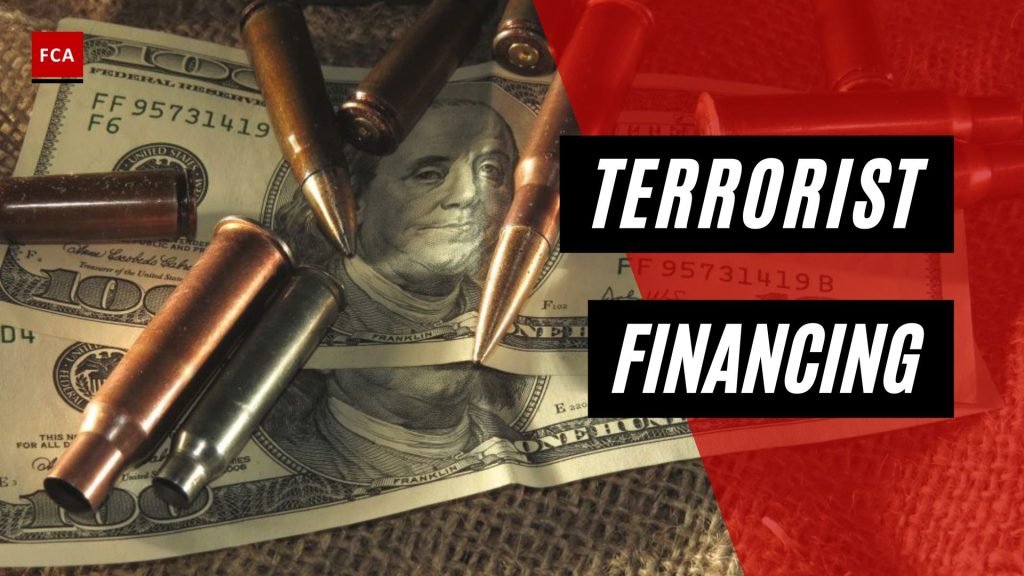
ABUJA, Nigeria – Seventeen years into a grinding insurgency that has reshaped lives and landscapes across Nigeria, the conflict is no longer defined solely by gunfire on distant frontlines. It has moved into the shadows — into bank accounts, illicit transfers, and hidden financial networks that sustain terror. While troops continue to battle militants, authorities have increasingly turned their focus to those accused of funding violence, raising a persistent and uncomfortable question: why are so few ever brought to justice?
Nigeria’s security crisis remains deeply entrenched. In the North-East, Boko Haram and the Islamic State West Africa Province (ISWAP) continue to launch attacks, while the North-West grapples with banditry that blurs into insurgency. In this report, Hussaini Ibrahim writes that although the government has become more assertive in naming alleged terror financiers, prosecutions remain limited — exposing a troubling gap between intelligence and accountability.
Sanctions Without Closure
In mid-April 2026, the Federal Government, through the Nigeria Sanctions Committee under the Office of the National Security Adviser, released an updated list of 48 individuals and 12 entities allegedly linked to terrorism financing. Among them were high-profile names such as Simon Ekpa and Tukur Mamu, alongside companies and Bureau De Change operators accused of enabling illicit financial flows.
Authorities said the designations targeted networks tied to Boko Haram, ISWAP, Ansaru, and the Indigenous People of Biafra, invoking provisions under the Terrorism (Prevention and Prohibition) Act, 2022. Financial institutions were directed to freeze all assets connected to those listed.
On paper, the move signalled urgency — even resolve. In practice, it reignited a long-standing national concern: what happens after the names are published?
The pattern is familiar. Lists are released. Accounts are frozen. Headlines flare. Then silence.
“Without Prosecution, Naming Is Not Enough”
Security analyst Stephen Okwori believes that gap is not just procedural — it is dangerous.
“You cannot defeat an insurgency by addressing only those on the battlefield while ignoring those financing it,” Okwori said.
“Terror groups are sustained by logistics, recruitment, weapons procurement, and mobility. All of these depend on money. If the financial chain is not broken through prosecution, then the insurgency remains structurally intact.”
For Okwori, repeated naming without visible legal consequences risks eroding deterrence.
“When names are published and nothing follows in court, it sends a message that there are no consequences. That is dangerous because it normalises impunity,” he said.
He draws a critical distinction between intelligence and justice.
“Naming suspects is intelligence work. Convicting them is legal work. The problem begins when intelligence does not transition into prosecution,” he said.
According to him, Nigeria’s counterterrorism framework suffers from weak coordination across institutions.
“In countries where counterterrorism financing is effective, asset freezing is immediate, but prosecution follows quickly. That is the missing link we must fix,” he said.
Law Without Teeth?
Legal experts echo that concern, pointing not to the absence of laws but to their inconsistent application.
A Lagos-based financial crime lawyer told The AHR that Nigeria’s legal architecture is already robust.
“The Terrorism (Prevention and Prohibition) Act provides a solid framework for prosecution,” the lawyer said.
“The challenge is not the law, but the application. Many of these cases move slowly through the system, and in some instances, they never reach a conclusion.”
The opacity surrounding high-profile cases, he argued, deepens public scepticism.
“When people are publicly named and nothing is heard again, it raises legitimate questions. Are the cases active? Were they dismissed? Were settlements reached behind closed doors?” he said.
The tension between secrecy and accountability remains a delicate one. But the lawyer warns against allowing national security to become a shield for silence.
“National security cannot be an excuse for indefinite silence. Transparency and justice can coexist if properly managed,” he added.
He also called for structural reforms to accelerate justice delivery.
“Terror financing cases should not follow the normal slow pace of litigation. Specialised courts or accelerated procedures may be necessary,” he said.
The Cost of Silence
For civil society groups, the consequences of this enforcement gap extend beyond the courtroom into public trust.
Dr Benson Olugbuo, Executive Director of CLEEN Foundation, argues that transparency is not a liability — it is an asset in counterterrorism.
“Every time the government releases a list of alleged terror financiers, expectations rise among citizens,” he said.
“But without follow-up information, that expectation turns into doubt and frustration.”
Olugbuo insists that accountability strengthens — rather than weakens — national security.
“Providing updates on prosecutions, convictions, or asset recovery does not compromise security operations. Instead, it reinforces trust in the system,” he said.
He warns against what he describes as a dangerous cycle.
“Freezing accounts is an important first step, but it is not the end goal. The goal is justice, accountability, and deterrence,” he said.
Like others, he points to fragmentation across institutions as a critical barrier.
“No single agency can win this battle alone. Financial intelligence units, prosecutors, courts, and security agencies must work in sync,” he added.
Voices from the Frontlines
For those who have lived through the violence, the issue is neither abstract nor academic — it is deeply personal.
A resident of Borno State who lost his brother in an attack spoke with quiet frustration.
“They told us they know the people behind these killings,” he said.
“But if they truly know them, why are they not in prison? Why do we still live in fear while those funding violence remain free?”
Repeated announcements, he said, have begun to feel hollow.
“Every new list brings hope, but nothing changes on the ground. It feels like the same story repeating itself,” he said.
A widow of a fallen soldier echoed that grief — and anger.
“My husband died serving this country,” she said.
“But if those who funded the attackers are not punished, then what exactly are we fighting?”
For her, justice must extend beyond the battlefield.
“Punishing only the fighters is not enough. The sponsors are just as responsible. Until they face consequences, this war is incomplete,” she said.
A War Half-Fought
Nearly two decades into the insurgency, Nigeria stands at a critical juncture. Its strategy is evolving — from bullets to bank accounts, from firefights to financial surveillance. But without consistent prosecutions, that evolution risks stalling.
The April 2026 sanctions list may signal renewed intent. Yet its true impact will not be measured by the number of names published, but by the number of cases that end in courtrooms — and convictions.
For now, the gap between intelligence and justice remains wide.
And in that gap, impunity finds room to breathe.
Until Nigeria can close it — converting accusations into accountability — its war against terrorism risks remaining unfinished: loudly declared in policy, but quietly unresolved in justice.
About the Author


 Oluwatobi Adu

 Hope Ajayi