Billions Spent, Healthcare Missing: Inside Nigeria’s Primary Healthcare Crisis
 Korede Abdullah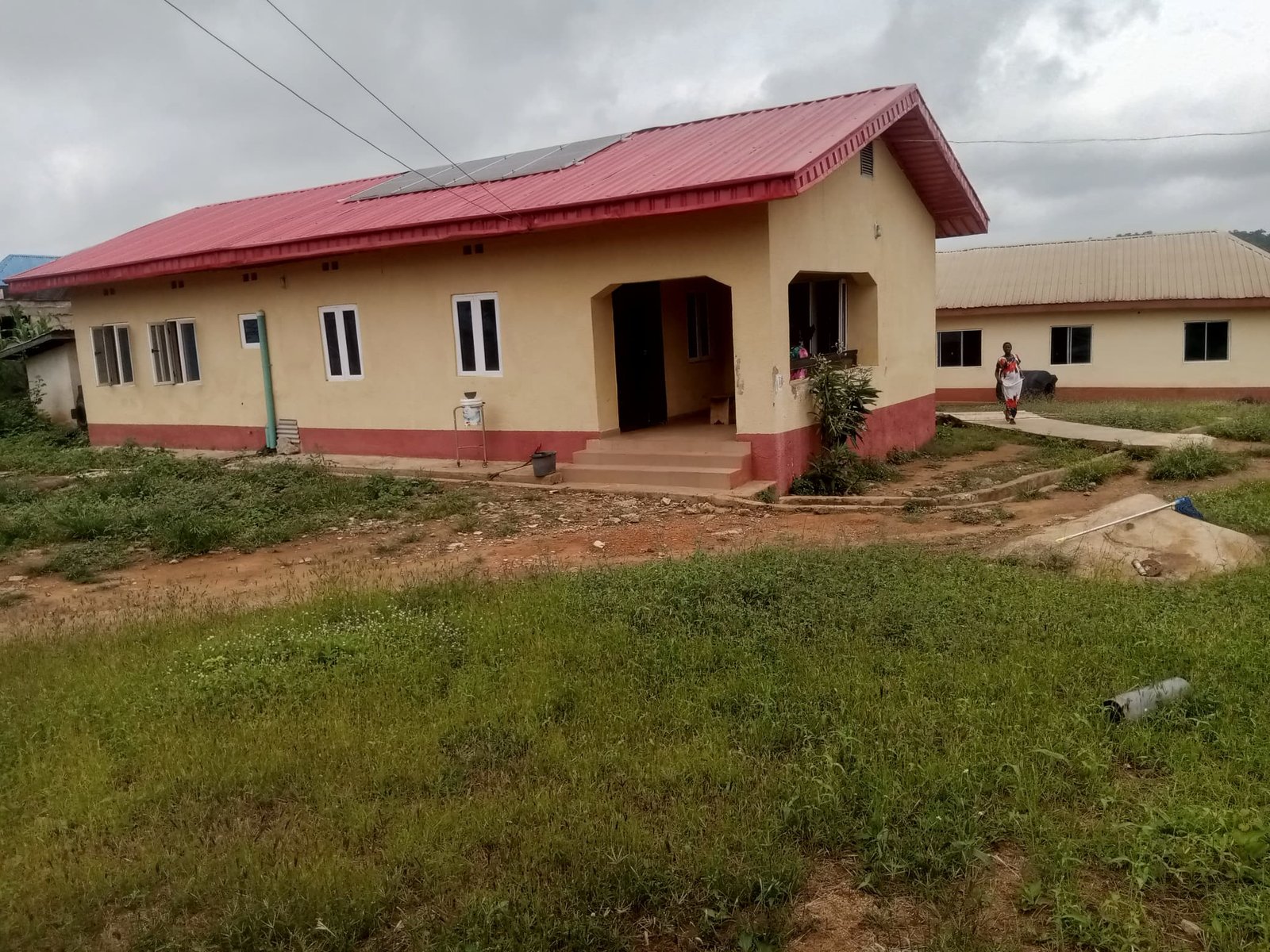
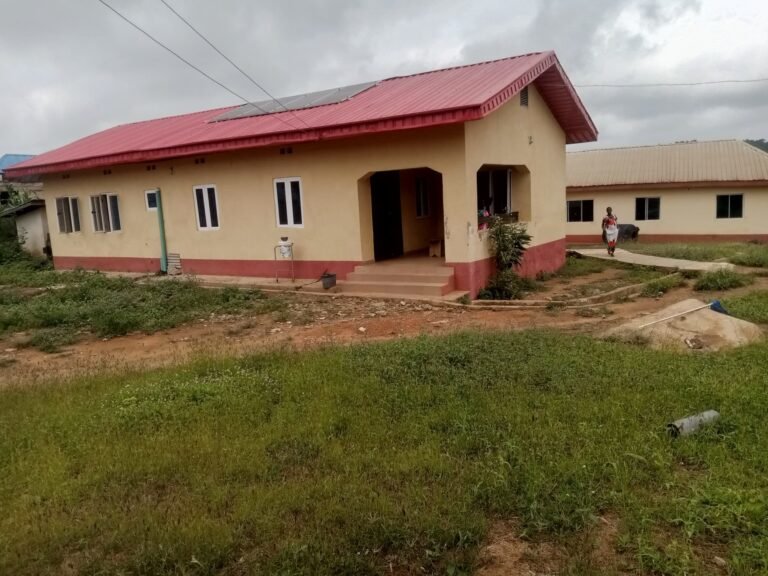
Ayede Primary Health Center. (Photo credit: Korede Abdullah/AHR)
LAGOS, Nigeria – Nigeria has channelled billions of naira into primary healthcare, yet many communities continue to face facilities without adequate medicines, equipment and personnel, while some revitalisation projects remain unfinished or unusable. In this report, Korede Abdullah examines the gap between Nigeria’s primary healthcare spending and the services available to patients, uncovering troubling project delays, persistent facility shortages and growing demands for transparency and accountability.
Billions Disbursed, But Only 29.3% Meet the Benchmark
For millions of Nigerians, a primary healthcare centre (PHC) is the first, and sometimes only, point of contact with the health system. Its ability to provide maternity care, childhood immunisation, essential medicines and timely referrals can determine whether patients receive the treatment they need.
Yet an assessment of 290 PHCs across six states suggests that significant gaps remain between investment and functionality. The assessment, conducted by Orodata Science in collaboration with Africa Data Hub, found that only 85 facilities, representing 29.3 per cent, met the benchmark for revitalisation. The remaining 205, or 70.7 per cent, fell short.
The assessment covered Abia, Benue, Cross River, Kano, Osun and Taraba. Investigators examined building conditions, equipment, staffing, electricity, water supply, accessibility and the capacity to provide essential healthcare services.
These indicators go beyond the appearance of a building. They help determine whether a pregnant woman can access appropriate maternity care, whether a child can receive scheduled immunisation and whether a sick person can obtain treatment without travelling long distances. The findings raise a critical question: why are so many facilities still falling short when billions of naira have been committed to strengthening primary healthcare?
Where the Billions Are Going
One of Nigeria’s principal mechanisms for financing primary healthcare is the Basic Health Care Provision Fund (BHCPF), established under the National Health Act of 2014 to support essential services, strengthen PHCs and improve access to affordable healthcare.
The fund is designed to bring basic services closer to communities, particularly people who cannot afford expensive hospital bills. However, it operates through several national gateways, each with distinct responsibilities.
The National Primary Health Care Development Agency (NPHCDA) supports PHC revitalisation, essential medicines and supplies, workforce support, maternal and child healthcare, and community outreach. The National Health Insurance Authority (NHIA) manages the health insurance gateway, while the Nigeria Centre for Disease Control and Prevention (NCDC) and National Emergency Medical Treatment Committee (NEMTC) oversee public health and emergency medical functions, respectively.
The entire fund, therefore, is not dedicated solely to constructing or renovating health centres. Figures published by the NPHCDA and gathered by Africa Health Report indicate that ₦50.8 billion was disbursed to 8,309 PHCs between 2023 and mid-2025, including ₦12.4 billion in the first half of 2025.
The agency also reported that 2,341 facilities had been upgraded to Level 2 standards under BHCPF funding. However, reported upgrades are not the same as independently verified evidence that facilities are fully functional.
A separate 2024 health-sector report put cumulative BHCPF disbursements at approximately ₦138 billion, with ₦109.6 billion released as of October 2024. The report also identified ₦125.74 billion as the BHCPF component included in the federal health-sector budget.
These figures cover different reporting periods and stages of financial reporting. They should not be directly combined without verification against official records. Nor should a budget allocation be mistaken for money already spent on renovations.
The distinctions are important. An allocation is not a release; a release is not necessarily a disbursement to a facility; and a disbursement does not prove that funds were used effectively. The more consequential question is what these resources have delivered—and whether the facilities meant to benefit from them can provide the services patients need.
Unfinished Projects, Defective Buildings
The Orodata assessment identified facilities where construction or renovation had not started, had stalled or been abandoned, or had reportedly been completed but remained locked or unused.
Its breakdown recorded 153 facilities with completed work, 41 with work ongoing, 17 where work had not started, 21 where projects were stalled or abandoned, and five completed facilities reportedly locked or unused.
The figures point to a distinction that matters to patients: a project recorded as completed is not necessarily a functioning health centre.
The assessment found visible defects in 73 of the 153 facilities recorded as completed. The findings raise questions about construction quality, contractor performance, supervision and the inspections conducted before projects were certified as finished.
A building may look improved from the outside while defects compromise its usefulness and durability.
The assessment also found that no reason was provided for delays in 14 of the 21 stalled or abandoned projects. Five were reportedly abandoned by contractors, while one case was attributed to funding delays.
That leaves important questions unanswered. Who was responsible for the delays? Were contractors paid? Were penalties imposed where contractual obligations were breached? What plans exist to complete the work?
The findings do not, by themselves, establish that public money was stolen or misappropriated. They do, however, justify closer scrutiny of contracts, payment records, inspection reports, completion certificates and the actions of agencies responsible for supervising the projects.
Authorities should disclose how much each contractor received, the work covered by each contract, the original completion date, the reasons for delays and any corrective action taken.
Without that information, communities cannot easily establish why projects remain unfinished, defective or unusable—or who must answer for the failure to deliver them.
A Renovated Building Cannot Treat a Patient
Construction is only part of the problem. A PHC may have a new roof and freshly painted walls but still struggle to provide adequate care without essential medicines, functional equipment, electricity, clean water and trained personnel.
The NPHCDA’s Level 2 standards require facilities to provide essential primary and maternal healthcare services supported by appropriate infrastructure, skilled birth attendants, laboratory services, essential medicines and basic utilities.
Yet the Orodata assessment found significant gaps in the conditions needed to deliver these services. Only 22 of the 290 facilities assessed had functional ambulances, potentially limiting emergency transport and referral capacity at the centres concerned.
When patients require care beyond a facility’s capabilities, safe and timely transportation can be crucial.
For rural and underserved communities, inadequate services can mean longer journeys, additional transport costs and delays in receiving treatment. Pregnant women, newborns, children requiring immunisation and patients needing urgent referrals may face particular difficulties.
Families already struggling with rising living costs may also have to pay more to obtain care elsewhere.
The assessment does not establish that the identified deficiencies directly caused particular deaths or adverse clinical outcomes. However, it underscores why revitalisation must be measured by the services available to patients, not simply by changes to buildings.
Who Must Account for the Money?
Nigeria’s primary healthcare financing system involves several levels of government and implementing institutions.
At the federal level, funding is appropriated to the BHCPF, while national gateways administer resources according to their respective responsibilities. Official BHCPF guidance indicates that funds pass through the relevant gateways to state primary healthcare boards and state social health insurance agencies, supporting approved interventions at local government and facility levels.
Beyond the BHCPF, PHC revitalisation may receive support through other federal and state funding channels, including projects implemented by relevant ministries, departments and agencies. State primary healthcare boards, local governments and development partners may also contribute.
This arrangement makes it essential to trace each transaction separately. A federal allocation is not the same as a payment to a contractor, a transfer to a state agency or money received and spent by an individual health centre.
To establish what happened to the funds, the relevant authorities should publish project-level records showing the original budget, approved contract sum, amounts released and paid, contractor’s name, completion date, inspection findings and current operational status.
Such disclosures would help journalists, auditors, civil society organisations and communities compare financial records with the condition of facilities and the services they provide.
Without accessible, verifiable information, it remains difficult to determine whether implementation failures resulted from delayed releases, poor supervision, defective construction, inadequate planning or other factors.
Lagos PHC Board Chief Calls for Transparency
The Permanent Secretary of the Lagos State Primary Health Care Board, Dr Ibrahim Akinwunmi Mustafa, has called for more efficient fund management, transparency and strict accountability to address financing gaps affecting PHCs across Nigeria.
Mustafa said closing the funding gap required moving beyond budgetary allocations to ensure that resources translated into functional facilities, adequate medical supplies, improved working conditions for health workers and accessible services.
“The critical issue is not just how much money is allocated, but whether the resources are deployed effectively to improve healthcare delivery,” he said.
He stressed the need for operational plans with measurable targets, clear timelines and defined responsibilities. Investments, he added, should reflect communities’ actual needs, including medicine shortages, inadequate equipment, poor infrastructure and difficulties retaining qualified health workers.
Mustafa also called for reliable procurement and distribution systems for essential medicines, alongside better working conditions, adequate equipment and professional development opportunities to improve staff recruitment and retention.
He said stronger monitoring was necessary to establish whether public funds had been used for their intended purposes and whether investments had improved services.
“Regular audits, performance monitoring and independent verification are essential,” he said.
For Mustafa, accountability must extend beyond evidence that money has been spent. Authorities must establish whether projects meet required standards and whether the intended communities benefit.
“It is not enough to establish that money was spent; we must also determine what was achieved with the resources and whether the intended communities benefited,” he said.
Local Governments Must Meet Their Funding Obligations
Mustafa said local government chairmen must fulfil their counterpart funding obligations and work with state and federal authorities to sustain primary healthcare delivery. “Primary healthcare financing should be approached as a shared responsibility rather than a burden placed on one level of government,” he said.
He described the BHCPF as an important mechanism for strengthening primary healthcare, but said its effectiveness depended on proper implementation, timely disbursement, prudent use and accountability. “The fund should complement other available resources and support clearly identified priorities at the facility level. We must ensure that the money reaches the intended beneficiaries and addresses the specific challenges confronting PHCs,” he said.
Mustafa also advocated combining funding sources, including Lagos State’s Ilera Eko health insurance scheme and appropriate partnerships with development institutions such as the World Bank.
He said a clear financing framework should define the purpose of each funding stream, how resources complement one another and how their impact would be measured. This, he argued, would help authorities identify funding gaps, avoid duplication and sustain essential services beyond one-off projects.
He further called for stronger coordination among relevant agencies to improve monitoring and ensure that available resources produce measurable results.
Ayede-Ekiti Shows What Revitalisation Still Lacks
National funding figures and project assessments reveal the scale of the challenge. At individual health centres, the consequences are more tangible: infrastructure may improve while critical gaps in equipment, medicines and staffing remain.
Mrs. Adijat Balogun, a senior community health worker and head of Ayede-Ekiti Primary Health Centre in Ekiti State, said the facility had experienced improvements following the construction of a solar-powered borehole, renovation of its building and installation of a 5kW solar inverter system.
Speaking exclusively to Africa Health Report, Balogun said the interventions had improved access to water and electricity, creating a better environment for healthcare workers and patients.
But the improvements have not eliminated the centre’s outstanding needs. “Like Oliver Twist, we are still asking for more,” she said.
Balogun said the facility needed more medical equipment, essential medicines, healthcare consumables and personnel to strengthen routine consultations, maternal and child healthcare, immunisation and emergency services.
She also highlighted the need for improved maternity equipment, diagnostic facilities, infection prevention and control materials, and sustained funding for daily operations and maintenance. “Having a good building, water and electricity is important, but we also need the equipment, medicines and personnel to provide quality healthcare to our patients,” she said.
She urged government authorities to sustain the gains achieved through revitalisation while addressing the facility’s remaining needs. “We appreciate the improvements that have been made, but we need more support to serve our people better,” she said.
Her account illustrates the difference between improving infrastructure and ensuring that a facility can provide comprehensive, reliable healthcare. The borehole and inverter can improve basic operations, but their benefits remain limited if essential medicines, diagnostic equipment or sufficient personnel are unavailable.
Community Leaders Want More Than Renovations
Opeyemi Haruna, a community leader in Ayede-Ekiti, also called for more medical equipment, essential medicines and qualified health workers at the town’s PHC.
Haruna welcomed the renovated building, solar-powered borehole and 5kW solar inverter system, describing them as important improvements. However, he said infrastructure must be accompanied by adequate supplies and personnel. “We appreciate the improvements made to our health centre, particularly the renovated building, solar-powered borehole and inverter. These are important developments for our community, but we need the government to do more,” he said.
He urged the authorities to provide diagnostic tools, maternity equipment, medicines and other supplies needed for routine consultations, antenatal care, immunisation and emergency treatment. “Revitalising a health centre should not stop at renovating the building. The facility must have the equipment, drugs and qualified health workers needed to attend to patients,” he said.
Haruna also called for regular funding and proper maintenance to preserve the improvements, stressing that residents should not have to travel long distances for services that ought to be available in their community. “We want a health centre that is fully functional and capable of meeting the healthcare needs of our people. The government should sustain the improvements and address the remaining challenges,” he said.
His concerns echo Balogun’s account: infrastructure upgrades are important, but they cannot substitute for the medicines, equipment, personnel and operational funding required to deliver care.
The Real Test of Nigeria’s PHC Spending
The findings from 290 facilities, combined with the concerns of health administrators and community representatives, present a critical test of whether Nigeria’s primary healthcare spending is delivering value for money.
Official figures indicate substantial financial commitments and reported disbursements to thousands of facilities. Yet the Orodata assessment found significant functionality gaps among the centres examined, while workers and community leaders in Ayede-Ekiti say more equipment, medicines, personnel and operational support are still needed.
These findings do not prove that all the money was wasted or that every funded facility is failing. They do, however, show why expenditure figures alone cannot establish whether public investment is producing the intended results.
Federal and state governments must disclose how much was allocated and spent on the 290 facilities, how much each centre received, what contractors were paid and what additional resources are required to make the facilities functional.
Authorities should also publish verifiable records of completed repairs, defective projects, abandoned works, equipment supplied, staff deployed and services available at each facility. Such disclosures would allow the public to compare spending with tangible improvements, identify implementation failures and establish where corrective action is required.
The challenge is not simply to spend more. It is to ensure that every stage of the funding process—from allocation and disbursement to procurement, construction, staffing and maintenance—contributes to accessible, reliable healthcare.
Ultimately, Nigeria’s primary healthcare spending should be judged not by the billions announced, the number of buildings listed as renovated or the volume of money reported as disbursed, but by what happens when a patient walks through the door.
Can a pregnant woman receive appropriate care? Are essential medicines available? Are trained health workers present? Can the facility provide the services it is expected to deliver?
Answering these questions requires more than funding announcements and project completion reports. It requires transparent financial records, independent verification, functional facilities and clear evidence that patients are receiving better care.
Until governments can demonstrate those results, the gap between healthcare spending and healthcare delivered will remain unresolved.
The real measure of Nigeria’s primary healthcare investment is not how much money goes in, but whether patients get the care they came for.
About the Author


 Mirian Gom