The 90m Question: How Nigeria’s Economic Crisis Is Delivering Its Bleakest Christmas in a Decade
 Oluwatobi Adu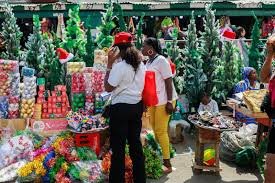
(By Oluwatobi Adu and Chukwu Obinna)
ABUJA, Nigeria – On a humid December afternoon in Abuja, Garki Market should be roaring. In a normal year, Christmas brings a frenzy of colour and commerce: bolts of bright fabric unfurled for last-minute outfits, butchers shouting prices over slabs of meat, the air thick with anticipation and the promise of celebration. Instead, there is a strange stillness. The stalls are full, but the aisles are bare. This is the quiet that comes when poverty deepens faster than hope.
As Nigeria approaches the festive season, millions of families are confronting what may be the poorest Christmas the country has experienced in more than a decade. Inflation has stripped households of their purchasing power, wages have failed to keep pace with prices, and insecurity has turned travel into a calculated risk. Even where prices have dipped, demand has collapsed. The result is a Christmas defined less by celebration than by survival. In this report, by Oluwatobi Adu and Chukwu Obinna, combines human stories from one of Abuja’s busiest markets with development data to answer a stark question: what does Christmas mean in a country where poverty is becoming the norm rather than the exception?
The World Bank projects that by 2027, as many as 90 million Nigerians could be living in extreme poverty. For traders and shoppers in Garki Market, that future already feels present.
Markets Full, Buyers Missing
At the heart of Garki Market, Mr Emmanuel Oma has stacked his fabrics carefully, as he does every December. In previous years, this was the period that sustained him through slower months. This year, he says, the customers have vanished.
“Nah person wey chop belleful go come buy material or buy something for his children,” he told Africa Health Report.
Only those who can afford to eat properly, he explains, can think of buying clothes for Christmas. The rest simply pass by.
He compares the season bluntly with last year. “To be very sincere with you things are very difficult in this country, we just turn security over to our goods, compared with last year is better than this year.”
For many traders, Christmas is no longer a peak but a pause — a period of waiting in hope that never quite arrives.
Vivian, a fashion designer who also trades at Garki Market, says the picture is uneven. Some food prices have fallen compared to 2024, but the cost of fabrics and sewing materials has risen sharply, squeezing both designers and customers. “The economy is not friendly with everyone. Last year is better than this year,” she said.
Orders that would normally flood in by early December have not materialised. Vivian blames not only the economy, but fear. Rampant insecurity has made many Nigerians reluctant to travel to their villages for the holidays, reducing the demand for new clothes traditionally worn to church services and family gatherings.
Insecurity’s Hidden Tax on Christmas
For food sellers, the problem is not always demand, but supply — and the insecurity that throttles it.
A meat seller popularly known as Mr Prophet told Africa Health Report that banditry and violence have disrupted the movement of livestock and food items, driving up costs even when buyers are scarce. “It is the insecurity that is affecting the sales, it has made prices go up, because people that normally sell 200 cows, fish and meat to us, now bring few to the market to sell to us.”
With fewer animals reaching the markets, traders pay more per unit, while customers — already stretched — buy less or nothing at all. The festive abundance Nigerians associate with Christmas tables has been replaced by cautious calculations.
Mr Danjuma, another foodstuff seller in Garki Market, confirmed that some staples are cheaper than last Christmas. Yet the reduction has not translated into sales. “People don’t have money,” he said, urging the government to tackle insecurity head-on. For him, insecurity is not an abstract policy issue but a daily barrier to trade and livelihood.
A Season of Empty Pockets and Empty Roads
Beyond the markets, the economic strain is reshaping how Nigerians experience December. Many families have abandoned plans to travel home, wary of kidnappings and attacks on highways. Transport costs remain high, and the risk often outweighs the reward.
Those who stay behind say Christmas extras — new clothes, extra food, small gifts — are luxuries they cannot justify. The focus has narrowed to essentials: rent, transport to work, and at least one meal a day.
Development economists warn that this shift has long-term implications. When festive seasons no longer stimulate spending, small traders lose the buffer that helps them survive lean months. Communities that once relied on seasonal circulation of money face deeper stagnation.
The World Bank’s poverty projections underline the scale of the challenge. Nigeria’s economic shocks — from naira depreciation to fuel price adjustments and persistent inflation — have combined to erode household resilience. Christmas, once a release valve, now exposes the fragility beneath.
Faith, Resilience and Quiet Adaptation
Yet even in this bleakness, Nigerians adapt. Churches still prepare for services, though offerings are thinner. Families improvise smaller meals, stretch ingredients, and lean on shared faith rather than shared feasts.
For traders like Mr Oma, the hope is not for profit but for endurance. Unsold goods are packed away carefully, guarded more closely than ever, waiting for a future season that might be kinder.
But resilience, analysts caution, has limits. Without policies that restore purchasing power, stabilise prices, and secure transport routes, adaptation risks turning into exhaustion.
A National Wake-Up Call
What is unfolding in Garki Market is not an isolated anomaly. From Lagos to Kano, Port Harcourt to Enugu, traders tell similar stories: stocked stalls, quiet aisles, shrinking margins. Christmas has become a mirror reflecting Nigeria’s widening inequality and deepening poverty.
The message from this festive season is stark. Economic recovery cannot be measured only in macroeconomic indicators. It must be felt in markets, kitchens, and journeys home.
As bells ring and carols play, many Nigerians are listening instead to the sound of empty tills. This Christmas, the celebration is subdued, the joy rationed, and the questions urgent.
Without decisive action to curb insecurity, tame inflation, and protect the poorest households, Nigeria risks normalising hardship — not just at Christmas, but year-round.
For now, the country waits. And in markets like Garki, traders watch the days slip by, hoping that next December will tell a different story.
About the Author

 Otamere Gladness
 Koko Maxwella
 Edino Chubiyo Cornelius