Korede Abdullah
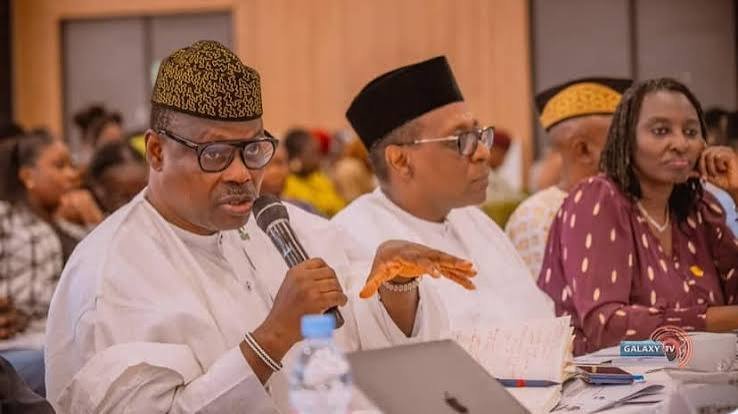
ABUJA, Nigeria — Nigeria’s failure to qualify for the 2026 FIFA World Cup was widely seen as a sporting disappointment. But the country’s biggest loss may have occurred far from the football pitch. Beyond missing the tournament, Nigeria forfeited millions of dollars in guaranteed FIFA earnings, lost opportunities in tourism, sponsorship, broadcasting, sports medicine and global branding at a time when the World Cup had become a multi-billion-dollar global industry. In this report, Korede Abdullah examines what Nigeria’s absence really cost, why the losses extended beyond football, and why qualifying for future World Cups should be treated as an economic development priority rather than merely a sporting ambition.
When the World Cup Becomes Big Business
The FIFA World Cup has evolved into far more than the world’s biggest football tournament. It is now one of the largest sporting economies on earth.
The 2026 edition, jointly hosted by the United States, Canada and Mexico, expanded from 32 to 48 teams and from 64 to 104 matches, creating unprecedented commercial opportunities for governments, broadcasters, sponsors, airlines, hotels, technology companies and healthcare providers.
Industry estimates put the tournament’s total economic value at between $13 billion and $15 billion, making it the most commercially successful World Cup in history.
Broadcast and digital media rights alone generated about $4.2 billion, while sponsorships, hospitality, licensing, ticket sales and merchandise accounted for billions more.
For participating nations, qualification was no longer simply about chasing a trophy—it became an economic opportunity.
Nigeria watched from home.
The Millions Nigeria Never Earned
Every one of the 48 qualified countries received guaranteed FIFA payments before a ball was kicked.
Participating nations collected: $10 million for reaching the group stage, $2.5 million for tournament preparation and logistics. That meant Nigeria forfeited at least $12.5 million by failing to qualify, countries advancing further earned substantially more, world champions Spain received $51 million, runners-up Argentina earned $34 million, semi-finalists collected between $28 million and $30 million, quarterfinalists received $20 million, and round of 16 teams earned $16 million.
For Nigeria, even a modest run beyond the group stage could have generated tens of millions of dollars for football development.
The Business Nigeria Missed
Every World Cup stimulates economic activity across multiple industries.
Countries that qualify enjoy increased:
Tourism promotion
Airline traffic
Hotel occupancy
Advertising campaigns
Sports merchandise sales
Broadcast revenues
Foreign investment opportunities
National branding
Major brands launch nationwide promotions around national teams.
Football jerseys become global products.
International broadcasters repeatedly showcase participating countries before billions of viewers.
Nigeria missed all of it.
Local businesses lost opportunities to align products with the Super Eagles, while Nigerian brands forfeited one of the world’s biggest marketing platforms.
Football’s Hidden Healthcare Economy
One of the least recognised casualties of Nigeria’s absence lies within healthcare.
Sports physician Dr Akin Iyanda told Africa Health Report that elite football today depends on an entire ecosystem of medical professionals.
“Modern football is sustained not only by players and coaches but also by sports physicians, physiotherapists, orthopaedic specialists, nutritionists, psychologists and rehabilitation experts.”
According to him, major tournaments expose medical professionals to cutting-edge injury management technologies, rehabilitation techniques and performance science.
Many of those innovations later improve general healthcare.
“Sports medicine has become one of the fastest-growing branches of medicine. Exposure at elite competitions benefits accident victims, elderly patients and rehabilitation medicine back home.”
Nigeria’s failure to qualify therefore denied local specialists valuable international experience and collaboration.
Africa Benefited While Nigeria Watched
The expansion of the World Cup to 48 teams increased Africa’s representation.
More African nations qualified.
More football associations accessed FIFA revenues.
More players attracted international transfers.
More countries strengthened youth academies, coaching systems and football infrastructure.
Nigeria—traditionally one of Africa’s football giants—was absent from those gains.
Football Is Also Soft Power
Modern football has become an instrument of diplomacy.
Countries use the World Cup to showcase culture, tourism, innovation and national identity before billions of viewers.
Public affairs analyst Yahaya Balogun believes Nigeria underestimated this opportunity.
“People focus on the $12.5 million participation fee, but the real loss was global visibility, investment opportunities and national branding.”
According to him, every World Cup appearance functions as an international advertising campaign that many countries could never afford to purchase.
“The World Cup creates opportunities for airlines, hotels, sportswear companies, digital businesses and investors.”
Why Qualification Is Now an Economic Strategy
Balogun argues that Nigeria possesses enough football talent but lacks consistent planning.
“Nigeria has never lacked talent. What has been missing is efficient football administration, grassroots investment and long-term planning.”
He believes future success depends on sustained investment in:
Grassroots football
Youth academies
Coaching education
Sports science
Sports medicine
Transparent football governance
Without those reforms, Nigeria risks repeatedly missing one of the world’s fastest-growing economic industries.
Beyond Football: Jobs, Investment and Innovation
The World Cup economy now extends into virtually every sector.
Technology firms provide data analytics and fan engagement platforms.
Banks finance sponsorships.
Telecommunication companies create digital experiences.
Insurance firms underwrite major sporting events.
Hospitality businesses experience record demand.
Healthcare professionals gain global exposure.
Countries that qualify benefit from this interconnected ecosystem.
Those that do not are largely excluded.
The Real Cost of Missing Out
Nigeria’s absence from the 2026 FIFA World Cup was not simply another football disappointment.
It represented lost foreign exchange, reduced investment opportunities, weaker tourism promotion, diminished global visibility and missed professional development across sectors ranging from sports medicine to broadcasting.
As future World Cups become even bigger commercial enterprises, the cost of failing to qualify will continue to rise.
Beyond Football: The Next World Cup Starts Now
The greatest cost of missing the 2026 FIFA World Cup was not simply the absence of the Super Eagles on football’s biggest stage. It was the loss of economic opportunities that reached far beyond the pitch—millions of dollars in FIFA revenue, global exposure for Nigerian businesses, investment prospects, tourism, sports medicine, and jobs across the wider sports economy. As the commercial value of future World Cups continues to grow, Nigeria can no longer afford to view qualification as only a football objective. It is an economic, healthcare and national branding imperative. The next World Cup campaign has already begun, and the real challenge is whether Nigeria will build the institutions, talent pipeline and governance needed to ensure the country is no longer watching from the sidelines while others reap the rewards.
About the Author


 Mirian Gom