 Mirian Gom
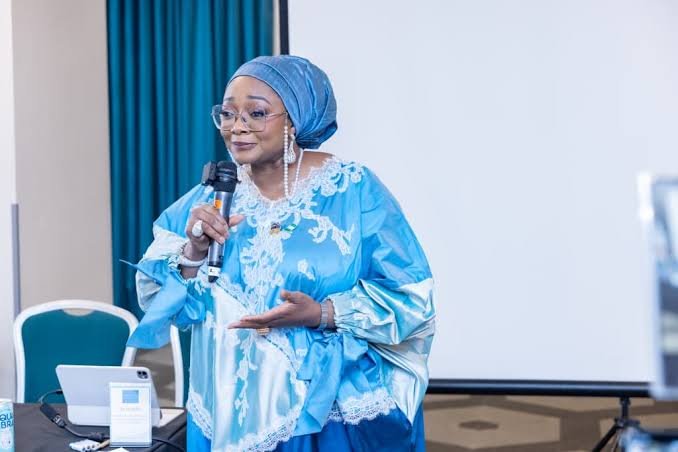
Minister of Women Affairs and Social Development, Imaan Sulaiman-Ibrahim
ABUJA, Nigeria – Nearly half of Nigerian women aged 15 to 49 used cloth during their last menstrual period, while disposable sanitary pad use in rural communities stood at just 32 per cent, highlighting deep inequalities the Federal Government’s new menstrual health policy seeks to address.
The Minister of Women Affairs and Social Development, Imaan Sulaiman-Ibrahim, disclosed this while launching the National Policy on Menstrual Health and Hygiene Management 2026–2030 at the Second National Summit on Menstrual Health and Hygiene Management in Abuja.
The policy targets more than 50 million women and girls of reproductive age, with a focus on affordable menstrual products, improved sanitation facilities and access to menstrual health education. Citing Nigeria’s 2024 Demographic and Health Survey, Sulaiman-Ibrahim said 46 per cent of women aged 15 to 49 used cloth during their last menstrual period, compared with 54 per cent who used disposable sanitary pads.
She said disposable pad use was significantly higher in urban areas, at 76 per cent, compared with 32 per cent in rural communities. Income also influenced access, with only 10 per cent of women in the lowest income group using disposable pads, against 90 per cent in the highest.
The minister also highlighted poor sanitation facilities in schools as a major barrier to menstrual hygiene. Citing UNICEF’s 2024 Situation Analysis, she said only eight per cent of schools had separate toilet compartments for girls with menstrual hygiene provisions, while three per cent provided basic gender-sensitive water, sanitation and hygiene services.
She added that girls in underserved communities could lose up to 20 per cent of their school year because of menstrual health challenges. “No girl should forfeit her education to a natural biological cycle, no woman should suffer indignity due to poverty or conflict,” she said.
Sulaiman-Ibrahim identified agrarian communities in Sokoto, Zamfara and Yobe, riverine settlements in Bayelsa and Delta, and underserved areas in Cross River, Ebonyi, Kogi and Nasarawa as priority locations for intervention.
The Federal Executive Council approved the policy on October 28, 2026, alongside the National Care Policy and Implementation Plan 2026–2030 and the National Costed Action Plan on Ending Violence Against Children.
Developed with Population Services International, WaterAid Nigeria and the Technical Working Group on Menstrual Health and Hygiene Management, the policy followed consultations across Nigeria’s six geopolitical zones. Beyond improving access to sanitary products, the government plans to promote local manufacturing, create jobs and expand women’s economic participation.
The minister said the National Policy on Affirmative Procurement would support women-owned businesses by linking public procurement of sanitary products and water, sanitation and hygiene infrastructure to women-led enterprises. She also identified tax waivers for locally manufactured sanitary towels and targeted financing as measures to strengthen domestic production.
About the Author


 Vincent Ndu

 Hope Ajayi
 Oluwatobi Adu