 Oluwatobi Adu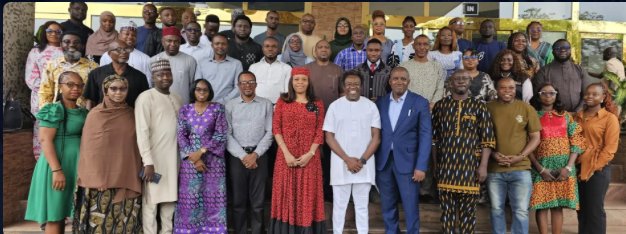
ABUJA, Nigeria – Nigeria’s push to expand health insurance coverage faces a major capacity challenge, with only 20% of staff in participating State Social Health Insurance Agencies receiving formal training in health financing, a WHO-supported assessment finds.
The Nigeria health insurance skills gap emerges as the country seeks to reduce heavy reliance on out-of-pocket payments and move closer to universal health coverage.
The findings follow a four-day health financing training organised by WHO Nigeria in partnership with the National Health Insurance Authority (NHIA) and funded by the Global Fund.
The training, held in Abuja from May 19 to 22, 2026, brought together 49 technical and management staff from the NHIA and State Social Health Insurance Agencies in Anambra, Ebonyi, Gombe, Kwara and Lagos states.
According to the assessment, 100% of respondents identified a strong need for health financing training, highlighting a significant capacity gap within institutions responsible for implementing health insurance schemes.
The gap is particularly important as Nigeria continues to grapple with high healthcare costs. In 2023, household out-of-pocket spending accounted for about 72% of current health expenditure in Nigeria, according to the World Health Organization Global Health Expenditure Database.
Dr Divine Igwe, Executive Secretary of the Ebonyi State Health Insurance Agency, says the training provided an opportunity to strengthen the capacity of state agencies.
“These opportunities are rare for many of our staff,” Igwe says. “The knowledge we gain here will help us strengthen health insurance implementation in our states and improve access to care for our people.”
The training covered health fund mobilisation and management, strategic purchasing of health services, value for money and evidence-based financing decisions.
More than 20 experts from WHO Nigeria, the WHO Regional Office for Africa, the Gates Foundation, the Centre for Health Economics and Development, NHIA, the Federal Ministry of Health and Social Welfare and the Private Sector Health Alliance of Nigeria facilitated the sessions.
“Knowledge must lead to action and impact on the population we serve,” says Dr Francis Ukwuije, WHO Nigeria health financing technical officer.
Participants’ average assessment score increased from 58% before the training to 61% afterwards, while 64% improved their individual scores.
NHIA Director General Dr Kelechi Ohiri, represented by Aliyu Mohammed, says the results demonstrate the value of institutional collaboration.
“The progress we have made shows what is possible when people and institutions work together for the common good,” he says.
WHO says sustained investment in health financing skills will be essential to expanding financial protection for women, children, people with disabilities, rural communities and other vulnerable populations.
Representing the WHO Representative in Nigeria, Dr Mary Nana Ama Brantuo says strengthening institutions and their workforce is central to achieving universal health coverage.
“This training is part of a broader effort to strengthen the systems that make universal health coverage possible in Nigeria,” she says.
About the Author

 Mirian Gom
 Korede Abdullah