
 Korede Abdullah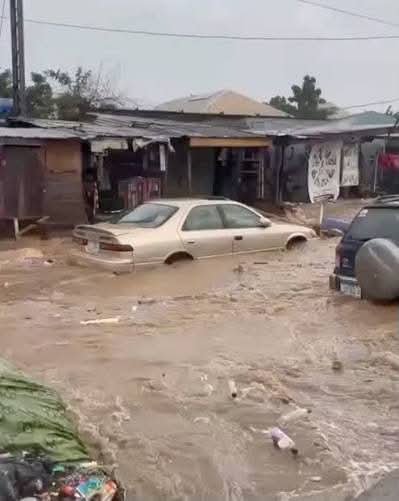
LAGOS, Nigeria – The Lagos State Government has approved the immediate dredging and maintenance of 28 additional primary drainage channels following widespread Lagos flash floods that inundate roads and communities after days of heavy rainfall across Nigeria’s commercial capital.
The announcement comes as prolonged rainfall on Tuesday triggers flooding in several parts of the state, disrupting movement and leaving roads submerged in areas including Victoria Island, Lekki, Ikeja, Gbagada, Mushin and Mafoluku.
Commissioner for the Environment and Water Resources, Tokunbo Wahab, says Governor Babajide Sanwo-Olu approves the emergency intervention to strengthen the state’s flood control infrastructure and reduce the impact of future downpours.
He urges residents to remain calm, describing the flooding as the result of an extreme weather event that produces an unusually high volume of rainfall within a short period.
“The rainfalls were an extreme weather event that produced an unusually high volume of water within a short period, overwhelming drainage channels in some locations and resulting in temporary flooding across parts of the state,” Wahab says.
According to the commissioner, the weather conditions are not unique to Lagos, noting that similar intense rainfall has recently affected several African countries as well as parts of North America.
The state government says the additional dredging forms part of its broader flood mitigation strategy, which includes drainage construction, channelisation, desilting and continuous maintenance of waterways to improve stormwater management.
Wahab says government investments alone cannot eliminate flooding, urging residents to support ongoing efforts by protecting drainage infrastructure.
He warns against dumping refuse into drains and waterways, illegal reclamation of wetlands and construction on drainage alignments, saying such activities obstruct the natural flow of stormwater and increase flood risks.
“Residents also have an important role to play in reducing the impact of flooding,” he says.
About the Author


 Mirian Gom
 Oluwatobi Adu