
 Oluwatobi Adu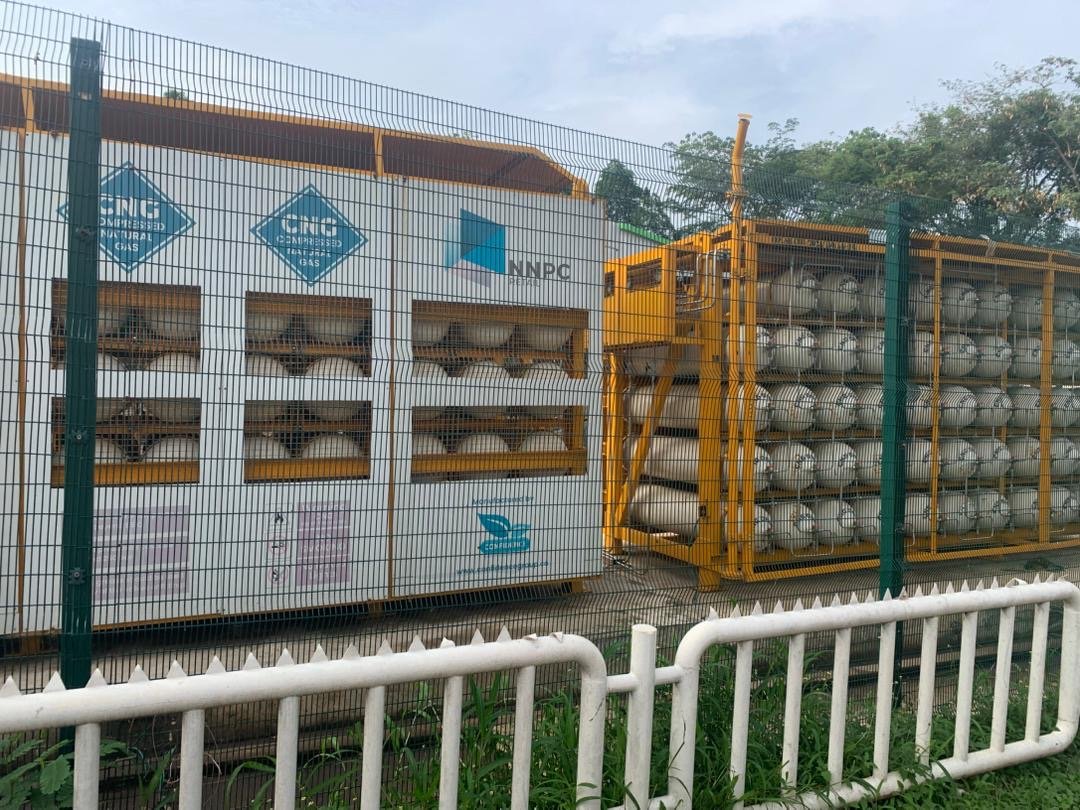
Vehicles undergoing conversion at the NNPC Conversion and Training Centre, Wuse Zone 3, Abuja, during a visit by Africa Health Report on May 27, 2026. (Photo credit: Otamere Gladness/AHR)
(By Oluwatobi Adu and Otamere Gladness)
ABUJA, Nigeria – When the Federal Government removed fuel subsidies in 2023, transportation costs surged across Nigeria, placing additional pressure on households already grappling with rising living expenses.
In response, the administration of President Bola Tinubu launched several interventions aimed at easing the burden on citizens, including the Presidential Initiative on Compressed Natural Gas and Electric Vehicles (Pi-CNG & EV), which subsidises the conversion of petrol-powered vehicles to Compressed Natural Gas (CNG).
Nearly three years later, Africa Health Report took to the streets of Abuja to find out whether the initiative is making a difference and whether lower fuel costs are translating into more affordable transportation for residents.
Interviews with commercial drivers, technicians and conversion centre operators suggest that while CNG has significantly reduced fuel expenses for many drivers, its impact on transport fares remains mixed.
Drivers Report Lower Fuel Expenses
For many commercial drivers who have converted their vehicles, the biggest benefit of CNG is the reduction in daily operating costs.
Mr. Kelvin, a commercial driver who joined the programme in February 2026, said he was initially sceptical when government officials approached drivers to encourage participation.
“Most of us were not interested at first, but I decided to test it,” he told Africa Health Report.
According to him, the lower cost of gas compared to petrol has reduced the amount he spends on fueling his vehicle.
“CNG is cheaper. Many people are struggling financially, so sometimes I consider passengers because my fuel expenses have reduced,” he said.
Similarly, another commercial driver, Mr Jide, who converted his vehicle under a government-supported scheme in 2025, described the savings as substantial.
“I spend far less on fuel now than I did when I was using petrol. The difference is significant,” he said.
However, he noted that vehicle owners must pay close attention to maintenance requirements.
“The system works well, but you need to replace components such as plugs and coils from time to time,” he explained.
Has the Savings Reached Passengers?
While drivers consistently reported lower fuel costs, evidence of reduced transport fares was less clear.
Some drivers said the savings allow them to occasionally reduce charges for passengers or absorb fluctuations in operating expenses.
Mr Alfa Babatunde, who has used CNG for more than a year, said the technology has eased the financial pressure on drivers.
“No matter how you look at it, it is better than petrol. Sometimes I consider my customers when fixing prices,” he said.
However, transport fares in Abuja continue to be influenced by multiple factors beyond fuel prices, including vehicle maintenance costs, inflation, traffic conditions and spare parts expenses.
As a result, passengers may not always experience fare reductions that directly correspond with the lower cost of CNG.
Conversion Centres See Growing Interest
Operators of conversion centres say demand for the technology is increasing as motorists search for alternatives to expensive petrol.
At Adast Systems CNG Conversion Centre in Abuja, Manager Pupji Joel said the facility now handles more than 20 vehicle conversions monthly.
According to him, government subsidies have made conversion more affordable despite rising costs associated with imported equipment and logistics.
“The subsidy has helped many vehicle owners access the service at lower rates than would otherwise be possible,” he said.
Conversion costs vary depending on the vehicle type, engine configuration and cylinder capacity.
Safety and Technical Concerns
One of the concerns frequently raised by motorists is safety.
Technical Supervisor Ikechukwu Prince said extensive checks are carried out before and after installation to ensure vehicles meet safety standards.
“They are not tampering with the vehicle’s engine. The process involves installing additional components and ensuring everything is properly calibrated,” he explained.
The conversion process typically takes between 24 and 48 hours.
According to technicians interviewed, most complaints after installation are minor and often result from unfamiliarity with the new system rather than major technical defects.
However, some drivers acknowledged that poor installation could affect vehicle performance, highlighting the need for quality control and trained technicians.
Infrastructure Remains a Key Challenge
Despite growing acceptance of CNG, stakeholders said expanding refilling infrastructure remains critical to the success of the initiative.
Although government-backed stations currently offer CNG at significantly lower prices than petrol, access remains uneven in some areas, limiting convenience for motorists.
Industry operators argue that wider availability of refilling stations, sustained subsidies and public awareness campaigns will be necessary to encourage broader adoption.
Mixed Verdict, Clear Savings
Findings from Africa Health Report’s field assessment indicate that CNG is helping many commercial drivers reduce fuel expenses at a time of persistent economic hardship.
However, while drivers acknowledge the financial benefits, the impact on transportation costs for passengers is less straightforward, with fares continuing to be shaped by wider economic pressures.
As Nigeria accelerates its transition towards alternative energy sources, the experiences of Abuja drivers suggest that CNG is providing meaningful relief for operators, even as questions remain about how much of those savings are ultimately reaching commuters.
About the Author


 Mirian Gom


 Korede Abdullah