FG Plans ₦70bn Oral Health Investment as Nigeria Steps Up Fight Against Noma
 Mirian Gom
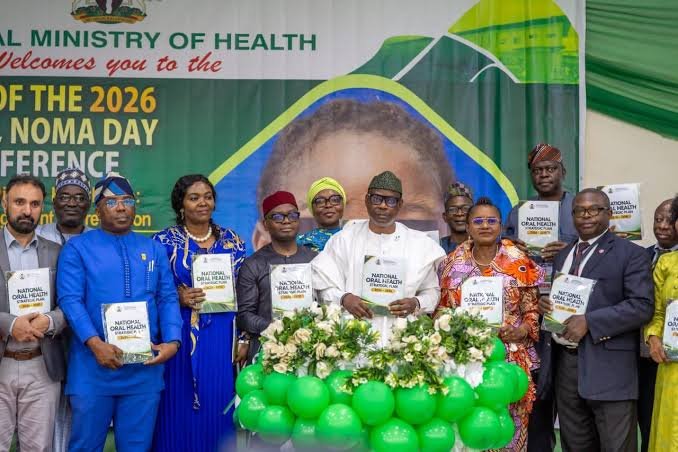
ABUJA, Nigeria – The Federal Government has announced plans to invest ₦70 billion in a five-year national oral health strategy, with a focus on improving access to dental services and strengthening Nigeria’s response to Noma, a severe disease that can destroy facial tissue and cause life-threatening complications.
The Minister of State for Health and Social Welfare, Dr Iziaq Salako, disclosed the proposed investment on Thursday in Sokoto during the 12th Biennial Scientific Conference and General Meetings of the Nigerian Association of Oral and Maxillofacial Surgeons (NAOMS).
The National Oral Health Strategic Plan is expected to cover 2026 to 2030 and address gaps in oral healthcare delivery across the country. Represented by the Medical Director of the Federal Neuro-Psychiatric Hospital, Kware, Dr Abubakar Baguda, Salako said the government had integrated Noma surveillance into the Integrated Disease Surveillance and Response system to improve early detection, reporting and response.
He said the surveillance initiative was particularly important in communities where malnutrition and limited access to healthcare increase children’s vulnerability to the disease. “Noma, as you are aware, is a disease of poverty, malnutrition, poor oral hygiene and weak health systems,” the minister said. He explained that the disease could begin as a gum infection in a malnourished child, particularly between the ages of two and six, before progressing rapidly and destroying tissues around the mouth and face.
According to Salako, children who survive advanced Noma may experience severe facial disfigurement and difficulties with eating, speaking and breathing, often requiring specialised reconstructive surgery and long-term support. He said Nigeria carries one of the highest Noma burdens globally, with cases particularly associated with Sokoto, Kebbi, Zamfara, Borno and other northern states.
The minister described the role of oral and maxillofacial surgeons as critical in managing advanced cases, while emphasising that early identification and prompt treatment could prevent the disease from progressing to severe stages. He said survivors with extensive tissue damage often require complex surgical procedures to restore essential functions and improve their quality of life.
Salako also said Nigeria’s advocacy contributed to the World Health Organisation’s recognition of Noma as a Neglected Tropical Disease in December 2023. He called for a coordinated national response that would move beyond isolated interventions to prioritise prevention, early detection, timely treatment, surgical rehabilitation and the social reintegration of survivors.
The conference, themed “Confronting Noma: The Role of Oral and Maxillofacial Surgeons,” began with free surgical operations for 30 indigent patients. The minister said the government remained committed to strengthening preventive, promotive, curative and rehabilitative oral healthcare services. However, the success of the proposed ₦70 billion strategy will depend on its funding arrangements, implementation framework and the availability of trained personnel and specialised facilities, particularly in communities with the greatest disease burden.
About the Author

 Vincent Ndu
 Oluwatobi Adu