Nigeria, Morocco Partner to Strengthen Weather Forecasts and Climate Early-Warning Systems
 Oluwatobi Adu
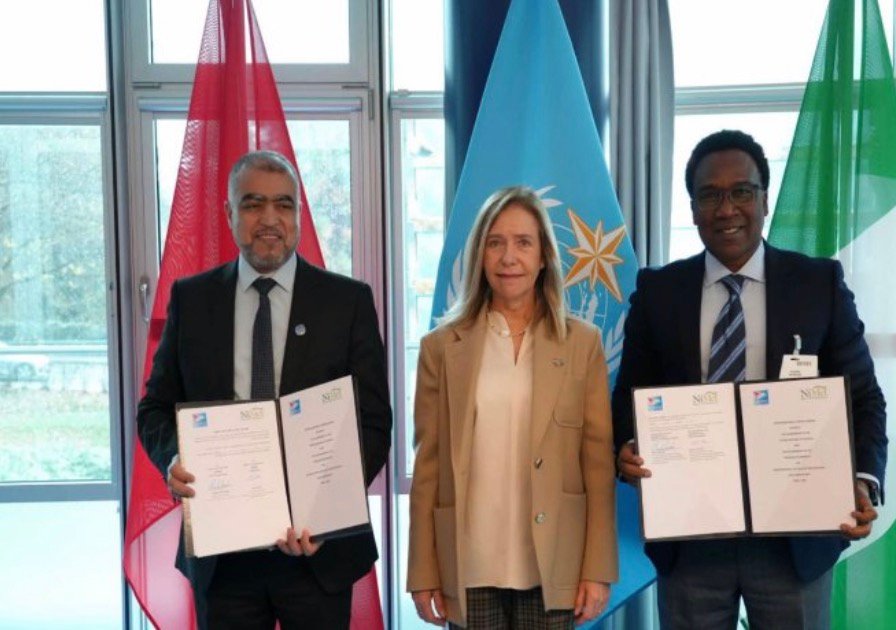
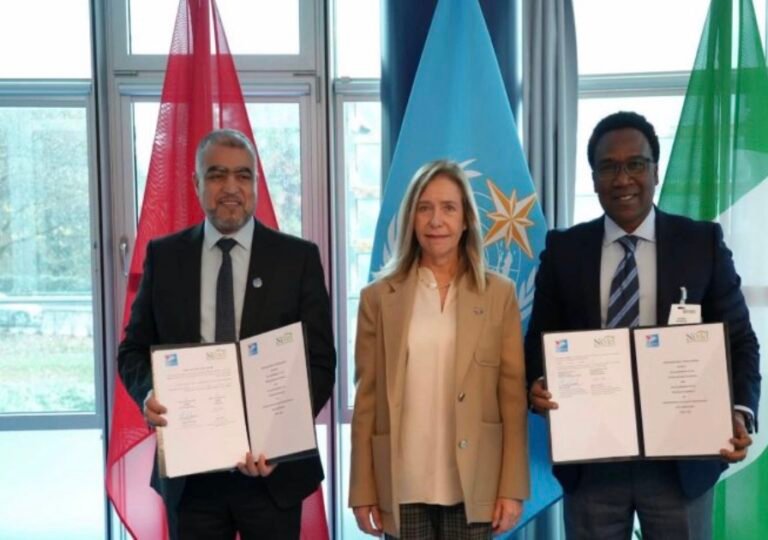
Director-General of Morocco’s General Directorate of Meteorology, Prof. Celeste Saulo, Secretary-General of the World Meteorological Organization (WMO), and Director-General/CEO of the Nigerian Meteorological Agency (NiMet), Prof. Charles Anosike
ABUJA, Nigeria – Nigeria and Morocco have signed a cooperation agreement to strengthen weather forecasting, climate research and early-warning systems, in a partnership expected to expand technical collaboration and improve meteorological services across Africa.
The Nigerian Meteorological Agency (NiMet) and Morocco’s General Directorate of Meteorology signed the Memorandum of Understanding (MoU) on Thursday on the sidelines of a session of the World Meteorological Organisation’s (WMO) Commission for Observation, Infrastructure and Information Systems in Geneva, Switzerland.
NiMet Director-General, Prof. Charles Anosike, signed for Nigeria, while his Moroccan counterpart, Mohammed Dkhissi, represented Morocco. Anosike said the agreement would strengthen cooperation between African meteorological agencies, demonstrate the continent’s technical capabilities in climate science and support countries requiring technical assistance.
He said the partnership would also promote knowledge sharing and regional collaboration to ensure that more African countries benefit from advances in meteorological services. “This partnership signifies what the WMO has been doing and together we can do better,” he said.
Dkhissi described the agreement as mutually beneficial, providing opportunities for both countries to exchange professional experience, technical expertise and technological innovations.
He stressed that the agreement should translate into practical outcomes rather than remain a formal document. “This MoU is not for the shelf but for immediate implementation,” he said.
The Secretary-General of the WMO, Prof. Celeste Saulo, witnessed the signing and congratulated both countries, describing international and regional cooperation as central to the organisation’s mission.
The agreement covers collaboration in weather forecasting, seasonal climate prediction, early-warning systems, climate research, meteorological observations and the development of climate services for socioeconomic sectors. It also provides for institutional capacity building, technology transfer, the application of artificial intelligence to weather and climate services, and the development of digital meteorological tools.
The partnership comes amid growing demand for reliable weather information to support agriculture, aviation, water management, disaster preparedness and other sectors exposed to climate risks. However, the impact of the agreement will depend on how quickly the agencies translate its provisions into joint research, operational tools, staff development and accessible climate information for communities and businesses.
About the Author



 Hope Ajayi
 Korede Abdullah