
Eyes on the Road: Can Kano’s Smart Transport Gamble Make Its Streets Safer?
 Hussaini Ibrahim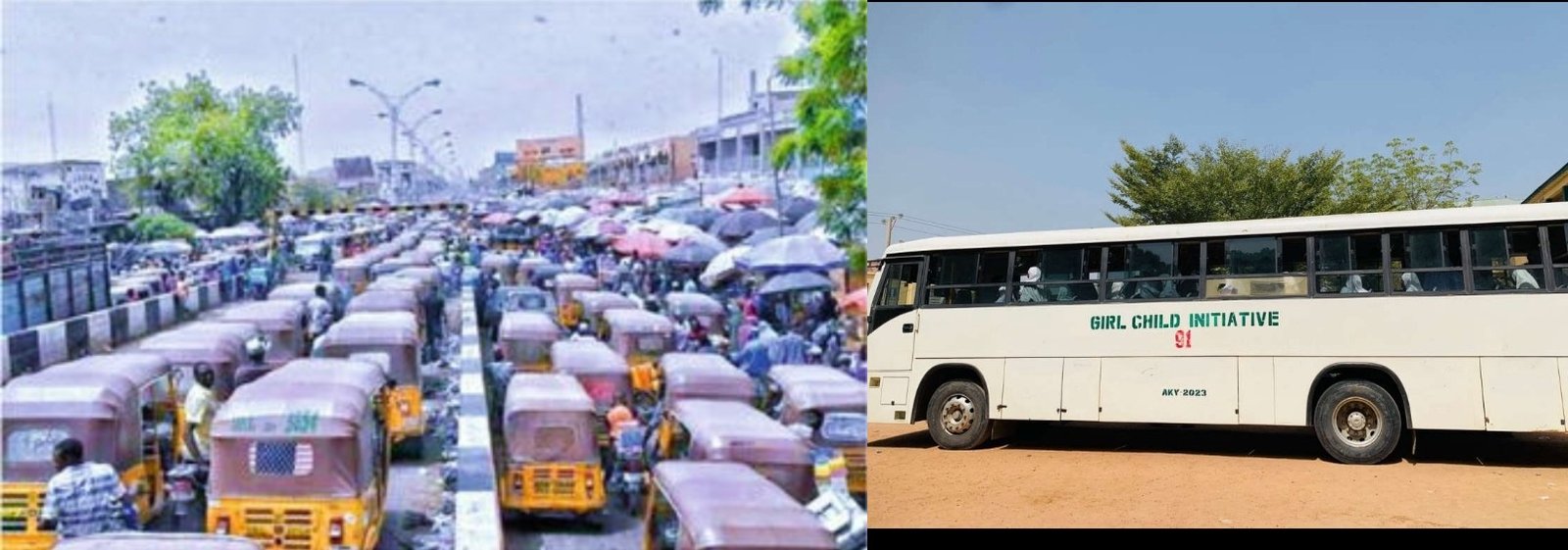
KANO, Nigeria – At dawn, Kano wakes to motion: tricycles coughing into life, buses groaning under the weight of commuters, tankers edging past markets already alive with trade. It is a city built on movement—and too often bruised by it. Now, Kano is betting that data can tame the chaos.
With the launch of a technology-driven Smart Transport System, officials promise a future where commercial vehicles are visible in real time, emergency responses are quicker, and criminals find fewer shadows to hide in. Hussaini Ibrahim reports that the plan has ignited cautious hope across the city—tempered by fears about cost, trust, and whether technology alone can change habits forged over decades.
A System That Sees Everything
At the centre of the initiative is a deceptively simple idea: know who is driving, know where vehicles are, and act fast when something goes wrong. The Commissioner for Transport, Barrister Haruna Isa-Dederi, unveiled the programme as a three-layered framework—Know-Your-Customer (KYC) registration for operators, GPS trackers installed in commercial vehicles, and a central dashboard accessible to regulators and security agencies.
“Our goal is to modernise transport management while safeguarding lives and property,” Dederi said. “With real-time visibility, authorities can coordinate faster interventions and enhance accountability across the transport sector.”
From tricycles and taxis to buses, trailers and fuel tankers, each vehicle is to become a moving data point. Officials say the system will curb reckless driving, improve regulatory compliance and provide actionable intelligence to tackle crimes such as vehicle theft and kidnapping—persistent anxieties in a city of millions.
The Price Of Safety
On Kano’s roads, enthusiasm collides quickly with arithmetic. The state has pegged the KYC and tracker installation fee at ₦28,000 per vehicle, with a 10 per cent subsidy for early adopters. For operators surviving on thin margins amid high fuel prices, the sum is daunting.
Malam Ibrahim Saleh, chairman of the National Union of Road Transport Workers in Kano State, does not dismiss the promise—but he hears the grumbles daily.
“Drivers are hopeful, but ₦28,000 per vehicle is a heavy burden for families depending on daily earnings,” Saleh said. “We need phased enforcement and incentives to avoid resistance. People want safety, but they also want fairness.”
That tension—between collective benefit and individual cost—runs through every conversation about the scheme. For many drivers, the fear is not the tracker itself, but the suddenness of enforcement and the suspicion that technology could become another tollbooth.
Lives Between Lanes
For commuters, the debate is visceral. Abdullahi Ibrahim, who navigates Kano’s traffic every weekday, speaks of fear as a routine companion.
“Every day, I worry for my children in traffic,” she said. “If this system works, it will save lives. But it must be enforced consistently—otherwise it’s just technology without change.”
Her words capture a city’s yearning: safer crossings, disciplined drivers, fewer sirens slicing through afternoons. Women and children—often the most vulnerable road users—stand to gain the most if discipline replaces improvisation.
Security, politics and a hard truth
From the police end, enthusiasm is tempered by scepticism. A senior officer involved in traffic oversight, who requested anonymity, told AHR that the initiative aimed at commercial tricycles risks being seen as revenue-first.
“I discussed extensively with the Public Relations Officer of AS&J, the company overseeing the project, and learned that the primary goal is to collect tax,” the officer said.
He pointed to history. During the administration of former governor Abdullahi Ganduje, a similar system existed, he recalled, with modest levies that later triggered protests when rates rose.
“Every developed country collects taxes. The idea itself is sound,” he said. “But politicisation is the biggest challenge. It slows development.”
The warning is blunt: without trust, even the smartest systems stall.
What Experts Say
Dr Musa Abdullahi, a road safety analyst, argues that technology must be paired with culture.
“The potential is enormous,” he said. “But operators must see it as protection, not punishment. Residents must trust that data is used responsibly. Enforcement must be consistent, fair and transparent.”
Tampering with devices, funding maintenance, training personnel—each is a pressure point that could unravel the promise if neglected.
Government’s Bigger Picture
For state officials, the Smart Transport System is not an isolated project but part of a wider ambition under Governor Abba Kabir Yusuf to modernise infrastructure and digital governance.
“This is about building trust and improving service delivery,” Dederi said. “It positions Kano as a safety-conscious megacity.”
Early adopters see glimmers of change. Alhaji Musa Bello, a transport entrepreneur, says real-time tracking has already reduced disputes and tightened discipline.
“Seeing where my drivers are gives me peace of mind,” he said. “If this works, it will change the transport culture in Kano.”
A City at a Crossroads
Kano stands between promise and practice. Done right, the Smart Transport System could reduce vehicle-related crimes, quicken emergency responses and restore confidence on the roads. Done poorly, it risks becoming another well-intentioned policy weighed down by costs, mistrust and uneven enforcement.
The city’s future may hinge less on satellites and software than on something harder to code: fairness, communication and the willingness of government and drivers alike to meet halfway.
For now, the roads keep moving—and Kano watches to see whether the new eyes in the sky will make the journey safer for everyone.
About the Author


 Oluwatobi Adu
 Oluwafunbi Bello
 Korede Abdullah
 Koko Maxwella