
 Edino Chubiyo Cornelius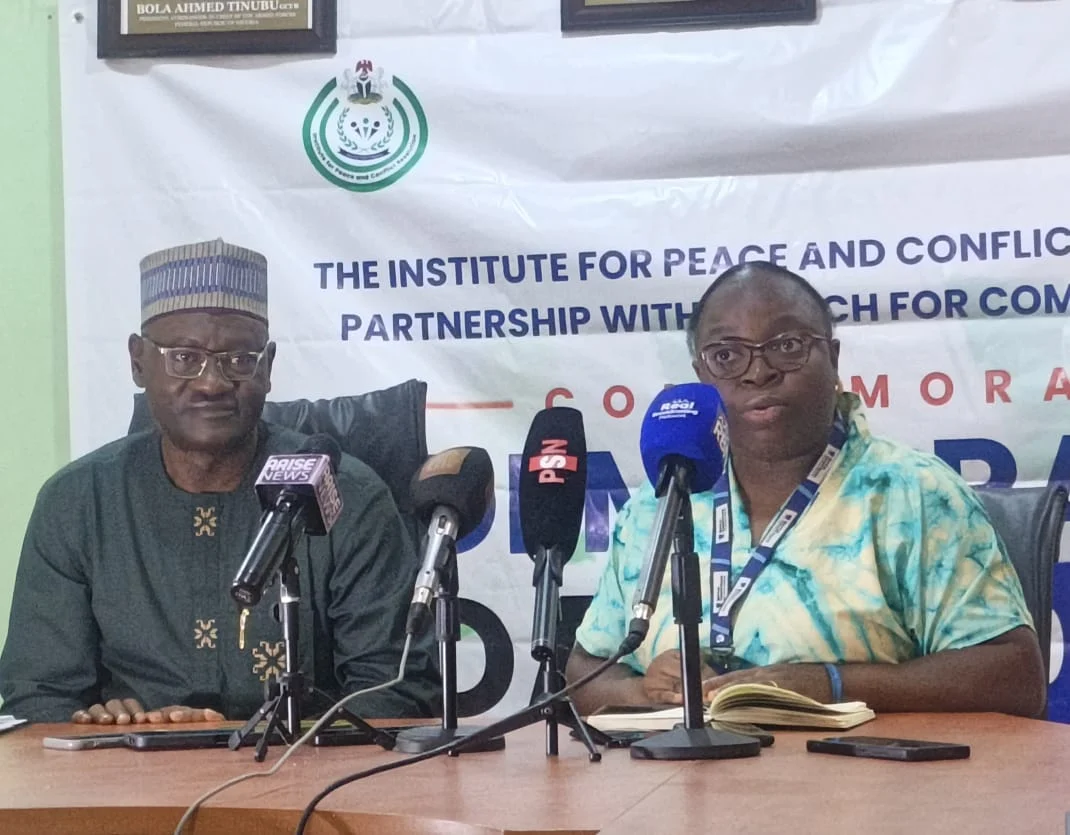
ABUJA, Nigeria – The Institute for Peace and Conflict Resolution and Search for Common Ground have warned that rising civic disengagement and the growing influence of money in politics pose significant threats to Nigeria’s democratic progress.
Speaking at a joint press briefing in Abuja on Thursday to mark Nigeria’s 2026 Democracy Day, IPCR Director-General Joseph Ochogwu said weak civic participation remains one of the biggest obstacles to strengthening democratic institutions and governance in the country.
According to Ochogwu, conflict assessments and field interventions conducted by the institute reveal that low voter turnout, poor civic awareness and limited citizen engagement continue to undermine democratic accountability.
He argued that many of Nigeria’s democratic challenges stem not from democracy itself but from declining public participation in governance and electoral processes.
“When citizens withdraw from elections and governance processes, it creates opportunities for manipulation, exclusion, misinformation and electoral malpractice,” he said.
Ochogwu noted that active civic participation remains critical for promoting transparency, accountability and peaceful political engagement.
Addressing voter apathy, he identified declining trust in public institutions, election-related violence, misinformation, poor governance outcomes and widespread disillusionment as key drivers of low voter turnout.
He warned that reduced participation weakens democratic legitimacy and allows narrow political interests to dominate governance processes.
On vote buying and money politics, Ochogwu described the increasing monetisation of political participation as a major threat to inclusive democracy.
He said excessive financial influence often sidelines ordinary citizens while giving wealthy individuals disproportionate control over political processes and party structures.
“Financial influence has become deeply entrenched within political parties, often shaping internal decisions and determining outcomes,” he noted.
The IPCR chief also highlighted insecurity, including terrorism, banditry, violent extremism and transnational organised crime, as additional threats to democratic governance.
Meanwhile, Director of Programmes at Search for Common Ground, Gift Omoniwa, expressed concern about the vulnerability of young Nigerians to recruitment by extremist and criminal groups.
She stressed the need for sustained investment in youth empowerment, education and economic opportunities to reduce radicalisation risks.
Omoniwa highlighted innovative initiatives, including reality television programmes designed to promote positive alternatives and showcase youth resilience.
Ochogwu concluded by urging Nigerians, particularly young people, to actively participate in elections and governance, stressing that sustaining democracy requires collective responsibility.
About the Author


 Mirian Gom

 Korede Abdullah