
Dark Signals, Deadly Crossings: Abuja’s Traffic Light Crisis
 Edino Chubiyo Cornelius
ABUJA, Nigeria – At one of Abuja’s busiest intersections, a flickering amber light struggles to command obedience. Drivers inch forward, unsure who has the right of way. A pedestrian hesitates mid-step. Then, in a split second, horns blare, brakes screech, and the fragile illusion of order collapses into chaos.
This is not an isolated scene. Across Nigeria’s capital, malfunctioning traffic lights are quietly reshaping how roads are used — and misused. In a city designed for order, the failure of these silent regulators is creating a dangerous new reality. Edion Cornelius, writes.
A Capital Losing Control at Its Crossroads
Abuja’s road network is often praised as one of Nigeria’s most structured. Wide lanes, planned intersections and designated crossings were built to ensure smooth mobility. Yet, beneath this design lies a growing problem: traffic signals that flicker, fail or go completely dark.
Where these systems break down, drivers improvise. Pedestrians gamble. Traffic officers, when present, attempt to restore order manually.
Residents say these failures are no longer rare inconveniences but recurring disruptions that shape daily commutes.
When Signals Fail, Chaos Follows
Traffic lights are more than coloured bulbs; they are the unseen coordinators of urban movement. When they stop working, the consequences ripple instantly.
A traffic officer with the Police Traffic Unit, Mr. Salisu, explains:
“Traffic lights are put in place to ensure safety for pedestrians and road users, and it is very important for these traffic signs to function.
Some of these signal’s wear and tear with time, which can become dangerous for road users. It causes disorganised road usage and can lead to accidents.”
He adds that the problem is not always immediate neglect:
“Sometimes officials may not even know immediately that a traffic light is damaged, and that can lead to long periods before repairs are carried out.”
His insight reveals a critical gap — one not of intention, but of response. In the absence of rapid detection systems, faults linger. And during that time, risk becomes routine.
Drivers Between Frustration and Necessity
For many motorists, traffic lights represent both discipline and delay. This dual perception shapes how drivers respond when systems fail.
Mr. Godsent Ogbonaya, a regular driver, shares his experience:
“For Abuja here, especially around town, I never really see traffic lights wey no dey work. But not everywhere will be the same.”
He acknowledges their importance, but not without reservation:
“It’s no good if the lights don’t work, especially because children dey crossing the road sometimes. But I’m not going to lie, these traffic lights do make people waste time on the road sometimes.”
This tension highlights a deeper issue: compliance is often tied to efficiency. When traffic systems are poorly synchronised — or completely broken — drivers are more likely to rely on instinct than regulation.
Ironically, this often worsens congestion rather than easing it.
Pedestrians: The Most Vulnerable
While drivers can manoeuvre around uncertainty, pedestrians face far greater risk.
Mrs. Fatima Unekwu, a frequent commuter, underscores this reality:
“Traffic lights and signs are very helpful here in the FCT because of how busy the roads can be.
For many of us without cars, they help reduce the risk of accidents.”
For pedestrians — including schoolchildren, traders and the elderly — traffic signals are not optional conveniences but essential safeguards.
“If there is any broken traffic light, it should be fixed because of how important it is on busy roads in Abuja.”
Without functioning signals, crossing a road becomes a calculated risk — one that many are forced to take daily.
The Hidden Cost of Neglect
Beyond safety concerns, malfunctioning traffic lights carry economic and social consequences.
Delays at intersections ripple across the city:
Commuters spend longer hours in traffic
Transport fares may rise due to extended travel times
Businesses face delivery disruptions
For pedestrians, the cost is less visible but equally significant — stress, uncertainty and exposure to danger.
Urban mobility experts warn that traffic lights are part of a broader ecosystem. When maintained and synchronised, they:
Reduce travel time
Improve safety
Minimise conflict between road users
But when neglected, they do the opposite — amplifying disorder instead of preventing it.
Manual Control Is Not a Long-Term Solution
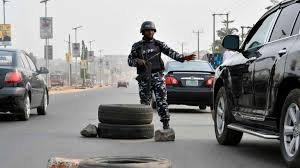
In some areas, traffic officers’ step into direct vehicles manually when signals fail. While this can temporarily restore order, it is not sustainable.
Manual control: Requires constant human presence
Cannot match automated coordination across multiple intersections
Leaves gaps during off-peak hours or staff shortages
In a rapidly growing city like Abuja, reliance on manual intervention is a stopgap — not a solution.
A System in Need of Urgency
The core issue is not simply broken infrastructure, but the speed — or lack thereof — in addressing it.
Experts point to several necessary interventions:
Routine inspection of traffic signals
Rapid-response repair teams
Improved inter-agency coordination
Public reporting systems for faults
Without these, minor technical issues can evolve into prolonged hazards.
Restoring Order to a Planned City
Abuja was built to embody structure and efficiency — a capital city where movement is predictable and safe. But infrastructure does not maintain itself.
As traffic volumes increase, the reliability of traffic signals becomes even more critical. Their failure undermines not just road safety, but public confidence in urban systems.
Functional traffic lights symbolise more than control; they represent trust — that the system works, that movement is regulated, and that safety is prioritised.
The Road Ahead
Fixing Abuja’s traffic light problem may not require grand innovation. In many ways, it is a matter of consistency — maintaining what already exists.
Yet the impact of doing so is profound:
Fewer accidents
Safer pedestrian crossings
Reduced congestion
Improved economic productivity
In a city striving to reflect order, restoring these silent guides of movement may be one of the most effective steps towards reclaiming it.
Because when the lights go out, it is not just visibility that is lost — it is control.
About the Author


 Chukwu Obinna
 Korede Abdullah
 Oluwatobi Adu