


(By Oluwatobi Adu, Edino Cornelius and Oluwafunbi Bello)
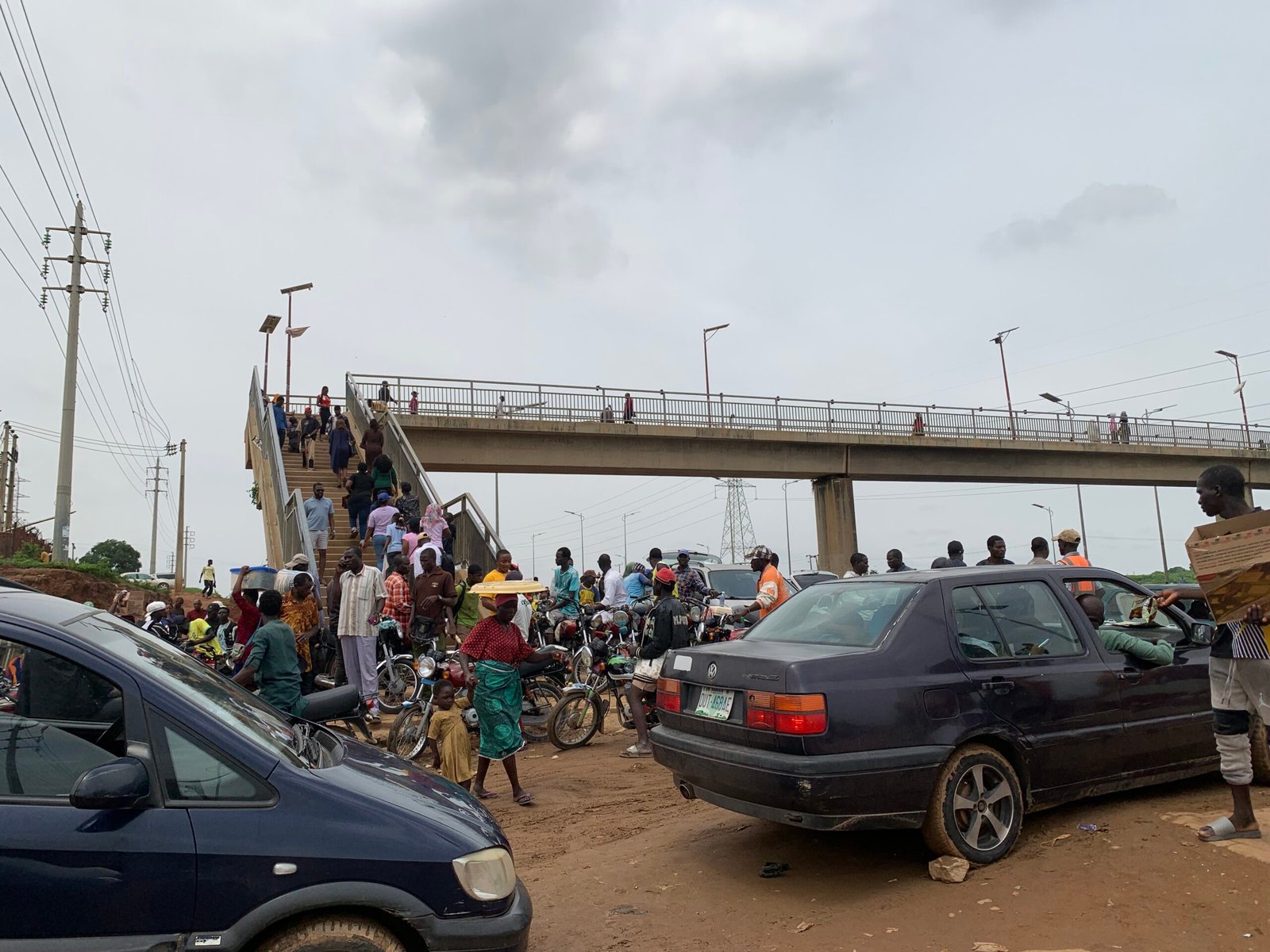
ABUJA, Nigeria – Every weekday before dawn, corps member Joshua Oluwaseyi leaves home in Mararaba knowing there is only one reliable way to reach the staff bus that takes her to work in Abuja — a commercial motorcycle, popularly known as Okada. If the Federal Capital Territory (FCT) Administration follows through with plans to tighten restrictions on commercial motorcycles, she fears that daily journey could become nearly impossible.
Her concern echoes across satellite towns and densely populated communities where motorcycles and tricycles provide the crucial “last-mile” transport linking homes to bus routes.
The FCT Administration says the proposed restrictions are driven by security concerns, but interviews with security experts, economists, transport operators and commuters suggest the debate is far more complex than crime statistics alone.
Crime Concerns Driving the Policy
According to data from the FCT Police Command, crime in the territory fell by 15.1%, with 1,077 suspects arrested from 1,426 reported cases.
Police also recorded:
104 kidnapping cases
216 kidnapping suspects arrested
68 victims rescued
268-armed robbery cases
132 robbery suspects arrested
More than ₦409 million recovered
376 firearms and 187 rounds of ammunition seized
73 stolen vehicles recovered
Security agencies have repeatedly linked motorcycles to robberies, kidnappings and phone-snatching because they enable suspects to weave through traffic and escape quickly.
However, official crime records do not show that commercial motorcycle operators are responsible for most offences committed in Abuja.
Instead, experts argue that criminals are exploiting motorcycles—not that motorcycles themselves are the source of crime.
‘The Problem Is Enforcement’
Security consultant Dr Steve Okwori believes the government’s concerns are understandable but says banning motorcycles alone will not solve insecurity.
“When I heard the announcement by the FCT Minister regarding the proposed ban on Okada operations, I understood the security concerns behind the decision. However, I do not think Okada operators are the major cause of insecurity in the Federal Capital Territory.”
He argues that previous restrictions have failed largely because enforcement has been inconsistent.
“The security agencies responsible for enforcing existing restrictions are not doing enough.”
Okwori recalled how a colleague was attacked by two men riding a motorcycle during a morning walk in Abuja’s Area 8.
“They attempted to rob him of his phone… they struck one of his fingers with a dagger while aiming for his head.”
Yet he cautions against treating every rider as a criminal.
“Many Okada riders are genuine people trying to earn an honest living. The problem is that criminals also use motorcycles to commit offences.”
He believes motorcycles should remain operational in satellite communities such as Kubwa and Bwari, where public transport remains limited.
For Many Residents, There Is No Alternative
Across Abuja’s outskirts, commuters say motorcycles are not a luxury but a necessity.
Joshua Oluwaseyi, a corps member living in Maraba, says she cannot reach her workplace without them.
“To get to where my PPA’s staff bus picks me, I have to take a bike because my place is far from the main road.”
In Kubwa, teacher Mohammed Emmanuel says motorcycles help him meet his school’s early reporting time.
“Teachers are expected to be in school before 7:30 a.m., and I prefer to take a bike because it’s fast.”
Snack seller at Apo, Afolayan Bunmi worries the impact would extend beyond commuters.
“Stopping bike riders from working will not only affect those of us who rely on them, it will also affect how they earn a living.”
Provision store owner Mariam Osiege says motorcycles offer door-to-door access unavailable with tricycles.
Meanwhile, private sector worker Blessing Oyiza fears unemployment could worsen if thousands of riders lose their income.
“With unemployment already increasing, stopping these people from working will only add to the problem.”
What Reporters Found Across Abuja
Africa Health Report visited Nyanya, Apo Resettlement, Jahi 2, Lugbe Police Signboard and Mpape to assess transport realities.
The findings revealed a consistent pattern.
In most communities, motorcycles and tricycles provide the only practical connection between inner neighbourhoods and major roads.
Many areas have no buses operating within residential streets.
Residents therefore depend heavily on Okada and keke for everyday mobility.
Riders Say They Are Paying for Crimes They Did Not Commit
Many operators rejected suggestions that commercial riders should collectively bear responsibility for insecurity.
Jahi 2 Bike Riders Chairman Hassan Umar said many members entered the business after fleeing insecurity or because they could not find employment.
“Our people don’t see work. That’s why we came to Abuja to do this work.”
He said many would willingly leave commercial riding if decent jobs became available.
Mpape riders’ leader Musa questioned why all riders should be blamed.
“You wan tell me say na Okada people dey cause trouble for Nigeria?… Make dem find another alternative.”
Lugbe Bike Riders Secretary Hamza Rabiu insisted most operators simply want to feed their families.
“We are peaceful people. We are only doing this job to put food on our table.”
Tricycle Operators Also Fear Restrictions
Although the proposal has focused largely on motorcycles, tricycle operators believe they could also be affected.
Nyanya operator John Nanzi says the business transformed his life.
“I married my wife from this work. I bought land and started building my house in Abuja with this work.”
Rather than imposing an outright ban, he urged authorities to introduce buses through hire-purchase schemes while properly registering operators.
Apo Resettlement tricycle leader Jubril Ibrahim also acknowledged that some unregistered operators damage the sector’s reputation.
“Not all of us are bad like the government portrays.”
Economists: Alternatives Must Come First
Economist Abdulnaseer argues Abuja cannot aspire to become a modern capital without first providing reliable public transport.
He believes buses and rail systems should precede any blanket restriction.
“You cannot ban something without providing an alternative.”
Without efficient transport, he warns residents could be forced to buy vehicles or take loans despite soaring fuel costs.
Financial analyst Toheeb Adebeshin broadly supports the proposed restrictions but says they should not happen overnight.
“Giving them some time makes them think of a business or something they can do.”
Rather than leaving operators stranded, he proposes that the government consider buying back motorcycles to help riders start new businesses.
A Familiar Policy, An Unfinished Debate
This is not the first time Abuja has attempted to curb commercial motorcycle operations.
Previous restrictions targeted the city centre, yet illegal operations continued, raising fresh questions over whether enforcement—not legislation—is the real challenge.
For many commuters, the issue is no longer simply about motorcycles.
It is about whether the capital has built a transport system capable of replacing them.
Until that happens, the proposed crackdown leaves Abuja balancing two competing priorities: improving security while ensuring thousands of residents can still get to work, school and home.
For many living beyond the city centre, the question is not whether motorcycles should eventually disappear—but whether Abuja is ready for life without them.



Join the conversation