Mirian Gom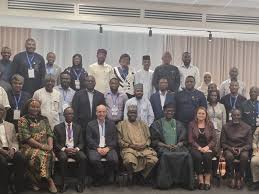
ABUJA, Nigeria – The Federal Government has declared a major shift in Nigeria’s industrial trajectory, insisting the country can now grow its manufacturing base without sacrificing environmental sustainability, following the successful implementation of a landmark clean production initiative.
Speaking at the close of the Industrial Energy Efficiency and Resource Efficient Cleaner Production (IEE & RECP) project in Abuja, Minister of Environment, Balarabe Lawal, described the programme as a “transformational breakthrough” rather than a routine policy intervention.
Funded by the Global Environment Facility and implemented by the United Nations Industrial Development Organization, the initiative demonstrated that industrial growth and environmental protection are not mutually exclusive.
“We asked a bold question — can Nigeria industrialise without degrading its environment? The answer is clear: yes, we can,” Lawal said.
Over 200 professionals — including regulators, policymakers and industry leaders — were trained in energy efficiency and cleaner production methods, while sustainability principles were integrated into university curricula to shape future engineers and manufacturers.
The programme also delivered Nigeria’s first national database of industrial waste hotspots and energy-intensive enterprises, providing a critical tool for policy planning and investment decisions.
According to National Project Coordinator Jacob Oladipo, participating companies recorded measurable gains, with firms such as Nestlé Nigeria and Nigerian Foundries earning international certifications and recognition for efficiency improvements.
Industry stakeholders say the impact is already visible, particularly in reducing energy costs, which account for up to 40 per cent of manufacturing expenses.
The government now plans to scale the initiative nationwide, targeting small and medium enterprises as part of a broader push to embed sustainability across Nigeria’s industrial ecosystem.
About the Author

 Korede Abdullah
 Oluwafunbi Bello
 Abah Felicity