
Beauty Etched in Blood: Nigeria’s Microblading Boom and the Quiet Risks Beneath the Skin
 Koko Maxwella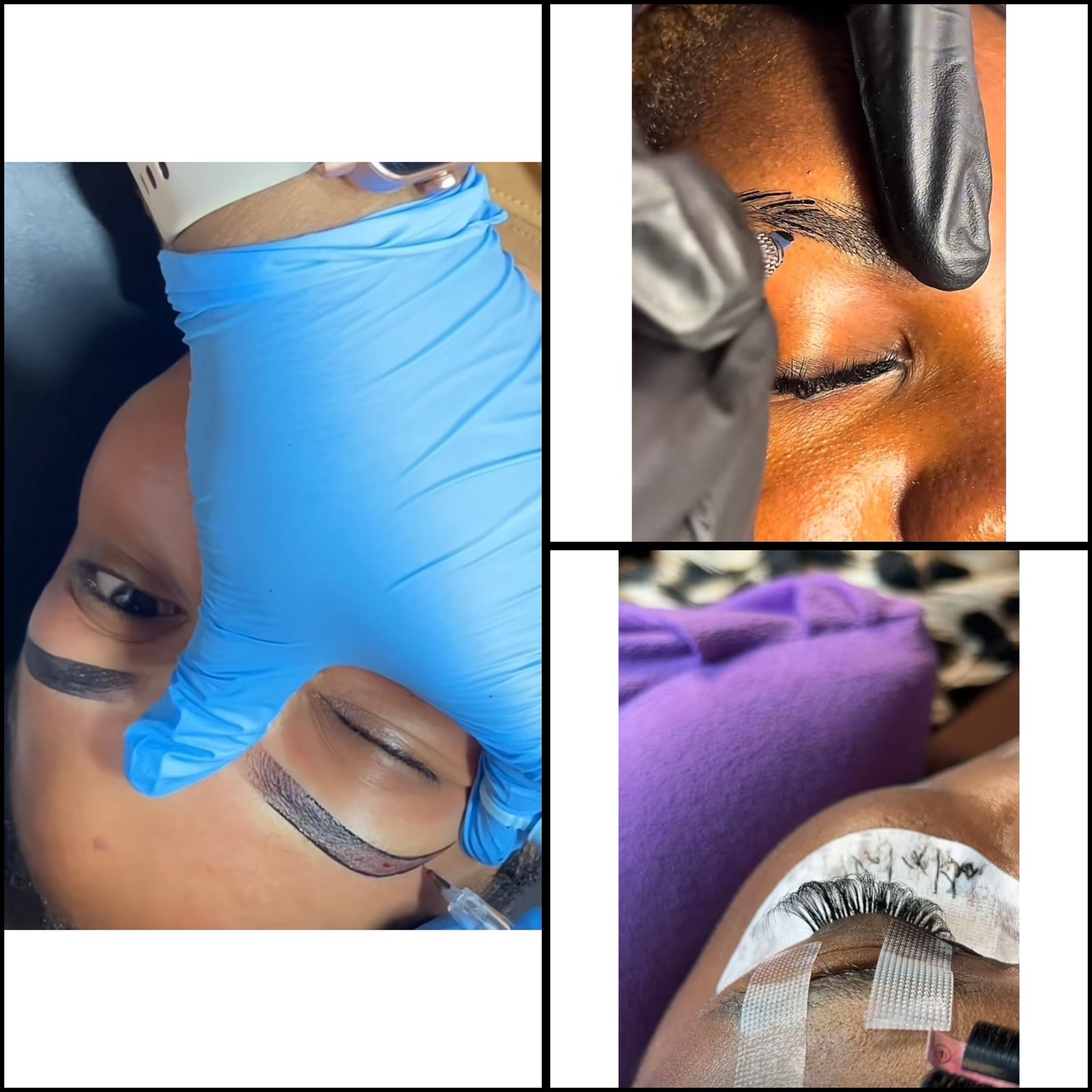
ABUJA, Nigeria – On a humid afternoon in Aba, the low hum of a beauty studio competes with the buzz of anticipation. A young woman reclines, eyes closed, as a technician leans in with surgical precision. Stroke by stroke, pigment is etched into her skin. Within minutes, her eyebrows—once sparse—appear fuller, sharper, almost sculpted.
It is a quiet transformation, but one that speaks volumes about a booming beauty culture in Nigeria—where convenience, confidence and cosmetic perfection are increasingly within reach. Yet, behind the promise of flawless brows lies a more complex story: one of unregulated practices, hidden health risks, and a growing demand that may be outpacing safety.
Microblading, once a niche cosmetic procedure, has surged into mainstream popularity, particularly among young Nigerian women. Marketed as a semi-permanent solution to thin or uneven brows, it offers what many desire most—effortless beauty. No pencils. No daily routines. Just a polished look that lasts for months, even years.
But as the trend accelerates, so too do concerns from medical professionals and insiders within the beauty industry.
At its core, microblading is far from superficial. The procedure involves making tiny, deliberate cuts into the skin and embedding pigment to replicate natural hair strokes. Before the process begins, a numbing cream is applied. Then, using a handheld pen fitted with ultra-fine needles, technicians carefully trace the outline of the brows.
The results can be striking—often indistinguishable from real hair. Koko Maxwella, writes.
For 24-year-old Adaeze Nwankwo, the decision to undergo microblading felt almost inevitable. “I was tired of filling in my brows every morning,” she said in an interview on Tuesday. “When I saw how natural it looked on others, I decided to try it.”
Initially, the outcome was everything she had hoped for. “It was beautiful,” she recalled. “It made me feel more confident.”
But weeks later, the experience took an unexpected turn.
“I started noticing itching and slight swelling around my brows,” she explained. “At first, I ignored it. But it got worse.”
When she returned to the salon, she was told it might be a reaction to the pigment used.
Adaeze’s story is not isolated. While many clients leave satisfied, others report complications that range from mild irritation to more serious health concerns.
Chidinma Okafor, a beauty technician with three years of experience, acknowledges both the demand and the risks. Speaking during an interview on Wednesday, she described the procedure as delicate and highly dependent on skill and hygiene.
“We apply numbing cream first, then use a tattoo-like pen to create fine strokes before adding pigment,” she explained. “A lot of clients want it now because it saves time and looks natural.”
Yet, she was candid about the industry’s shortcomings.
“Not everyone doing this job is properly trained,” she admitted. “Some people just learn informally and start offering services.”
The consequences, she warned, can be significant.
“If tools are not sterilised properly, or if low-quality pigments are used, clients can get infections or reactions,” she said. “Even with eyelash extensions, the glue can cause problems if not used carefully.”
Her remarks highlight a deeper issue: the rapid expansion of Nigeria’s beauty industry without a corresponding framework for regulation or certification.
From a medical perspective, the risks are even more pronounced.
Dermatologist Dr. Ibrahim Sadiq does not mince words. “Microblading involves breaking the skin barrier,” he said in an interview on Thursday. “Once that barrier is compromised, the body is exposed to potential infections.”
According to him, contaminated equipment can introduce bacteria into the bloodstream, while certain pigments may trigger allergic reactions.
“In some cases, poor technique can lead to scarring,” he added. “And if tools are not properly sterilised, there is also the risk of blood-borne diseases.”
The concerns extend beyond microblading itself. Eyelash extensions—often paired with the procedure—carry their own set of risks.
“The adhesives used can irritate the eyes,” Dr. Sadiq explained. “They can trigger allergic reactions or even infections like conjunctivitis, especially when hygiene is poor.”
Despite these warnings, the appeal remains strong.
For many, microblading is more than a cosmetic choice—it is a lifestyle upgrade. It offers symmetry, saves time, and enhances facial features in a way that feels both subtle and transformative.
In a society where appearance can influence confidence and opportunity, the allure is undeniable.
But the Downsides are Equally Real
Beyond infections and allergic reactions, some clients are left with uneven results or permanent scarring—outcomes that are not easily reversed. Maintenance costs, including periodic touch-ups, can also accumulate over time, making the “convenience” more expensive than anticipated.
Perhaps most concerning is the lack of regulation.
In many salons, standards vary widely. Certification is not always required. Inspections are rare. And for clients, verifying a technician’s qualifications can be difficult.
As a result, trust becomes the primary currency—often replacing formal assurances of safety.
Health experts argue that this gap must be addressed urgently
Dr. Sadiq emphasised the importance of due diligence. “Clients should seek out certified professionals,” he advised. “They should confirm that tools are sterilised and ask questions about the pigments being used.”
He also stressed the role of aftercare, which is frequently overlooked.
“Even if the procedure is done correctly, poor aftercare can lead to infection,” he said. “Hygiene is critical in the days following the treatment.”
For Adaeze, the experience has been a lesson in caution.
While she does not entirely regret her decision, she is more aware of the risks involved. “It’s not just about looking good,” she reflected. “You have to think about your health too.”
Her words echo a broader reality—one that sits at the intersection of beauty, commerce and public health.
As Nigeria’s cosmetic industry continues to grow, the challenge will be balancing innovation with safety, and demand with accountability.
For now, the burden largely falls on individuals to make informed choices in an environment where standards are still evolving.
Because in the pursuit of beauty, the line between enhancement and harm can be dangerously thin.
About the Author


 Oluwatobi Adu

 Mirian Gom
 Korede Abdullah