 Korede Abdullah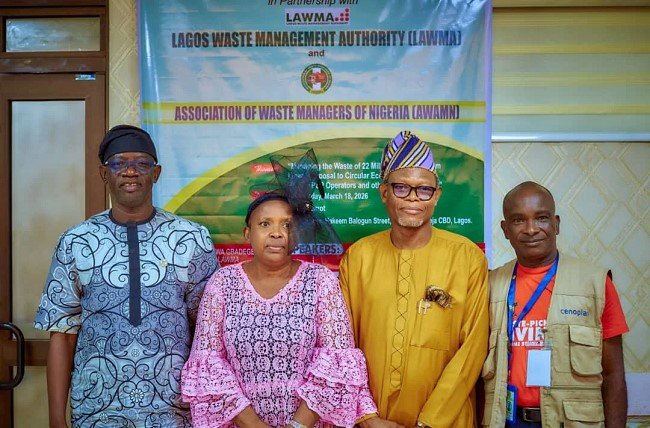
LAGOS, Nigeria – Environmental stakeholders are urging a transition to a circular economy to tackle mounting waste challenges in Lagos, Africa’s largest megacity.
At a forum organised by the Property and Environment Writers Association of Nigeria, experts say the current linear waste model is unsustainable for a population exceeding 22 million.
Managing Director of the Lagos Waste Management Authority, Muyiwa Gbadegesin, describes waste management as a critical governance challenge.
“For a long time, cities operated a linear model where waste is generated, collected, and dumped. That approach is no longer sustainable,” he says.
Gbadegesin calls for waste to be treated as a resource through recycling, processing, and reuse.
President of the Association of Waste Managers of Nigeria, Olugbenga Adebola, stresses the need for stronger collaboration between government and private operators.
He criticises inadequate policy support and urges constitutional backing for environmental accountability.
PEWAN Chairman Okwy Iroegbu-Chikezie highlights ongoing reforms, including technology-driven waste systems and upgraded facilities.
Experts warn that without urgent reforms, poor waste management will continue to impact public health, urban planning, and economic growth.
About the Author

 Mirian Gom
 Oluwatobi Adu