Oluwatobi Adu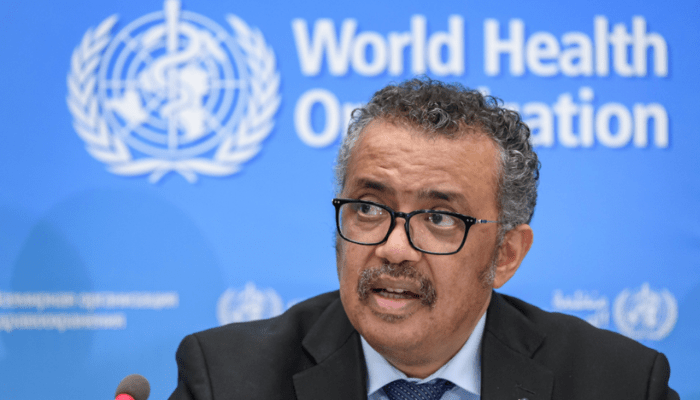
WHO-DG, Dr Tedros Adhanom Ghebreyesus
ABUJA, Nigeria – The World Health Organisation (WHO) suspends operations at its global emergency logistics hub in Dubai, warning that the escalating Middle East conflict is disrupting critical humanitarian supply chains worldwide.
WHO Director-General Tedros Adhanom Ghebreyesus confirms the suspension on Thursday, citing security concerns and regional instability following US and Israeli strikes on Iran.
“Operations at WHO’s logistics hub for global health emergencies in Dubai are currently on hold due to insecurity,” Tedros says.
The Dubai hub plays a vital role in global humanitarian operations. According to WHO officials, it processed more than 500 emergency orders for 75 countries last year.
WHO’s Eastern Mediterranean Regional Director, Dr Hanan Balkhy, warns that the disruption is already affecting life-saving medical deliveries.
“Humanitarian health supply chains are now being jeopardised,” Balkhy says.
She explains that airspace closures and restrictions affecting access to the Strait of Hormuz have blocked shipments valued at $18 million, while another $8 million worth of supplies cannot reach the hub.
The disruption is delaying more than 50 emergency supply requests from 25 countries, including $6 million in medicines destined for Gaza.
WHO also reports that $1.6 million in polio laboratory supplies have been held up, potentially affecting Afghanistan and Pakistan, where the disease remains endemic.
To mitigate the crisis, the organisation is exploring alternative routes through logistics hubs in Nairobi, Dakar and Brindisi.
Officials are also discussing potential land routes through Saudi Arabia if the conflict continues.
Meanwhile, WHO says it is coordinating health responses across 16 affected countries, strengthening disease surveillance and preparing for possible mass casualties.
Tedros warns that the conflict also poses serious risks to nuclear facilities.
“Any compromise to nuclear safety could have serious public health consequences,” he says.
About the Author

 Hope Ajayi