Nigerian Survivors Reveal Southeast Asia Cyber-Slavery at Abuja Forum
 Oluwafunbi Bello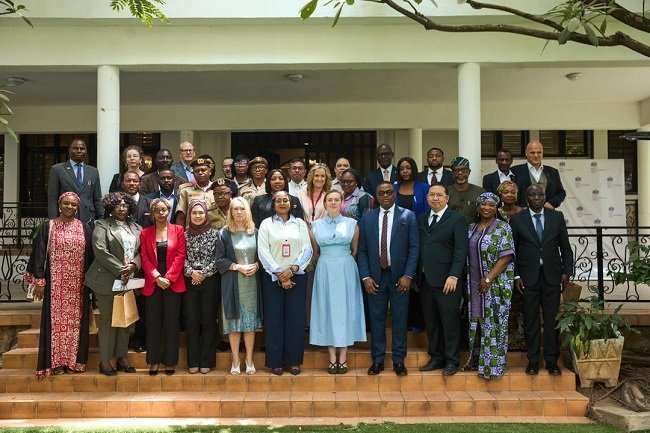
Deputy High Commissioner, Gill Lever, with representatives of NATIP, IOM, Thailand Embassy, Nigeria Immigration Service and National Cybersecurity Coordination Centre
ABUJA, Nigeria – Nigerian survivors of transnational human trafficking publicly expose the hidden machinery of cyber-slavery in Southeast Asia at a high-level, survivor-led forum convened in Abuja, as authorities warn the crisis now traps more than 300,000 victims globally.
The closed-door meeting, jointly organised by National Agency for the Prohibition of Trafficking in Persons (NAPTIP) and the British High Commission Abuja, brings together recently repatriated Nigerians who recount being lured abroad by fraudulent job offers, only to be forced into online scam operations in Myanmar, Laos, Cambodia and Thailand.
The forum, titled Confronting the Global Scam Centre Crisis: Perspectives of Nigerian Survivors, forms part of Nigeria’s expanding response to cyber-enabled human trafficking — a crime increasingly linked to organised transnational syndicates.
According to the UN Office of the High Commissioner for Human Rights’ 2026 report A Wicked Problem, at least 120,000 people remain trapped in forced scam compounds in Myanmar alone, with regional estimates exceeding 300,000 across Southeast Asia. Nearly 75 per cent of identified victims between 2020 and 2025 are trafficked under the guise of legitimate employment.
Earlier this month, coordinated diplomatic and rescue efforts involving NAPTIP, Nigeria’s Ministry of Foreign Affairs, the Nigerian Embassy in Bangkok and British NGO EDEN secure the return of 23 Nigerian nationals from the Thai Myanmar border.
“I was promised opportunity and dignity,” one survivor tells the forum. “Instead, I lived in fear, forced to deceive others to survive.”
UK Deputy High Commissioner Gill Lever OBE praises the survivors’ courage, saying, “Their voices are vital to dismantling these criminal networks.”
NAPTIP officials reiterate Nigeria’s commitment to prevention, rescue and international cooperation, warning that unchecked cyber-slavery threatens global digital security and human rights.
About the Author

 Korede Abdullah
 Abah Felicity