
Gin in the Shadows: Why Nigeria’s Sachet Alcohol Ban Still Hasn’t Reached the Street
 Edino Chubiyo Cornelius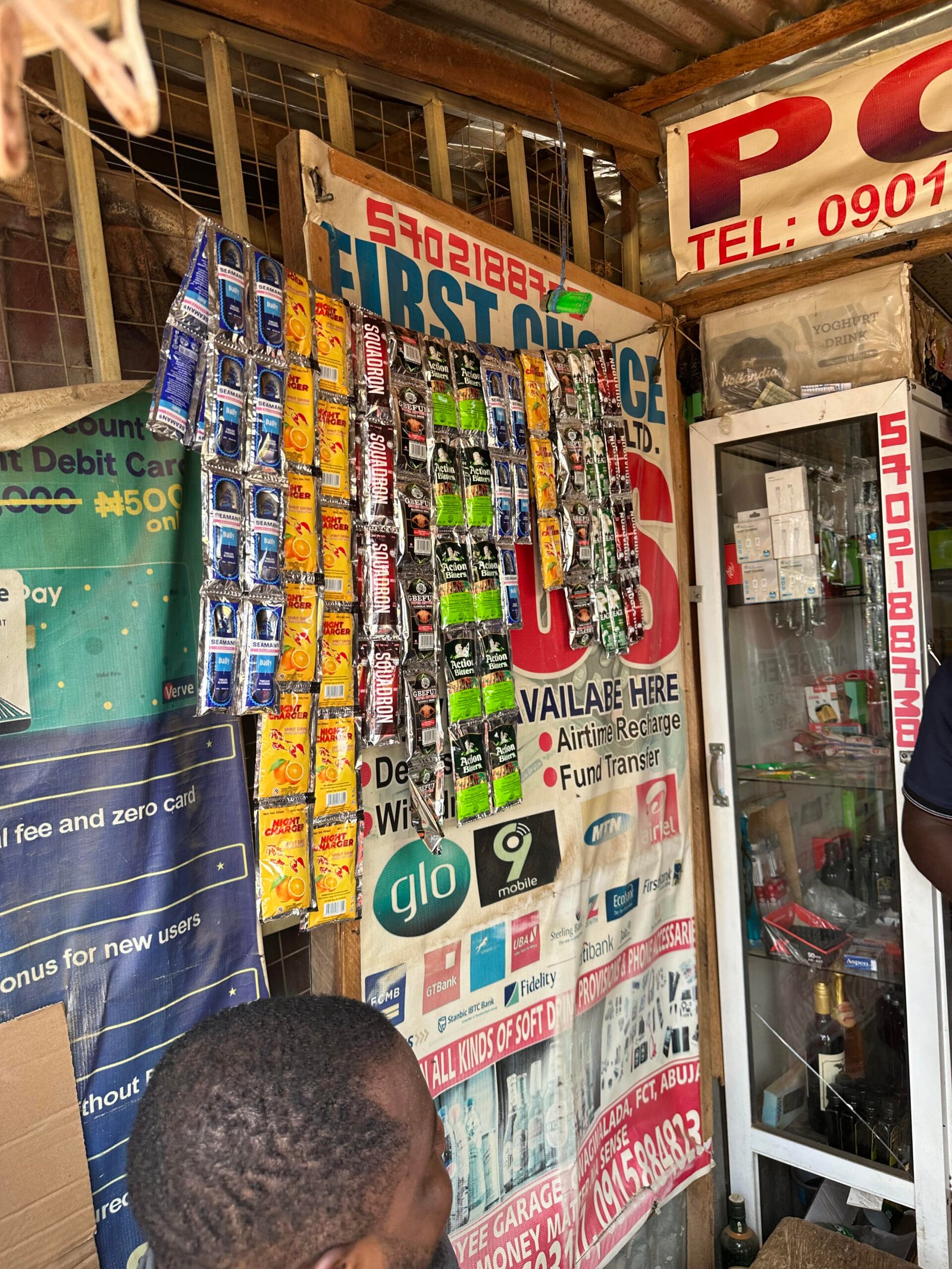
Sachet alcohol displayed openly in a Nigerian market despite government restrictions
ABUJA, Nigeria – On paper, the ban was decisive. In practice, it is porous. When Nigeria moved to restrict the production and distribution of sachet and small-volume alcoholic drinks, the announcement carried the weight of a public health emergency. Cheap, pocket-sized alcohol — easy to conceal, easier to consume — had become ubiquitous, particularly among young people. The policy, led by the National Agency for Food and Drug Administration and Control in collaboration with the Federal Ministry of Health, promised to curb impulse buying, discourage underage drinking and rein in a product blamed for quiet but widespread harm.
Months later, the ban has failed to disappear from view. Sachets still dangle from nails in kiosks. They still sit at eye level in neighbourhood bars. They still change hands openly in markets across Abuja — not as contraband, but as business as usual. The gap between policy and practice is not hidden. It is hanging in plain sight. Edino Cornelius, writes.
A Market That Never Got the Memo
At Katampe market, on the northern edge of Abuja, sachet alcohol is not whispered about or smuggled under counters. It is displayed openly, swinging in clusters like ripe fruit.
Kingsley, a wholesaler whose shop is stacked floor to ceiling with everyday goods, said he had no idea the drinks were restricted. Speaking in Pidgin, he shrugged off the policy as something far removed from his daily reality.
“Omo I no know ooh. Why dem even ban am sef? I go sell this one finish before I stop. Na money I use to buy am,” he said.
For him, the logic is simple. The stock was bought with hard-earned cash. Throwing it away would mean a loss he cannot absorb.
Nearby, another trader, Aliue Kabiru, was blunter about why sachet alcohol is still everywhere.
“Many people still dey sell am. E be like dem never serious about am. No be only me dey sell am,” he said, gesturing across the market.
Their comments reveal a truth often missing from policy statements: regulation that does not account for informal economies rarely survives contact with them.
Between Compliance and Survival
Even where traders insist, they have moved on, the evidence often contradicts them.
At a small bar in Katampe, the owner, ELjima, said his business now focused on bottled drinks, soft drinks and palm wine. Yet sachet alcohol was neatly arranged at the front of the bar during the visit, visible to anyone walking past.
The contradiction is telling. Publicly, there is acknowledgement of the restriction. Privately, the product remains too profitable — and too popular — to abandon.
Industry observers point to familiar weaknesses: unclear timelines, phased implementation that never quite ends, and inspections that are sporadic at best. Without sustained monitoring from manufacturers through distributors to retailers, enforcement becomes selective. And selective enforcement, traders say, is no enforcement at all.
Why Sachets Still Sell
The persistence of sachet alcohol is not accidental. It is structural.
First, there is economic pressure. Many retailers operate on razor-thin margins. Stock bought before the restriction represents sunk costs they cannot afford to write off. In the absence of compensation or buy-back schemes, compliance feels punitive.
Second, demand has not disappeared. Sachet alcohol is cheap, portable and sold in quantities that suit low-income consumers. For someone with limited cash, a sachet is affordable in a way a bottle is not.
Third, enforcement gaps remain glaring. In many neighbourhoods, inspections are rare and penalties unevenly applied. Where regulators are absent, rules lose their authority.
The result is a parallel reality: a ban that exists in official statements, and a product that thrives on the street.
The Health Risks That Won’t Go Away
For health professionals, the continued circulation of sachet alcohol is more than a regulatory failure — it is a public health risk.
Mrs. Mercy, a nurse in Abuja, said the original intent of the restriction was clear: protect young people.
“Generally, too much alcohol is bad to a person’s health. I think the main aim of the ban is to stop adolescents and teens from getting access to these small drinks. If it’s still out there, then it’s still a threat to the lives of young ones,” she said.
Medical research consistently links early exposure to alcohol with higher risks of dependence, accidents and long-term health complications. The very features that make sachet alcohol attractive — low price, small size, easy concealment — also make it particularly dangerous for adolescents.
As long as the products remain readily available, health workers warn, the risks remain unchanged.
Policy Announced, Reality Unchanged
The sachet alcohol restriction highlights a familiar Nigerian dilemma: strong policy language undermined by weak follow-through.
Announcements alone do not empty shelves. Directives without sustained oversight rarely reshape behaviour. In informal markets that power much of the country’s retail economy, regulation must compete with survival instincts.
For the ban to work, experts say, regulators will need more than press releases. Clear communication to traders, consistent inspections, and public awareness campaigns are essential. So too is recognising the economic realities of small-scale sellers caught between compliance and loss.
Until then, sachet alcohol will continue to occupy a strange space — officially restricted yet widely sold; publicly condemned, yet privately profitable.
And in markets like Katampe, the ban will remain what many traders already believe it to be: a rule that never quite arrived.
About the Author



 Oluwatobi Adu
 Korede Abdullah
 Oluwafunbi Bello