
Nigeria Trains Them, Others Pay Them: The Quiet Exodus Emptying Our Wards
 Oluwafunbi Bello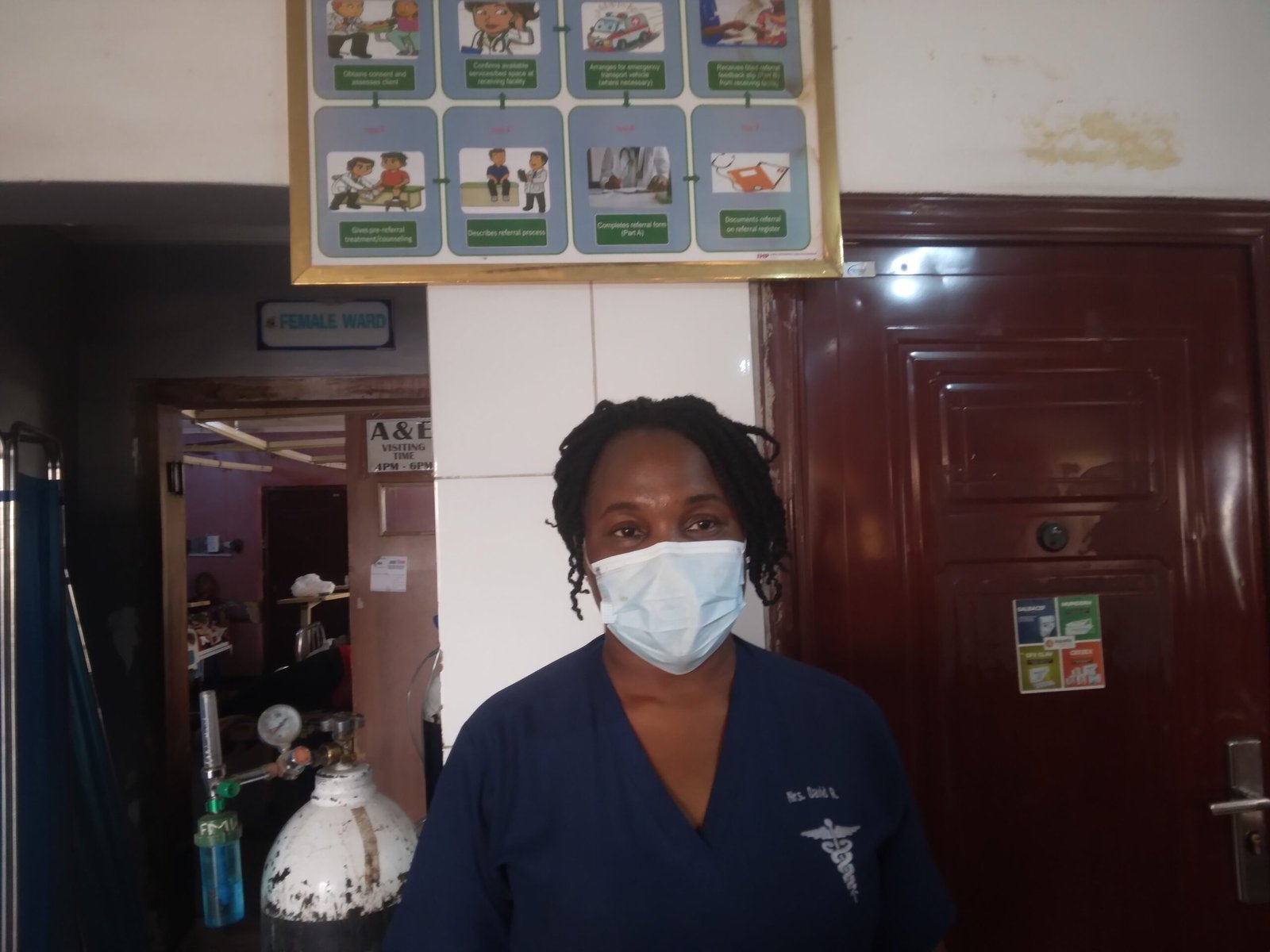
Kubwa General Hospital resident nurse, Ruth David
ABUJA, Nigeria – On a humid afternoon inside Kubwa General Hospital, the rhythm of care never slows. Call bells ring. Paper files shuffle. A nurse adjusts a drip with one hand while calming a restless patient with the other. The work is intimate, relentless and risky. Yet for many nurses here, the calculation has become painfully simple: stay and struggle or leave and survive.
Over the past decade, Nigeria’s health budget has ballooned—from about ₦237 billion to roughly ₦2.48 trillion. On paper, it reads like progress. On the wards, nurses say little has changed where it matters most: pay, staffing, safety and dignity. The result is a steady outflow of skilled hands—quiet departures that are hollowing out hospitals even as the nation trains more health workers than ever. Oluwafubi Bello, writes.
For Gloria Okafar, a Level 12 nurse with 11 years on the job, the choice many colleagues face is not ambition—it is arithmetic. “We work too much,” she said. “And if it’s abroad, you will make more money even if the workload is heavy. At least it’s a good environment.” Okafar earns about ₦300,000 a month in Abuja and says she is still owed three months’ arrears. “My pay has increased over the years, but it’s not worth the work I do.”
That sentiment echoes up the ranks. Haruna Ibrahim, a Chief Nursing Officer on Level 14, earns around ₦400,000 monthly including allowances for shifts and uniforms. “As a man with a wife and grown-up children, this salary is not enough for our expenses,” he said. Years of promotions have brought responsibility—but not relief. “The gap between what we do and what we earn keeps widening.”
Among younger nurses, the horizon is already set beyond Nigeria’s borders. Kolawole Joanne, a fresh graduate, says she wants to serve at home but sees the odds stacked against her. “With the millions spent on me in nursing school and how underpaid nurses are here, working abroad is very preferable,” she said.
At Kubwa General Hospital, resident nurse Ruth David describes overseas practice as a promise of better pay, modern facilities and a more supportive environment. “Here, you improvise too much,” she said. “Abroad, systems work.”
The Pay Gap that Pushes People Out
The economic contrast is stark—and sobering. In the United States, nurses earn roughly $30 to $50 per hour, translating to about ₦48,000–₦80,000 hourly. In Canada, registered nurses earn a similar range. In the United Kingdom, average hourly pay sits around £9–£13, or ₦18,000–₦26,000.
By comparison, nurses in Nigeria earn ₦150,000–₦400,000 per month—the equivalent of three to five hours’ pay in North America. The math is unforgiving. It explains why visas are filled before wards are.
Health financing analysts warn that the numbers don’t just reflect wage differences; they signal value systems. “Countries that retain health workers treat them as critical infrastructure,” said an Abuja-based analyst who asked not to be named. “Pay is competitive, safety is prioritised, and overtime is compensated. Where those signals are weak, people leave.”
When Nurses Go, Doctors Follow—and Patients Pay
The exodus is not confined to nursing. Consultants—medical specialists at the apex of care—face a disparity that is even more dramatic. In the United States, Canada and the United Kingdom, a medical consultant’s hourly earnings can exceed what a Nigerian consultant earns in an entire month. While exact figures vary by specialty, analysts note that an hour of specialist time abroad can rival—or surpass—the ₦600,000–₦1 million monthly range many Nigerian consultant’s report, especially once arrears and delayed allowances are factored in.
The implications are profound. Nurses anchor hospital operations; consultants define standards of care. As both drift away, the system strains. Remaining staff work longer shifts. Burnout rises. Errors creep in. Patients wait longer—or seek care elsewhere, if they can afford it.
Working Conditions: Risk Without Reward
Beyond pay, nurses describe working conditions that compound the problem. Chronic understaffing stretches shifts into double duty. Protective equipment can be scarce. Exposure to occupational hazards—from needle-stick injuries to infectious diseases—is routine. Counselling and mental health support are limited, even as nurses absorb the trauma of loss and grief daily.
“Sometimes you buy gloves with your own money,” one nurse said quietly. “You shouldn’t have to.”
The pressures create a vicious cycle. Poor conditions push nurses out. Their departure worsens conditions for those left behind. Each exit makes the next more likely.
Budgets Up, Benefits Lag
Why hasn’t rising spending translated into relief on the wards? Nurses point to delayed implementation of wage reviews, unpaid arrears, and allowances that lag inflation. They argue that capital projects and administrative costs have outpaced investment in people—the very workforce meant to deliver care.
“Health budgets are not just about buildings,” said a public health economist. “They are about human capital. If nurses and doctors are not prioritised, the system bleeds expertise.”
Patriotism Has Limits
No nurse interviewed framed migration as a rejection of Nigeria. Many spokes of duty—and heartbreak—at leaving patients behind. But patriotism, they said, does not pay rent, school fees or medical bills.
“We want to serve,” Okafar said. “But we also want to live.”
A Warning—and a Way Forward
The warning is clear: without urgent reform, Nigeria risks waking up to hospitals without doctors—and wards without nurses. The solution is not a single policy but a package: competitive wages indexed to inflation; prompt payment of arrears; safe staffing ratios; modern equipment; and clear career progression. Transparent budgeting and accountability must ensure that funds reach the frontlines.
Retention incentives—housing support, childcare, scholarships, hazard allowances—could slow the tide. So could bilateral agreements that protect Nigeria’s investment in training, even as mobility remains a right.
The stakes are human. Every departure leaves a gap that machines cannot fill. As Nigeria trains its health workers, the question is whether it will also value them—before the quiet exodus becomes an emergency.
About the Author


 Hope Ajayi

 Mirian Gom
 Korede Abdullah