
Nigeria’s Healthcare on the Brink: Regulation, Strikes and the Deadly Trade in Fake Drugs
 Koko Maxwella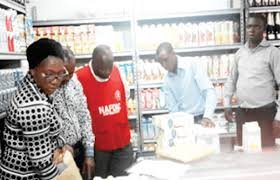
ABUJA, Nigeria – When Nigerian regulators rolled out convoys to seal off the country’s largest open drug markets in early 2025, the images were dramatic: padlocked shops, truckloads of seized medicines and warnings of a public health emergency long ignored. Yet beneath the spectacle lay a deeper crisis — one where weakened regulation, professional strikes and mass emigration of health workers converge to put millions of lives at risk.
Nigeria’s healthcare system is fighting two battles at once: a war against counterfeit and substandard medicines, and a struggle to retain and regulate the professionals meant to safeguard patient care. In this report, Koko Maxwella, reports that in 2025, those battles collided — with devastating consequences.
A Regulatory Mandate Under Pressure
The National Agency for Food and Drug Administration and Control (NAFDAC) carry one of the most critical mandates in Nigeria’s public health architecture: ensuring that medicines, foods and medical products are safe, effective and fit for human use. Its relevance has never been more pronounced.
Between February and March 2025, NAFDAC launched what it described as one of the largest enforcement operations in its history. Coordinated raids shut down Nigeria’s three major open drug markets — Idumota in Lagos, Bridge Head Market in Onitsha, and Ariaria Market in Aba. More than 100 truckloads of expired, falsified and substandard medicines were evacuated, including banned narcotics and unapproved pharmaceuticals.
In August, enforcement escalated at Nigeria’s ports. At Onne Port in Rivers State, NAFDAC took custody of 16 containers of counterfeit and banned medical products valued at an estimated ₦20.5 billion. Among them were millions of doses of falsified codeine syrup, tramadol tablets and other critical medicines routinely used by vulnerable patients.
“These are not victimless crimes,” a senior agency official said during one of the briefings. “They directly translate into treatment failure, resistance, addiction and death.”
To sustain momentum, the federal government announced a Federal and Regional Task Force bringing together regulators, customs officers and security agencies in a multi-sector push against fake drugs and unsafe foods.
Yet even as seizures made headlines, regulators admit the problem remains deeply entrenched.
What Went Wrong — And Why It Persists
Despite high-profile operations, many shuttered drug shops quietly reopen once enforcement teams withdraw. Counterfeit networks adapt quickly, changing packaging, rerouting supply chains and exploiting porous borders.
In Onitsha, market leaders themselves handed over expired and fake drugs valued at hundreds of millions of naira — a gesture hailed as progress but also a signal of how deeply counterfeit products have penetrated legitimate distribution systems.
Regulatory agencies remain chronically under-resourced. Surveillance is often reactive, driven by tip-offs or public outrage rather than sustained monitoring. Prosecutions are slow, and penalties are widely viewed as too weak to deter organised criminal networks.
Frustration has spilled into public debate. Some lawmakers have called for extreme punishments — including life sentences or the death penalty — for fake drug peddlers. While controversial, the proposals reflect mounting concern that existing legal frameworks underestimate the scale of harm inflicted.
Strikes, Migration and the Professional Vacuum
While NAFDAC battles unsafe products, Nigeria’s professional regulators face a parallel crisis.
The Medical and Dental Council of Nigeria (MDCN), responsible for setting standards and disciplining doctors and dentists, spent much of 2025 navigating the fallout of prolonged industrial actions across public hospitals.
Resident doctors, under the umbrella of the Nigerian Association of Resident Doctors (NARD), embarked on repeated strikes over unpaid allowances, training funds and deteriorating working conditions. Some actions stretched for weeks, paralysing tertiary hospitals nationwide.
At the same time, Nigeria’s health workforce continued to shrink. More than 16,000 doctors are estimated to have emigrated in recent years, leaving public hospitals dangerously understaffed.
With wards operating on skeleton crews, MDCN’s ability to enforce standards and monitor professional conduct was significantly weakened — especially in public facilities where oversight is most critical.
The vacuum creates opportunity. Unlicensed providers step in. Informal drug sellers flourish. Patients, desperate for care, turn to the cheapest and most accessible options — often without assurance that medicines are genuine or safe.
Human Impact: When Systems Fail Patients
“Patients are at risk every day,” says Dr. Aisha Abubakar, an Abuja-based consultant physician with more than a decade of experience.
She describes a growing pattern during strikes and service disruptions: patients bypass hospitals altogether, purchasing medicines from roadside vendors or unregistered shops. “Without a valid NAFDAC registration number, these drugs are neither traceable nor reliably tested,” she explains. The consequences range from treatment failure to severe toxic reactions.
For Ekama Daniel, a pharmacist, the scale of the problem threatens to erase hard-won public health gains.
“During the seizures this year, we saw containers with millions of falsified doses of codeine and other drugs,” he says. “That is an epidemic in itself.”
Enforcement alone, he argues, is not enough. “Education must go hand-in-hand with regulation. Consumers need to know how to check NAFDAC numbers and buy only from licensed pharmacies.”
Health economists warn that delayed treatment during strikes worsens chronic illnesses and pushes families deeper into poverty. In many cases, the economic shock forces households to rely on cheaper, unregulated medicines — compounding health risks in a vicious cycle.
Consumer Protection and Systemic Gaps
Nigeria’s consumer protection mechanisms in health services remain fragmented. Patients often lack clear channels to report harm caused by fake drugs or negligent care. Legal redress is slow, expensive and intimidating.
Professional councils — including the Nursing and Midwifery Council of Nigeria and MDCN — face backlogs in disciplinary processes, while coordination between regulators remains inconsistent.
Experts say the absence of seamless data-sharing between NAFDAC, MDCN, Customs and the Pharmacy Council of Nigeria allow counterfeiters and unlicensed practitioners to exploit institutional silos.
What Experts Say Must Change
Public health specialists and civil society groups converge on several priorities:
Stronger legislation with penalties proportionate to the public health damage caused by counterfeit medicines
Sustained funding for regulators to enable year-round surveillance, not episodic crackdowns
Inter-agency coordination that treats fake drugs as organised crime, not isolated offences
Public education campaigns embedded in communities, markets and health facilities
Workforce reforms to address strikes, migration and morale in public hospitals
Without these, experts warn, seizures will remain symbolic — impressive in scale but limited in long-term impact.
Clear Targets for 2026
Advocates are calling for measurable benchmarks in the coming year:
Full digitisation and public verification of NAFDAC product registration
A national database linking licensed health professionals to facilities
Reduced strike days through binding welfare agreements
Faster prosecution timelines for counterfeit drug cases
Expanded consumer reporting mechanisms for unsafe medicines
What Citizens Should Demand
Ultimately, accountability does not rest with regulators alone.
Citizens are urged to demand transparency in health funding, insist on licensed points of care, verify medicines before use and support whistle-blowing efforts within drug markets and health facilities.
As Nigeria’s population grows and health needs expand, the cost of regulatory failure rises sharply.
An Unfinished Fight
The events of 2025 exposed both the strength and fragility of Nigeria’s healthcare oversight. Dramatic raids and task forces signal intent, but lasting protection depends on resilient institutions, protected professionals and informed citizens.
Until regulation and workforce stability move in tandem, the fight against fake drugs — and the broader struggle for safe healthcare — remains unfinished.
About the Author


 Hope Ajayi
 Mirian Gom

 Korede Abdullah