
 Mirian Gom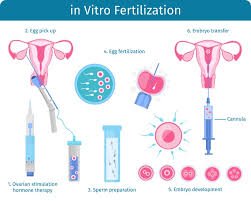
ABUJA, Nigeria – Couples planning to start a family in 2026 may significantly improve their chances of conception with a simple, cost-free change, according to a landmark medical study.
A new randomised controlled trial published in The Lancet finds that men who abstain from ejaculation for just 48 hours before providing a semen sample for in-vitro fertilisation (IVF) achieve higher pregnancy rates than those who follow traditional advice of waiting two to seven days.
The study, led by researchers at the First Hospital of Jilin University in China, followed nearly 500 men undergoing conventional IVF. Half adhered to the long-standing multi-day abstinence recommendation, while the other half ejaculated exactly 48 hours before producing a sample on the day of egg retrieval.
The results show a clear advantage. Clinical pregnancy rates reached 54.4 per cent in the 48-hour group, compared with 44.9 per cent among those who waited longer. Ongoing pregnancies beyond the first trimester were also higher at 46 per cent, versus 36 per cent in the conventional group.
Researchers say the findings challenge entrenched medical guidance.
“Using the trigger-day as the last ejaculation time point, compared to the conventional timing, can improve pregnancy rates in conventional IVF,” the authors note.
Experts believe shorter abstinence produces “fresher” sperm with reduced DNA damage from oxidative stress, even if overall sperm volume is lower. This is particularly significant amid a global sperm-quality decline of nearly 50 per cent over the past 70 years.
While welcoming the findings, fertility specialist Dr David Miller of the University of Leeds urges caution, noting that live birth rates remain the ultimate measure of success.
Still, clinicians describe the “48-hour rule” as a rare, evidence-based intervention that costs nothing and could reshape fertility treatment worldwide.
About the Author


 Korede Abdullah
 Hope Ajayi