

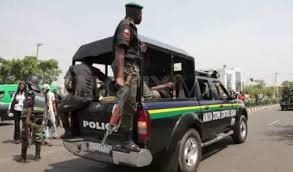
KANO, Nigeria – As church bells rang across Kano on Christmas morning, they carried an unfamiliar undertone for many Christians in the state: calm. In neighbourhoods long accustomed to heightened anxiety during major religious celebrations, worshippers walked to services without haste, children played freely after Mass, and families lingered with neighbours late into the evening. For a city often portrayed through the prism of religious tension, Christmas 2025 unfolded quietly — guarded by vigilance rather than fear. For Christians in Kano, one of Nigeria’s most religiously diverse and politically sensitive states, the season has not always been predictable. But this year, the atmosphere was markedly different. Streets around churches were lined not with apprehension but with uniformed officers, patrol vans and a sense of order that residents say made all the difference.
In this report, Hussaini Ibrahim gathered that the peaceful celebrations followed weeks of coordinated security planning by the Kano State Police Command, supported by sister agencies including the Nigeria Security and Civil Defence Corps (NSCDC). The result, according to residents and security officials alike, was a festive period largely free of incidents, allowing Christians to celebrate openly while reinforcing wider interfaith harmony.
Planning for calm
The groundwork for the calm Christmas was laid days earlier. In a statement issued on Monday, December 23, 2025, and signed by the Police Public Relations Officer, CSP Abdullahi Haruna, the Kano State Commissioner of Police, Ibrahim Adamu Bakori, outlined a comprehensive security strategy designed to protect lives and property before, during and after the festivities.
The directive followed a high-level strategic meeting involving departmental heads, area commanders, tactical unit leaders and divisional police officers. At the meeting, security chiefs reviewed plans for visibility patrols, intelligence-led operations and traffic management, particularly around worship centres and recreational spaces expected to record large crowds.
“The Commissioner of Police has mandated all operational commanders to ensure adequate security coverage at worship centres and recreational facilities across the state,” Haruna said.
Beyond physical presence, the police emphasised intelligence gathering and rapid response.
According to the statement, round-the-clock patrols were introduced, checkpoints were reinforced, and officers were instructed to maintain a professional but approachable posture to reassure the public.
For many residents, the difference was noticeable. Patrols were visible not only in city centres but also in suburban and peri-urban communities, where security presence has often been less pronounced in previous years.
Civil Defence steps in
Complementing the police effort, the Kano State Command of the NSCDC deployed 1,350 personnel across the state during the yuletide period. The deployment, announced in a statement issued on Tuesday, December 24, 2025, was aimed at closing security gaps and extending coverage to areas considered vulnerable.
“As part of efforts to enhance visibility and prevent criminal activities during the yuletide, the Corps deployed one thousand, three hundred and fifty personnel across the state,” said the NSCDC Public Relations Officer, Ibrahim Abdullahi.
According to the statement, tactical teams and rapid response units were strategically positioned across urban, peri-urban and rural locations identified as potential flashpoints. Officers conducted continuous foot and mobile patrols around churches, markets, motor parks, major highways and other public spaces.
For security analysts, the scale of the deployment underscored a broader shift towards inter-agency collaboration. Rather than operating in silos, agencies shared intelligence and coordinated patrol routes, reducing response times and improving situational awareness.
Worship without worry
On Christmas Day, the impact of these measures was felt most clearly around churches. In Sabon Gari, a predominantly Christian area of Kano metropolis, worshippers arrived early for services, passing through orderly security checks before entering church premises.
Inside, sermons focused on peace, gratitude and coexistence — themes that resonated beyond the pews. Outside, uniformed officers stood watch, exchanging greetings with residents and directing traffic to ease congestion.
The Chairman of the Christian Association of Nigeria (CAN) in Kano State, Mr John Namaza, said the difference from previous years was striking.
“Honestly, no one can guarantee 100 per cent security anywhere in the world, but we enjoyed relative peace in Kano State during this Christmas,” Namaza told Africa Health Report on December 26, 2025.
He described the festive period as one of the calmest in recent memory, attributing the improvement to deliberate planning and sustained engagement by security agencies.
“We appreciate the drastic decrease in criminal activities. It shows that the efforts of security agencies are yielding results,” he said.
Life beyond the pews
Away from formal worship, the season unfolded much like Christmas elsewhere: food shared, visits exchanged and children reveling in the excitement of new clothes and simple gifts. For many Christians in Kano, the ability to move freely and celebrate openly was itself a gift.
Mrs Grace Sunday, a resident of Sabon Gari, said the day was marked by warmth and neighbourly interaction.
“Our Christmas was calm. After church, we visited friends and shared food with neighbours. Kano people are peaceful,” she said, noting that Muslim neighbours also stopped by to exchange greetings.
Mr Paul Yohanna echoed the sentiment, pointing to the visibility of security personnel as a key factor.
“There was a visible security presence, especially around churches. We celebrated freely and moved around without any problem,” he told AHR.
For younger residents, the calm carried deeper meaning. Miss Esther Michael said the peaceful celebrations reflected gradual but important progress in interfaith relations.
“We spent Christmas praying, visiting family and sharing love. We thank God and the security agencies for the peace we enjoyed,” she said.
Beyond the festive calm.
While the absence of incidents was widely welcomed, community leaders were quick to caution against complacency. Mr Namaza urged security agencies to sustain the level of collaboration and vigilance beyond the festive season.
“Peace is not something you switch on only during celebrations,” he said. “Continuous intelligence sharing, community engagement and visible policing are essential if we want this calm to last.”
Security experts agree. Festive periods often bring heightened deployment, but long-term stability, they argue, depends on trust between communities and security institutions. In Kano, where religious and ethnic diversity is a defining feature, that trust is built through consistent presence and open communication.
As the yuletide season drew to a close, residents expressed cautious optimism that the calm Christmas could signal a broader trend. For many, the sight of Christians celebrating openly, guarded not by fear but by cooperation, offered a glimpse of what coexistence in Kano can look like when preparation meets goodwill.
For one quiet Christmas at least, the bells rang, the boots stood firm, and a city known for its complexity chose peace





Join the conversation