
From Market Mayhem to Midnight Prayers: How Christmas and New Year 2025 Unfolded in Nigeria
 Mirian Gom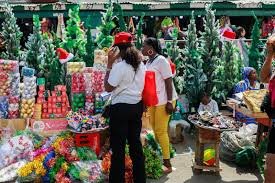
ABUJA, Nigeria – Long before Christmas Day arrived, the signs were already unmistakable. Markets swelled with people, transport systems groaned under pressure, and the air carried the familiar mix of impatience and excitement that defines the festive season in Nigeria. By the time the calendar turned to Christmas and then New Year 2025, the story that emerged was not just one of celebration, but of resilience, hustle, family, faith and renewal.
For many Nigerians, the festive season is a test of endurance as much as it is a time of joy. In the days leading up to Christmas, commercial activity surged across major markets, with Maraba Market standing out as a hive of relentless motion. Between December 22 and 24, the market was at its peak, driven largely by a rush for clothing as families prepared to mark the season in new attire. Koko Maxwella, writes.
Traders struggled to keep up with demand, while buyers navigated narrow pathways choked with goods and bodies. The pressure spilled beyond the market itself. Public transport became increasingly difficult to access, with coastal buses almost impossible to find. Many transporters were fully booked, while others were engaged in private logistics tied to festive shopping and travel. “The days before Christmas were exhausting,” a trader in Maraba Market said. “People wanted everything at once — clothes, food, gifts — and they wanted them immediately.”
To cope with the congestion, alternative means of movement became essential. Like many others, I relied on a commercial bike to move in and out of the market and transport purchases. It was faster, more flexible and often the only way to cut through the gridlock. The experience was intense, but it revealed something deeper: the economic pulse of the festive season, where commerce becomes both chaotic and vibrant.
Food, crowds and communal energy
Beyond clothing, food markets recorded equally heavy patronage. Shoppers crowded stalls selling rice, poultry, spices and cooking essentials, underscoring the central role of food and hospitality in Christmas celebrations. For many households, preparing elaborate meals remains a key expression of love, gratitude and tradition.
The atmosphere in these markets was overwhelming at times — voices overlapping, prices fluctuating, tempers occasionally fraying — yet it also reflected a shared purpose. People were preparing not just to eat, but to host, to give and to celebrate together.
Despite the stress, the communal energy was unmistakable. Strangers exchanged jokes in queues, neighbours helped each other bargain, and traders worked late into the night. It was a reminder that the festive season, for all its pressure, is also a powerful social glue.
A quieter Christmas Day
When Christmas Day finally arrived, the tempo shifted. The frenetic pace of the markets gave way to something slower and more intimate. Rather than loud street parties or extravagant outings, the day centred on family.
Time spent with relatives — talking, laughing and sharing meals — became the defining feature of the celebration. In those moments, the meaning of Christmas felt clearer. The absence of noise and spectacle allowed for deeper connection, turning the day into a space for reflection and gratitude.
For many families, this quieter approach reflected economic realities as well as personal choice. With rising costs and stretched budgets, meaningful celebration did not require excess. Presence mattered more than display.
“It wasn’t about going out,” a family member said. “It was about being together.”
Recreation amid the rush Still, the festive season offered moments of leisure. During the break, time spent with siblings included a visit to Magic Land, a popular recreational centre that introduced a special festive promotion. The offer drew massive crowds, turning the venue into a sea of excited faces and long queues.
The turnout was so overwhelming that accessing all the rides became impossible. Children and adults alike waited patiently, negotiating limited options amid the surge of visitors. While the crowding was frustrating, the outing retained its charm. Laughter, shared snacks and the novelty of being away from routine added a lighter layer to the holiday experience.
The scene highlighted a broader reality of the festive period: public leisure spaces often struggle to meet demand during holidays, yet they remain important outlets for recreation and bonding, especially for families.
Crossing into the New Year
As Christmas faded, anticipation for the New Year grew. New Year’s Eve brought renewed energy, marked by a blend of spirituality and celebration. Attending church that night offered a moment of grounding amid the excitement. The atmosphere was vibrant and uplifting, filled with prayers, music and reflections on the year gone by.
Outside church walls, the city told a different but complementary story. Fireworks and rockets lit up the night sky, while street celebrations intensified. In many areas, roads were temporarily blocked as residents gathered to usher in the New Year together. Bright flashes illuminated faces filled with hope, excitement and, for some, quiet determination.
The celebrations were loud, colourful and symbolic. They marked not just the end of a calendar year, but the collective desire for renewal — a fresh start after months of challenges.
Returning to reality
As the first days of January passed, the festive haze began to lift. Attention gradually shifted back to responsibilities and planning. Preparations to resume work commenced, with an official return scheduled for January 4. The transition was subtle but inevitable, as conversations moved from celebrations to schedules and obligations.
Further ahead, arrangements were made for biometric documentation on January 8, signalling a full return to professional duties. These administrative steps, though routine, served as reminders that the pause of the festive season was ending.
For many, this shift carried mixed emotions. There was relief in returning to structure, but also nostalgia for the warmth and freedom of the holidays. Yet the balance felt appropriate. The season had provided rest and joy, but it also reinforced the importance of readiness and commitment as work resumed.
A season that mirrors society
In retrospect, the 2025 Christmas and New Year holiday reflected the broader rhythms of Nigerian life. It was marked by intense economic activity, highlighting both opportunity and strain. It offered space for family connection, underscoring enduring cultural values. It created moments of recreation and spiritual reflection, and it ended with a sober return to responsibility.
Above all, it was grounding. The season delivered joy without ignoring reality, celebration without abandoning duty.
In its mix of hustle and rest, noise and quiet, faith and work, it captured what the festive period means to many Nigerians: a pause to reconnect, a chance to hope, and a reminder to move forward with renewed purpose.
About the Author


 Hope Ajayi
 Korede Abdullah

 Oluwatobi Adu