 Hussaini Ibrahim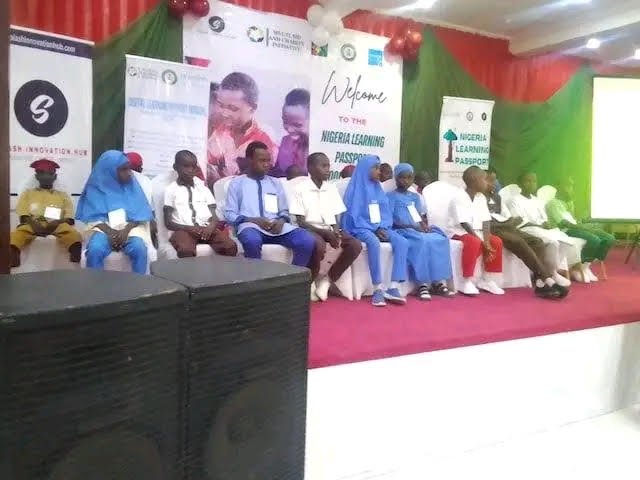
MAIDUGURI, Nigeria – The United Nations Children’s Fund (UNICEF) says more than 33,500 children in Borno State are now accessing digital learning through the Nigeria Learning Passport (NLP), a platform designed to support education continuity in communities affected by conflict.
Speaking at the annual NLP quiz competition in Maiduguri on Saturday, UNICEF Education Officer, Charles Atiya said the initiative is reshaping learning access for children whose schooling has been disrupted by insecurity.
“The Nigeria Learning Passport provides free, localised lessons that children can access both online and offline,” Atiya said. “Here in Borno, 33,532 learners have completed at least one digital course this year, supported by 425 trained teachers who understand blended and digital teaching approaches.”
The NLP platform currently hosts over 17,000 curriculum-aligned learning resources, while nationwide teacher training programmes have equipped more than 30,000 educators across 21 states with digital literacy skills.
UNICEF estimates the platform has now reached more than 800,000 learners and teachers, including over 230,000 school-aged children.
Atiya highlighted the inclusion of Tsangaya learners — children traditionally outside the formal school system — as a key milestone. “This is not only about access. It is about equity and inclusion,” she said.
UNICEF acknowledged support from the Borno State Government and donors including Airtel, SILSA, Sony, Samsung, and the UK’s FCDO, which provided tablets, routers, offline servers, and learning devices to schools with limited connectivity.
“We are preparing children for a digital future. These skills are no longer optional,” Atiya said, urging parents, schools, and communities to maintain momentum.
The Nigeria Learning Passport continues to expand as part of broader efforts to rebuild education systems weakened by years of insurgency and displacement in Nigeria’s northeast.
About the Author


 Mirian Gom
 Hope Ajayi