


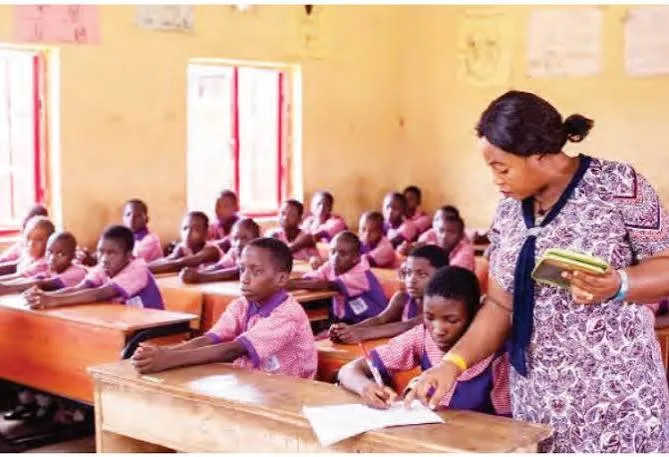
LAGOS, Nigeria – Imagine a classroom where one teacher struggles to teach dozens of pupils at once. Some children cannot see the board clearly, others struggle to understand their lessons, while exercise books pile up faster than the teacher can mark them. For millions of Nigerian children, this is the reality of an education system under pressure from teacher shortages, overcrowded classrooms, poor working conditions and inadequate funding. In this report, Korede Abdullah examines Nigeria’s reported 1.19 million teacher shortfall, the challenges confronting public schools across several states and the gap between government education commitments and what pupils experience in the classroom.
A Generation at Risk
A shortage of teachers is more than an administrative problem. It determines how much attention children receive, whether learning difficulties are identified early and how effectively pupils acquire the skills needed to progress through school. Across Nigeria, insufficient teaching staff, overcrowded classrooms, inadequate learning materials and delayed salaries are placing additional pressure on public schools.
Although federal and state governments have announced recruitment exercises and infrastructure interventions, a critical question remains: are these measures reaching the schools and children that need them most? The national figures reveal the scale of the challenge.
The Numbers Behind Nigeria’s Teacher Crisis
Data from the Universal Basic Education Commission (UBEC) indicate that 915,913 teachers serve 31.77 million primary-school pupils, against an estimated teacher shortfall of 1.19 million. Separately, the Federal Ministry of Education’s 2024/2025 Annual School Census recorded 39.83 million learners, 1,185,610 teachers and 725,778 classrooms across the reporting system.
The census puts the average at 60.1 learners per classroom, against the Universal Basic Education standard of 35 pupils per classroom. However, the figures come with an important limitation. Only 53.7 per cent of listed schools submitted data, meaning the census does not capture the complete picture of Nigeria’s education system.
The two datasets also measure different things. UBEC’s estimate concerns the reported primary-school teacher shortage, while the national census covers a wider population of learners, teachers and classrooms. They should not be interpreted as interchangeable measures. Nevertheless, both point to substantial pressure on basic education.
In overcrowded classrooms, teachers have less time to assess individual pupils, correct mistakes and identify children struggling with particular subjects. For many learners, this can mean falling behind without receiving the support they need.
Teachers Overstretched, Pupils Left Behind
The Secretary of the Association of Primary School Head Teachers of Nigeria (AOPSHON), Mrs. Kudirat Gbadamosi, described the shortage as a serious threat to educational quality. “The shortage is a serious threat to the quality of education in Nigeria. When schools do not have enough qualified teachers, the available teachers are forced to handle more pupils than they can effectively teach,” she told Africa Health Report.
She explained that overcrowded classrooms make it difficult to monitor pupils’ progress, assess their understanding and provide individual support. “A crowded classroom makes it difficult for a teacher to give every child adequate attention. Marking assignments, correcting mistakes, conducting assessments and supporting pupils with learning difficulties become more demanding,” she added.
But the problem extends beyond the number of teachers employed. Their distribution across schools and communities is equally important.
Gbadamosi called for a comprehensive national teacher audit to identify vacancies, subject-specific shortages, retirements and staffing disparities. “Government should begin with a comprehensive national teacher audit to identify vacancies, subject-specific shortages, retirements and staffing disparities,” she said.
Such an exercise would help governments determine where additional teachers are needed and ensure that recruitment addresses actual classroom vacancies rather than relying solely on state-wide employment figures. Developments in several states illustrate why that distinction matters.
Oyo: Primary Schools Lose Teachers as Secondary Numbers Rise
Oyo State offers an example of how teacher shortages can vary across different levels of education. A report published in February 2026 indicated that teaching staff in public primary schools declined from 19,583 in May 2019 to 16,481.
In contrast, secondary-school teaching staff reportedly increased from 13,730 to 26,436 following recruitment exercises. The figures suggest that recruitment at one level of education does not necessarily address shortages at another. They also highlight the importance of identifying staffing needs school by school.
The state’s access challenges add another dimension. A separate report published in March 2026 estimated that 674,324 children aged three to 17 were out of school, with poverty and long distances to schools among the identified barriers.
For children already struggling to access education, inadequate staffing and learning facilities can further limit their opportunities. The challenge, therefore, is not simply to recruit more teachers but to ensure that underserved schools receive them while addressing the economic and geographical barriers keeping children out of classrooms.
Ekiti: 5,530 Teachers Recruited, but Salary Questions Persist
Ekiti State has announced substantial recruitment and infrastructure interventions under Governor Biodun Oyebanji. On 5 October 2026, Oyebanji said his administration had recruited 5,530 teachers into public primary and secondary schools over four years.
In July, the government also approved another primary-school recruitment exercise to fill vacancies created by retirements. The Chairman of the State Universal Basic Education Board (SUBEB), Professor Femi Akinwumi, identified staffing gaps and underserved communities as priorities. However, recruitment announcements do not necessarily establish whether schools have adequate staff or whether newly employed teachers are receiving their salaries.
In February 2026, about 2,000 secondary-school teachers recruited in October 2025 reportedly complained about unpaid salaries. The Ekiti State Teaching Service Commission said the affected teachers had received provisional appointment letters. It explained that some were yet to complete documentation, credential verification and payroll registration.
The distinction matters because an appointment letter does not automatically mean a teacher has completed recruitment, resumed work or started receiving a salary. Ekiti has also reported more than ₦9.7 billion in counterpart funding to UBEC between 2022 and 2025. The government said it had renovated 699 classroom blocks and commenced work on another 106.
The 2024/2025 Annual School Census recorded 424,582 learners, 32,674 teachers and 17,846 classrooms in the state. However, only 2,223 of the 2,905 listed schools submitted data. Although the reported learner-to-teacher ratio of 13 to one appears favourable, incomplete returns make it difficult to establish whether staffing is adequate across all schools. For Ekiti, the next test is whether recruitment, infrastructure spending and improved teacher welfare translate into better classroom experiences.
Osun: Recruitment Grows, but Funding Constraints Remain
Osun State has also expanded its recruitment efforts, although funding constraints continue to affect its education system. In March 2026, Governor Ademola Adeleke approved a supplementary recruitment list, increasing the number of successful applicants from 1,000 to 1,241.
Permanent Secretary of the Ministry of Education, M.A.K. Jimoh, said the appointments comprised 660 personnel for SUBEB, 526 for the Teaching Service Commission (TESCOM) and 55 education officers.
TESCOM Chairman Temitope Mustapha rejected allegations that public schools were being abandoned. “No school is going into extinction in Osun State,” he said, adding that some newly recruited teachers had been deployed to rural schools.
The government has also reported infrastructure improvements. Adeleke said his administration constructed or refurbished more than 400 classrooms in 139 schools between 2022 and 2024 and provided over 12,500 sets of furniture. However, Commissioner for Education Dipo Eluwole acknowledged that limited finances were restricting further recruitment.
“We are unable to get enough teachers because of paucity of funds,” he said. The funding challenge extends beyond recruitment.
In October 2026, the state government disclosed that students at the Osun State Secondary School for Students with Special Needs in Osogbo had not resumed because funds were unavailable for their boarding and feeding programme.
Eluwole explained: “The non-resumption of the students is due to the unavailability of funds to cater for their boarding and feeding programme.” He added that the government could not guarantee the students’ welfare under the circumstances.
The situation raises concerns about the continuity of education for children with disabilities, whose learning needs may require additional support and specialised facilities.
It also demonstrates why education budgets must cover more than recruitment and classroom construction. Funding must sustain school operations and protect vulnerable pupils from interruptions to their education.
Ogun: ₦271.6 Billion Education Budget Faces Implementation Questions
Ogun State has announced major investments in teacher recruitment and school infrastructure.
At the 2026 World Teachers’ Day celebration, Governor Dapo Abiodun said his administration had employed more than 7,000 teachers and earmarked ₦24 billion through SUBEB for critical education infrastructure. The government also announced the absorption of more than 1,500 OgunTEACH interns into the mainstream civil service.
Commissioner for Education, Science and Technology, Professor Abayomi Arigbabu, had earlier reported that more than 1,474 classrooms had been built or rehabilitated, with another 332 projects underway. However, the impact of these interventions depends on whether projects are completed, equipped and maintained.
Ogun’s 2026 budget reportedly allocated ₦271.6 billion to education, representing 16.3 per cent of its ₦1.67 trillion total budget. Yet reported spending against the relevant 2025 allocation stood at 56.7 per cent during the period examined.
The figures raise questions about the actual release and utilisation of approved funds, the completion of school projects and the extent to which spending has improved teaching and learning.
For Ogun, the challenge is to demonstrate that budgetary commitments translate into functional classrooms, adequate teaching staff and better educational outcomes.
Lagos: Enrolment Is Not Enough Without Better Learning
In Lagos State, education authorities are shifting attention towards measuring what pupils actually learn rather than relying solely on school inspections and administrative compliance.
At an education quality assurance roundtable in Ikeja on 22 October 2026, Commissioner for Basic and Secondary Education Jamiu Tolani Alli-Balogun said school inspections must produce measurable improvements in pupils’ performance.
The Director-General of the Office of Education Quality Assurance (OEQA), Dr Sulaimon Ogunmuyiwa, disclosed plans to expand monitoring across the state’s 57 local government areas and local council development areas. The proposals include digital school evaluations and stronger school-based self-assessment.
Former Budget Office Director-General Ben Akabueze also argued that education should be assessed by what children learn rather than enrolment and infrastructure figures alone.
The emphasis is significant. A child can attend school regularly and still struggle with basic reading, writing and mathematics. In May 2026, Alli-Balogun said the state spent ₦1.4 billion to register 45,598 public-school students for the 2026 West African Senior School Certificate Examination.
He also reported that 61.52 per cent of candidates sponsored for the 2025 examination obtained at least five credits, including English Language and Mathematics.
While these figures indicate government support and provide some insight into examination performance, they do not establish whether all pupils receive adequate teaching, particularly in underserved communities. School monitoring must therefore assess classroom instruction, teacher attendance, learning materials and pupils’ progress, alongside compliance with administrative standards.
Ondo: 8,083 Teacher Shortfall Highlights Deployment Challenges
Ondo State’s 2025–2028 teacher recruitment and deployment plan identified a shortage of 8,083 teachers across basic and junior secondary education.
The figure comprised 6,208 vacancies at the SUBEB level and 1,875 at the Teaching Service Commission (TESCOM) level.
Governor Lucky Aiyedatiwa approved the employment of 1,010 secondary-school teachers in March 2025, following an earlier recruitment process covering primary and secondary schools.
At the 2026 Teachers’ Day celebration, Aminu Olugbenga, Ondo State president of the All Nigeria Confederation of Principals of Secondary Schools (ANCOPSS), commended government interventions but called for additional recruitment and improved school security.
Commissioner for Education, Science and Technology, Professor Igbekele Ajibefun, also announced measures targeting premature promotion from Primary Four to secondary school, examination malpractice and unregistered private schools.
Meanwhile, SUBEB Permanent Secretary Princess Abike Bayo-Ilawole has led enrolment campaigns, while TESCOM Chairman Mrs Oluwadaisi Oke oversees public secondary-school teacher recruitment and welfare.
These interventions address different challenges, including school access, recruitment and education standards.
However, increased enrolment must be matched by adequate staffing, safe learning environments and suitable facilities. Otherwise, more children entering classrooms could intensify existing pressure on schools.
Unpaid Salaries Put Teachers’ Welfare and Retention at Risk
Beyond recruitment, delayed salary payments remain a major concern for teachers across several states.
Reports cited in this investigation indicate salary arrears of 15 months in Kogi State, 10 months in Benue, eight and a half months in Bayelsa and six months in Ekiti. The reported arrears raise questions about teachers’ financial security and the ability of state governments to retain qualified personnel.
Gbadamosi said prolonged salary delays undermine teachers’ welfare and their capacity to perform effectively. “Teachers depend on their salaries to feed their families, pay rent, transport themselves to work and meet other basic obligations. Prolonged non-payment can damage morale, affect attendance and make it difficult to retain qualified personnel,” she said.
She also raised concerns about communities contributing money to support teachers’ salaries. “Where communities have to contribute money to pay teachers because government provision is inadequate, it raises serious questions about the sustainability of public education financing,” she said.
Although communities can support schools through voluntary contributions and local initiatives, such assistance cannot replace the government’s responsibility to finance public education and pay teachers.
Gbadamosi urged governments to settle verified salary arrears, implement applicable wage agreements and pay pensions and gratuities promptly.
Reports that some states have yet to fully implement the new minimum wage or the Harmonised Retirement Age for Teachers Act also require attention from the relevant authorities.
Without reliable remuneration and reasonable working conditions, governments risk losing experienced teachers while making the profession less attractive to qualified graduates.
Education Funding: The Gap Between Budgets and Classrooms
Nigeria’s teacher shortage is closely linked to inadequate education funding and concerns about how available resources are utilised.
A September 2026 UNICEF report, Public Finance for Basic Education in Nigeria, reportedly found that education’s share of total government expenditure declined from 9.3 per cent in 2015 to 3.6 per cent in 2023.
The reported figure is considerably below the widely cited international benchmark of allocating 15–20 per cent of public expenditure to education. For schools, inadequate funding can translate into dilapidated classrooms, insufficient desks, a shortage of textbooks, poor sanitation and too few teachers.
Some schools also lack safe drinking water, functional toilets and secure boundaries, creating additional challenges for pupils and teachers.
Gbadamosi said basic education required sustained investment in both personnel and infrastructure. “Basic education requires sustained investment in teachers, classrooms, instructional materials, sanitation and school maintenance,” she said.
She stressed that increased budget allocations must be matched by actual releases and transparent spending. “Additional funding is necessary to address teacher shortages, poor infrastructure and inadequate learning materials. At the same time, governments must ensure that money allocated to education is properly released, spent for its intended purpose and independently audited,” she said.
Her recommendation highlights the need for transparent budgets, timely releases, independent audits and public reporting on completed school projects. Parents and communities should be able to establish what governments have approved for their schools, what has been delivered and what remains outstanding.
10.5 million Children Out of School as Learning Gaps Persist
The consequences of Nigeria’s education challenges extend beyond overcrowded classrooms and teacher shortages.
UNICEF has reported that approximately 10.5 million Nigerian children aged five to 14 are out of school. Its June 2022 foundational learning factsheet also found that 70 per cent of children could not read with meaning or solve simple mathematics problems.
Although the learning assessment dates to 2022 and should not be presented as a current measurement, it illustrates the depth of Nigeria’s foundational learning challenge. Children who attend school may still struggle with basic literacy and numeracy when they lack consistent instruction, learning materials and regular feedback.
Those outside the education system face additional barriers, including poverty, insecurity, long distances to schools and the cost of education.
Gbadamosi said consistent teaching and adequate learning materials were essential to children’s development. “Children need consistent instruction, regular feedback and opportunities to practise what they learn. When teachers are overstretched, these activities may suffer,” she said.
She warned against increasing school enrolment without providing the teachers, classrooms and materials required to support pupils.
Getting children into school is only the beginning. They must also receive quality instruction and have a safe environment in which to develop their abilities.
What Must Change to Close Nigeria’s Teacher Gap?
Gbadamosi called for a comprehensive national teacher audit, properly funded recruitment programmes, improved working conditions and urgent rehabilitation of unsafe and dilapidated schools.
She also urged governments to establish measurable targets for teacher recruitment, classroom improvements, school attendance and learning outcomes. “Teachers’ welfare and pupils’ learning outcomes are closely connected. Qualified teachers need fair remuneration, manageable workloads, professional development and adequate teaching materials to perform effectively,” she said.
She maintained that governments must move beyond announcements and demonstrate measurable improvements in public schools. “Education should be treated as a fundamental public responsibility, not a residual budget item,” she said, adding that teachers must receive their lawful entitlements and pupils must have access to safe, adequately equipped learning environments.
Closing the teacher gap will require several coordinated interventions:
- A national teacher audit: Governments must identify vacancies, subject-specific shortages, retirements and staffing disparities.
- Fair teacher deployment: Recruitment must prioritise underserved communities and schools with the greatest staffing needs.
- Timely salaries: States must settle verified arrears and ensure regular payment of teachers’ entitlements.
- Improved infrastructure: Schools need safe classrooms, furniture, sanitation facilities and adequate learning materials.
- Transparent education spending: Governments must publish budget releases, expenditure records and project completion reports.
- Learning-outcome monitoring: Education authorities must track literacy, numeracy, attendance and pupils’ progress, rather than relying on enrolment figures alone.
Governments should also publish regular school-level data on teacher numbers, vacancies, attendance and infrastructure projects. Such information would help parents, policymakers and education stakeholders determine whether interventions are reaching the schools that need them most.
Nigeria’s Education Crisis Will Be Measured in Children’s Futures
Across Ekiti, Osun, Ogun, Lagos and Ondo, governments have announced recruitment exercises, classroom renovations, digital learning initiatives and other education interventions.
These efforts indicate that the challenges are receiving attention. However, reported staffing shortages, salary concerns, incomplete school data and persistent learning difficulties raise questions about the extent to which the interventions are improving classroom conditions.
Federal and state governments must recruit and fairly deploy qualified teachers, pay salaries on time, improve school facilities and increase education funding while ensuring that public money is properly accounted for.
Ultimately, Nigeria’s education system cannot be judged by the number of teachers employed, classrooms renovated or billions of naira announced.
The real test is whether a child in a rural primary school can read confidently, whether a secondary-school student can solve basic mathematics problems, whether teachers can work without worrying about unpaid salaries and whether every child, regardless of family income, location or disability, has a fair opportunity to learn.
Nigeria’s reported 1.19 million teacher shortfall is therefore more than a staffing problem. It raises a fundamental question about the country’s commitment to educating its children. Every year that classrooms remain understaffed, millions of pupils’ risk losing opportunities they may never recover. The cost of failing to close the gap will not be measured only in missing teachers, but in the futures of the children left behind.




Join the conversation