The Drink That Turned Deadly: Inside Ondo’s Monkey Tail Poisoning Tragedy
 Korede Abdullah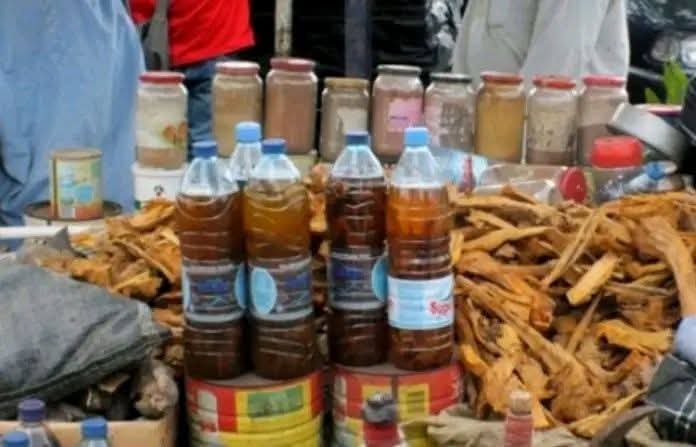
Locally prepared alcoholic mixtures linked to the suspected methanol poisoning outbreak in Ondo State.
ONDO, Nigeria- The deadly poisoning outbreak in Ondo has exposed more than the dangers of suspected methanol-contaminated alcoholic mixtures, raising critical questions about informal alcohol markets, quality controls and Nigeria’s capacity to respond to toxicology emergencies. By September 17, NAFDAC had recorded 182 affected people and 48 deaths across Odigbo and Irele, with some survivors suffering total or partial blindness; in this report, Korede Abdullah examines the risks behind locally prepared alcoholic mixtures and the gaps in Nigeria’s poisoning response through interviews with survivors, health officials, and residents.
When a Familiar Drink Became Deadly
In September 2026, several communities in Ondo State were thrown into a public-health emergency after residents became seriously ill following the consumption of locally prepared alcoholic and herbal mixtures suspected to have been contaminated with methanol.
The affected communities included New Town, Odole, Okele, Orita Odigbo, Araromi-Obu and Oniparaga in Odigbo Local Government Area, with cases also reported in Irele.
The number of victims rose as investigations expanded. NAFDAC later reported 182 affected people and 48 deaths, while laboratory analysis detected high concentrations of methanol in samples linked to the outbreak. The agency also reported that 11 of 15 samples tested positive for Cannabis indica.
The findings transformed what initially appeared to be a local health crisis into a wider warning about the safety of informal alcoholic products.
What Is ‘Monkey Tail’?
“Monkey Tail” is a commonly used name for locally prepared, high-alcohol herbal mixtures sold informally in parts of Nigeria. It is not a standardised commercial product with one fixed recipe, meaning its ingredients and preparation can vary between producers and locations.
Some preparations may contain locally distilled alcohol, herbs, roots and spices. Because production is often informal, consumers may have limited information about the ingredients, alcohol concentration, production conditions or storage of a particular batch.
That variation does not mean every drink sold as “Monkey Tail” is poisonous. The greater danger arises when an unregulated product becomes contaminated with a toxic substance such as methanol.
How Methanol Turns Alcohol into Poison
Methanol is different from ethanol; the type of alcohol intended for human consumption. Once methanol enters the body, it is metabolised into toxic compounds, including formaldehyde and formic acid. These substances can cause severe metabolic acidosis and damage the optic nerve, potentially resulting in visual impairment, blindness, neurological complications, coma and death.
A victim may initially experience headache, dizziness, nausea, vomiting, abdominal pain or weakness and appear to be suffering from ordinary alcohol intoxication. More severe symptoms may emerge after a delay, giving families a dangerous impression that the person simply needs to rest.
As poisoning progresses, victims can develop visual disturbances, breathing difficulties, altered consciousness, seizures, coma and potentially fatal complications.
Blindness Among the Survivors
The Ondo outbreak has left some survivors with life-changing injuries. NAFDAC reported that five people became totally blind and two others partially blind, while other victims experienced headaches, body weakness and pain, breathing difficulties and altered consciousness.
Ondo State Commissioner for Health, Dr Banji Ajaka, described the rapid deterioration associated with severe poisoning. “Once they consume, depending on the quantity, the kidneys will pack up, the eyes will go, the brain will be damaged.”
The effects therefore extend beyond the deaths recorded during the outbreak. Survivors may face long-term disability and the economic and social consequences that accompany it.
How Did the Poison Get into the Drink?
Detecting methanol in samples provides evidence of contamination, but it does not by itself establish how the substance entered the drinks.
Dr Akin Iyanda, speaking with Africa Health Report, said investigators must determine whether the contamination resulted from: “deliberate adulteration, accidental contamination, inappropriate production or another cause.”
That requires tracing the product from production through distribution and sale, identifying the ingredients used and determining how consumers were exposed.
The investigation is therefore not only about identifying a toxic substance. It is also about establishing where the contamination occurred and whether it could have been prevented.
The Risk Behind Informal Alcohol Markets
Informal alcoholic mixtures are not automatically poisonous. The public-health concern is that consumers may have few reliable safeguards for determining whether a particular batch has been produced safely.
Iyanda said informal production can involve weak controls over ingredients, alcohol concentration, storage, distribution and manufacturing processes. Unlike regulated commercial products, some informal preparations may not undergo consistent laboratory testing before reaching consumers.
This creates an information gap: consumers may recognise the name of a drink without knowing precisely what is in the bottle or container they are buying. The Odigbo outbreak showed the consequences when that uncertainty intersects with a toxic contaminant.
Why Consumers Turn to Informal Drinks
Price and accessibility are important parts of the story. Locally produced alcoholic mixtures can be cheaper and easier to obtain than regulated commercial alternatives, particularly for consumers with limited incomes.
That means enforcement alone may not eliminate demand. If one product disappears from the market but consumers still need cheap alcoholic drinks, demand may shift towards another informal producer or product. A lasting response therefore requires stronger monitoring alongside public education, safer production practices and effective enforcement against dangerous products.
A Laboratory Is Not Enough
For Iyanda, the Odigbo emergency also exposes a less visible problem: the difference between having laboratory capacity and being able to use that capacity quickly during a poisoning outbreak. “You cannot simply ask whether the country has a laboratory capable of detecting methanol. You have to ask whether a sample from a remote community can reach that laboratory quickly,” he said.
Samples must be collected correctly, preserved and transported appropriately before they can be analysed. Clinicians also need access to toxicology advice while laboratory investigations are still underway.
In suspected toxic-alcohol poisoning, treatment may also need to begin on the strength of strong clinical and epidemiological evidence rather than waiting indefinitely for laboratory confirmation.
The Antidote Must Reach the Patient
A treatment sitting somewhere within the health system is of little value if it cannot reach the patient in time. Iyanda stressed that point: “Having an antidote listed or available somewhere in the health system is not the same as having it immediately accessible to the patient who needs it.”
Effective poisoning response therefore requires more than medicines. It depends on early recognition, trained clinicians, toxicology support, appropriate referral systems and access to advanced treatment, including dialysis where indicated.
For communities far from major specialist centres, those links can determine how quickly a suspected poisoning becomes a treatable emergency.
A Community Left Counting the Cost
For residents of Odigbo, the outbreak is measured not only in official statistics but in families, neighbours and friends who became sick or died. Odigbo native Lanre Gbede described the incident as: “a painful tragedy for our community”
He said many residents had consumed what they believed was an ordinary local alcoholic drink before people began falling seriously ill.
Gbede called for authorities to establish the source of the suspected toxic mixture and strengthen monitoring, stressing that: “people need to know what they are consuming, especially when a product is being sold without proper information about its contents.”
Another Odigbo resident, Ademola Oyejide, said the scale of the tragedy was unexpected. “Nobody expected that drinking this kind of mixture could lead to so many deaths,” he said.

Oyejide urged residents to alert health authorities immediately when several people develop similar symptoms after consuming the same product. “If several people become sick after consuming the same drink, the community should immediately alert the health authorities instead of waiting until more people are affected.”
Beyond Odigbo
The poisoning outbreak raises questions that extend beyond one product and one community: how Nigeria monitors informal alcoholic mixtures, how quickly toxic exposures can be detected, whether toxicology services are accessible outside major centres and whether hospitals can provide the treatment required during a mass poisoning.
Dr Iyanda said clusters of unusual illness following consumption of the same product should raise suspicion of a common toxic exposure. “If clinicians and surveillance officers do not consider a common toxic exposure, diagnosis can be delayed.”
For consumers, severe symptoms after drinking a suspicious alcoholic preparation should not be dismissed as ordinary intoxication. Headache, vomiting, confusion, breathing difficulties and particularly blurred or reduced vision require urgent medical attention.
The deeper lesson from Odigbo is that poisoning emergencies are not contained by laboratory findings alone. They require surveillance that detects unusual illness early, laboratories that can receive and process samples quickly, clinicians who recognise toxic exposure and treatment systems capable of reaching patients before irreversible damage occurs.
The 48 deaths recorded in Ondo are therefore more than a statistic. They are a warning that Nigeria’s response to toxic alcohol poisoning must begin before the next community starts counting its dead.
About the Author


 Mirian Gom

 Oluwatobi Adu