 Korede Abdullah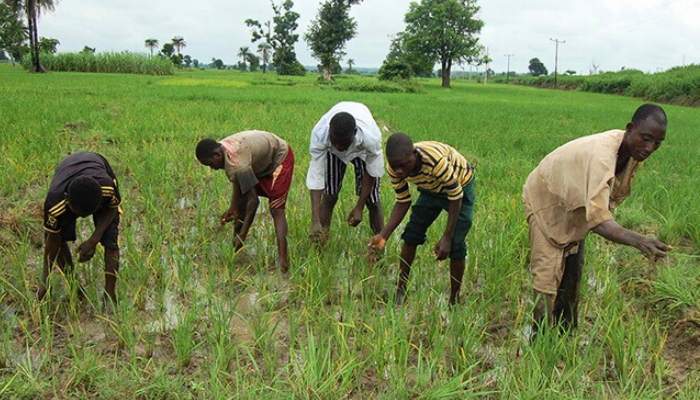
LAGOS, Nigeria – Nigeria has some of Africa’s largest expanses of fertile farmland. Yet millions of families skip meals, healthy diets have become unaffordable and food inflation continues to squeeze household budgets. Why is a country capable of feeding much of West Africa struggling to feed itself? Using the latest State of Food Security and Nutrition in the World (SOFI) 2026 report, Korede Abdullah examines why Nigeria’s agricultural promise has failed to translate into food security.
A Country Rich in Land but Poor in Food Security
Nigeria has introduced numerous agricultural programmes over the past four decades, ranging from subsidised fertiliser distribution to anchor borrower schemes, mechanisation initiatives and emergency interventions.
Yet food inflation remains stubbornly high, while insecurity, climate shocks, weak infrastructure and low productivity continue to limit food production.
Agricultural economist Dr. Israel Ojo believes the country’s greatest challenge is no longer access to land.
“Nigeria’s problem is productivity, not land availability. We have enough land to feed ourselves, but average yields remain far below global standards because many farmers still rely on rain-fed agriculture, manual labour and outdated farming practices.”
He argues that discussions should shift from how much land Nigeria possesses to how efficiently that land is utilised.
What Asia Did Differently
The SOFI report, jointly produced by the Food and Agriculture Organization (FAO), International Fund for Agricultural Development (IFAD), UNICEF, World Food Programme (WFP) and the World Health Organization (WHO), highlights how several Asian countries dramatically reduced hunger through decades of consistent investment.
Countries including China, India and Israel expanded irrigation, agricultural research, mechanisation, improved seed varieties and rural infrastructure while maintaining stable agricultural policies.
According to Dr. Ojo: “Agricultural transformation is driven by research, technology, infrastructure and consistent investment—not by programmes that disappear whenever governments change.”
Tinubu’s Remarks Spark National Debate
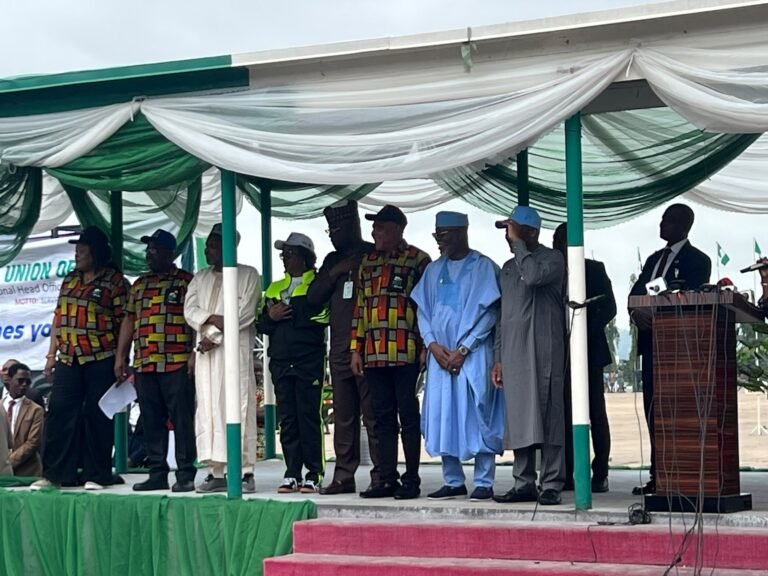
The report coincided with renewed public debate following President Bola Tinubu’s comments during a meeting with members of the Catholic Bishops’ Conference of Nigeria.
The President acknowledged that hunger had long existed in Nigeria and defended his administration’s interventions, including the declaration of a state of emergency on food security, fertiliser distribution financed through subsidy savings and temporary cash support for vulnerable households.
He also urged greater community participation in addressing hunger and encouraged Nigerians to embrace farming as part of the solution.
His remarks, however, generated strong reactions from opposition politicians and many Nigerians facing rising food prices.
Families Feel the Crisis Every Day
For many households, hunger is no longer measured by empty stomachs alone but by difficult choices made at the market.
Lagos trader Bisi Adeyemi says shopping has become increasingly painful.
“Every time I visit the market, food prices have gone up again. I now buy much smaller quantities because my income has not changed. Feeding my children three times a day has become extremely difficult.”
Hairdresser Chinwe Okafor, who operates in Igando, Lagos, believes healthy eating is gradually becoming unaffordable for ordinary Nigerians.
“Healthy food is becoming something only wealthy people can afford. The government needs to help farmers produce more food so prices can come down.”
A Hunger Crisis Becoming a Public Health Emergency
Experts warn that the consequences extend beyond empty plates.
Nutrition specialist Ademola Akinsola says poor diets are increasing the burden of disease across the country.
“Healthy diets are not luxuries. They are essential for children’s growth, stronger immunity, learning, productivity and disease prevention. Food insecurity has become both an agricultural and public health emergency.”
Medical evidence shows poor nutrition contributes to childhood stunting, maternal complications, weakened immunity and increased vulnerability to infectious and non-communicable diseases.
According to Akinsola, improving food security is therefore as important for national health as strengthening hospitals.
Insecurity Is Emptying Nigeria’s Farms
Experts identify insecurity as one of the biggest barriers to increased agricultural production.
Banditry, kidnapping and farmer-herder conflicts have forced thousands of farmers off their land across several food-producing states.
Dr. Ojo warns: “Without security, every agricultural intervention will produce only limited results because farmers cannot cultivate land they cannot safely access.”
Akinsola also advocates ranching as a long-term solution to farmer-herder conflicts.
“Most major livestock-producing countries have moved away from open grazing because ranching increases productivity, reduces conflicts and protects farmland.”
Experts Call for Long-Term Reforms
Rather than relying on emergency interventions, both experts argue Nigeria needs sustained structural reforms.
Among their recommendations are:
Expansion of irrigation systems
Greater investment in agricultural research
Modern farming technologies
Rural roads and storage facilities
Affordable agricultural financing
Stronger extension services
Agro-processing industries
Better collaboration between government, universities and the private sector
They also urge greater investment in young agricultural professionals capable of introducing innovation into the sector.
Can Nigeria Finally Feed Itself?
The evidence suggests Nigeria’s food crisis is not caused by a shortage of land but by decades of inconsistent policies, insecurity, low productivity and inadequate investment.
Despite its enormous agricultural potential, the country continues to import large quantities of food while millions struggle to afford healthy diets.
The latest global food security report offers another reminder that ending hunger will require more than seasonal interventions or emergency declarations. It will demand sustained political commitment, modern farming systems, improved rural infrastructure and policies that survive changes in government.
As Dr. Ojo concludes: “Nigeria has fertile land, favourable climate, a large domestic market and abundant human resources. The real question is no longer whether we have the capacity to feed ourselves—it is whether we have the political will to make it happen.”
Nigeria’s food crisis is no longer a question of fertile land or favourable weather. It is a test of political will. Until successive governments invest consistently in modern agriculture, protect farmers, expand irrigation and improve food supply chains, millions of Nigerians will continue harvesting hunger instead of abundance—despite living in one of Africa’s richest agricultural nations.
About the Author

 Oluwatobi Adu
 Hope Ajayi