
Women Drive Disease Detection, Boost Vaccination Response Across Nigeria
 Oluwatobi Adu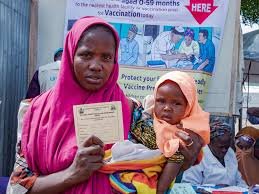
KEFFI, Nigeria – Women health workers are leading Nigeria’s frontline response to disease outbreaks, improving early detection, vaccination coverage and community trust in health systems, officials say.
In Nasarawa State, their impact becomes evident during a recent measles outbreak in Angwan Gangaran Tudu, where coordinated grassroots efforts help contain the spread and strengthen public health response.
“When my son developed a rash, I was scared,” says Hauwa Mohammed, a resident. “But the women health workers came to our home, explained what to do and helped us get care quickly.”
Health authorities say such interventions reflect a nationwide trend, with women serving as first responders—bridging gaps between communities and formal healthcare systems.
During the outbreak, female health workers lead door-to-door sensitisation campaigns, promote early symptom reporting and guide families to appropriate care.
Their efforts support the administration of 76,500 vaccine doses, deployment of 11 cold chain units and improved services across five health facilities. Women account for 78 per cent of the vaccination workforce, driving coverage from 60 per cent to 97 per cent in affected communities.
According to World Health Organization coordinator Zeenat Kabir Asma’i, investing in women at the community level delivers measurable results.
“When women are trained and trusted, we see earlier detection, higher vaccination uptake and better follow-up with families,” she says.
Despite progress, experts highlight persistent gaps in leadership opportunities, training and career advancement for women in healthcare.
Authorities and partners are now calling for sustained investment in gender-responsive systems to strengthen outbreak preparedness and long-term resilience.
About the Author


 Edino Chubiyo Cornelius
 Chukwu Obinna
 Hussaini Ibrahim