
Civic Rights at Risk: Uncollected PVCs and the Growing Threat to Youth Participation in Nigeria’s 2027 Elections
 Oluwafunbi Bello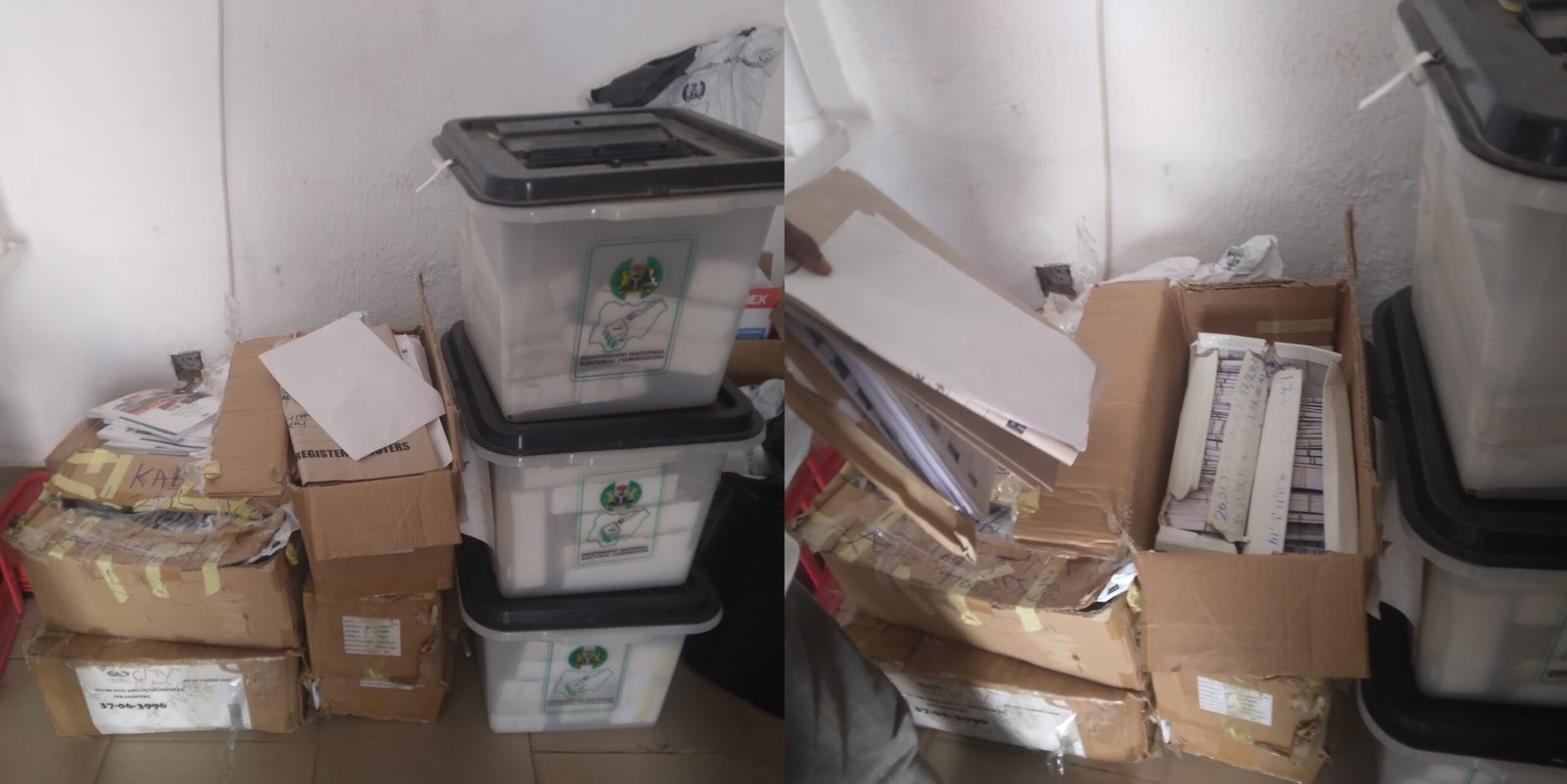
Stacks of uncollected Permanent Voter Cards inside INEC office Abuja (Photo credit: Oluwafunbi Bello/AHR)
Permanent Voter Cards (PVCs), the instruments through which Nigerian citizens exercise their civic right to elect leaders who shape national affairs, have for years attracted massive turnout, with millions registering ahead of elections. However, beneath this surge lies a troubling contradiction. Africa Health Report’s Oluwafunbi Bello reports that millions of already registered PVCs remain uncollected, lying idle in offices of the Independent National Electoral Commission (INEC), even as fresh applicants scramble to enroll amid intermittent portal closures.
In Abuja, cartons of unclaimed PVCs stacked within INEC offices offer a quiet but powerful symbol of a democracy under strain. Each card represents a citizen whose voice may not be heard when it matters most.
Across Nigeria, a combination of voter apathy, insecurity, administrative bottlenecks, and eroding public trust is creating a widening gap between registration and actual participation — particularly among young people, who form the backbone of the country’s population.
Public affairs analyst, Dr. Jide Ojo, attributes this growing disengagement to deeper governance failures.
“People cannot feel the impact of government, whether the federal, state or local government,” he said. “That disconnect feeds voter apathy.”
According to him, the pressures of daily life are increasingly pushing civic responsibility to the margins.
“There are multiple reasons why voter apathy happens in Nigeria — high cost of living, unemployment, lack of infrastructure — these are possible factors that can cause voter apathy,” he added.
But beyond economic hardship lies a more immediate deterrent: fear.
“Insecurity is one of the causes — for a community where there is insecurity, nobody will go out to vote because the community is already displaced,” Ojo explained. “I don’t think many people want to vote in a community where they can be kidnapped on their way.”
Uncollected Cards, Uncounted Voices
Inside INEC’s administrative office in Abuja, the scale of the problem is stark.
“We have over 25,000 PVCs that are unclaimed,” said Mr. Yusuf Abdulkareem, an official of the commission.
These uncollected cards, he noted, represent both a financial cost and a democratic loss.
“These are part of the things INEC uses money for, and citizens are not even coming to claim them,” he said.
INEC’s operational timelines further complicate access.
“Immediately we start registration, people are expected to collect their cards until the time reaches for us to stop and process the election,” Abdulkareem explained. “Once we start registration, three months to the election, INEC is to stop registration and prepare.”
“No card coming in, no card going out… what I mean is no more registration, no more transfer.”
While the commission has introduced digital options to ease processes, challenges remain.
“You can even stay at home… and do the transfer, replacement, or update online,” he said.
Yet for many Nigerians, especially young people, these systems are often unreliable or inaccessible.
A Generation Caught Between Eligibility and Access
For first-time voters, the issue is often one of timing.
“During the last registration for voter’s card, I was still underage and now that I want to register, the registration is closed,” said Fayode Favour, a 21-year-old university student.
Her experience reflects a broader structural gap — one that leaves many newly eligible voters unable to participate.
Others encounter technical setbacks.
“I’ve been trying to register online but the INEC’s website is down,” said Paul Elizabeth, 23.
Such disruptions highlight the limitations of Nigeria’s digital electoral infrastructure, even as demand for access continues to grow.
Disillusionment and the Erosion of Trust
Beyond access and logistics, a deeper issue persists — a growing lack of confidence in the electoral process.
“I don’t go out to vote every time because to me, my vote doesn’t count,” said Miss Adebimpe Adebayo, a federal worker. “They already know who will win the election, so why bother stressing myself?”
This perception, shared by many, reflects a widening trust deficit that threatens the legitimacy of democratic participation.
Insecurity, Mobility and the Burden of Voting
For others, participation is constrained by geography and safety concerns.
“Every election, I have to travel to my hometown in Kwara State to vote,” said Damilola Ayinla, who works in Ibadan. “But with this insecurity… I don’t think I will be voting during the next election.”
Nigeria’s voting system, which often ties voters to their place of registration, continues to disadvantage a mobile population — particularly young professionals and students.
Structural Gaps and Missed Reforms
Experts argue that Nigeria’s electoral system still lacks key reforms that could enhance participation.
“There are other things that are being done in other countries that are not being done in Nigeria,” Dr. Ojo said.
He cited early voting systems observed in Ghana.
“When I went to Ghana in 2008 to observe their presidential election, I noticed Ghana has provision for those who are going to be at work during the election… but we don’t do that in Nigeria.”
He also highlighted the absence of diaspora voting.
“Advocacy has been going on for many years that these people should be allowed to vote… but there is no provision for that.”
Even within existing structures, inefficiencies persist.
“The number of hours voting lasts in Nigeria is also short,” he noted. “In some communities, elections start by 11AM and end by 2PM which can also cause voter apathy.”
Questioning the structure further, he added: “Why do we have to split elections over two Saturdays? Why can’t we have all the elections in one day?”
When Survival Competes with Civic Duty
Election-day restrictions further complicate participation, particularly for low-income earners.
“You can’t lock down the economy!” Ojo said. “An okada rider who has to make money is forced to stay at home and yet you want him to queue up and vote.”
For many Nigerians, the immediate need to earn a living often outweighs the call to civic engagement.
A Critical Moment for Nigeria’s Democracy
The convergence of uncollected PVCs missed registration opportunities, insecurity, and declining trust presents a defining challenge for Nigeria ahead of the 2027 elections.
Young Nigerians — the largest and most dynamic segment of the population — risk becoming the most excluded from the democratic process.
The implications extend beyond voter turnout to the very legitimacy of governance and representation.
The Road Ahead
As the 2027 elections approach, calls for reform are growing louder.
Expanding registration access, strengthening digital platforms, introducing early voting, and addressing insecurity are critical to ensuring inclusivity.
Without decisive action, Nigeria risks entering another election cycle where millions are registered — but absent.
And in that absence lies a fundamental question: can a democracy truly function when its largest generation is left unheard?
About the Author

 Edino Chubiyo Cornelius
 Otamere Gladness