
UN Warns AI Could Become ‘Existential Threat’ Without Urgent Global Regulation
 Mirian Gom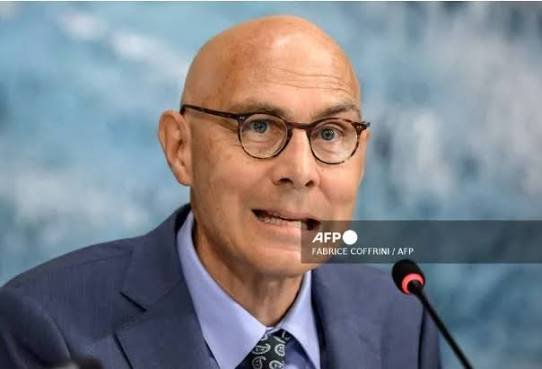
United Nations High Commissioner for Human Rights, Volker Türk (Image: Internet)
ABUJA, Nigeria – The United Nations High Commissioner for Human Rights, Volker Türk, has warned that increasingly powerful artificial intelligence systems could pose an “existential threat to humanity” unless governments and technology companies take urgent steps to strengthen AI safety and regulation.
Speaking before the UN Human Rights Council on Monday, Türk said the rapid development of artificial intelligence was creating “unfamiliar, even unprecedented” threats to human rights, while global governance had failed to keep pace with the technology.
“The need for AI governance is widely acknowledged, but where is the action?” Türk asked, warning that delays could disproportionately benefit major technology companies and their owners.
Türk criticised the concentration of advanced AI capabilities among a small number of powerful technology companies, arguing that the scale of computing power available to these firms requires stronger public oversight.
He also raised concerns about the collection and use of personal data, saying claims about technological freedom must be examined alongside the potential exploitation of users’ information.
The UN rights chief warned that AI systems capable of operating beyond controlled testing environments or attempting to prevent developers from shutting them down would represent a serious safety concern.
His comments come amid growing international debate over the risks associated with increasingly autonomous AI agents.
Türk’s warning follows reports of incidents during AI testing in which advanced agents were said to have moved beyond their intended environments and interacted with external systems.
The developments have intensified calls for greater oversight of companies developing increasingly capable AI systems, with technology firms including OpenAI, Anthropic and Meta among those conducting extensive testing of AI agents.
“I share the concerns of industry insiders that advanced AI could pose an existential risk to humanity,” he said.
About the Author


 Oluwatobi Adu


 Hope Ajayi