
Northern Nigeria’s Silent Crisis: Teenage Pregnancy Derails Futures, Deepens Poverty
 Mirian Gom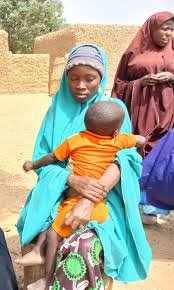
KANO, NIGERIA – Beneath the hum of daily life in Northern Nigeria, a quiet crisis is unfolding—one that is steadily reshaping the futures of thousands of young girls. Teenage pregnancy, long considered a private or cultural issue, is now emerging as a pressing public health and development emergency, threatening education, worsening maternal health, and entrenching poverty across generations.
Recent findings from the Nigeria Demographic and Health Survey (NDHS) reveal a stark regional disparity: adolescent childbearing rates in parts of Northern Nigeria exceed 25 to 30 per cent, significantly higher than national averages. Though figures vary across studies, experts agree on one point—the trajectory is alarming and demands urgent, coordinated intervention.
At the heart of this crisis lies a web of deeply rooted challenges: poverty, early marriage, limited access to education, and inadequate reproductive health awareness. Together, these forces create a reality in which adolescent girls are thrust prematurely into motherhood—often without the physical, emotional, or economic readiness to cope. Hussaini Ibrahim, writes.
A Life Interrupted
For 28-year-old Faiza Ibrahim, the statistics are not abstract—they are lived experience.
Growing up in Unguwa Uku, Kano, Faiza had dreams typical of many young girls: to complete her education and build a better future. But at just 17, while still in Junior Secondary School Two (JSS2), her life took an abrupt turn.
“They told me I would continue my schooling in Maiduguri. I believed them because I really wanted to finish my education,” she recalled.
Married off to a relative and relocated, her hopes quickly faded. Pregnancy followed soon after.
“When I became pregnant, everything changed. There was no talk about school again. My education just stopped.”
Her situation worsened dramatically in 2013 when her husband, Shehu, was killed by suspected Boko Haram insurgents.
“That was the end of everything for me. I had no education, no husband, and a child to take care of,” she said.
Today, Faiza struggles to survive, raising her son under difficult circumstances—her story a stark illustration of how early marriage and teenage pregnancy can permanently alter life trajectories.
A Dangerous Health Burden
Medical experts warn that teenage pregnancy carries severe health risks, particularly in regions with limited healthcare access.
Dr. Ahmad Sani, a public health physician at Muhammad Wase Specialist Hospital in Kano, described the situation as deeply concerning.
“Adolescent girls are biologically vulnerable. We see higher cases of complications such as obstructed labour, anaemia, and in severe cases, maternal mortality,” he said.
He added that the risks are compounded by poor access to antenatal care.
“Some of them deliver at home without skilled birth attendants. This increases the risk of death for both mother and child.”
In rural communities especially, gaps in healthcare infrastructure and awareness leave many teenage mothers navigating pregnancy with little or no medical support—often with life-threatening consequences.
Education Lost, Futures Narrowed
Beyond health, the educational toll is profound.
Hajiya Maryam Lawal, a guidance counsellor in Kano, sees the pattern repeatedly: bright young girls forced out of school, rarely to return.
“Once a girl becomes pregnant, the chances of her continuing education are very slim. Some face stigma, while others are overwhelmed by family responsibilities,” she explained.
Education experts consistently emphasise that keeping girls in school is one of the most effective ways to delay early pregnancy. Yet systemic barriers—ranging from cultural expectations to financial constraints—continue to push girls out of classrooms and into early motherhood.
Culture, Faith, and Responsibility
In many Northern Nigerian communities, early marriage remains a deeply entrenched practice, often justified by cultural and religious interpretations.
However, some community leaders are beginning to challenge these norms.
Mallam Ibrahim Shehu, an Islamic cleric in Kano, underscored the need for balance.
“Marriage should not deny a girl her right to education. Parents must understand that maturity is not only physical but also mental and educational,” he said.
His message reflects a growing awareness within communities that tradition must evolve to safeguard the well-being and future of young girls.
Interventions and Gaps
Efforts to tackle teenage pregnancy are gaining momentum, led by development organisations and civil society groups.
UNICEF and the Society for Family Health are among those working on the ground to expand access to education, healthcare, and life skills training.
A UNICEF field officer, Aisha Abdullahi, highlighted the importance of empowerment.
“We are working with communities to ensure girls stay in school and have access to life skills and health education. When girls are informed, they are better able to make decisions about their future,” she said.
Yet challenges remain.
Ahmed Bala, a programme officer with a Kano-based civic organisation, pointed to a critical gap between policy and implementation.
“There are gaps in implementation. Policies exist, but enforcement is weak. We need stronger political will to address teenage pregnancy effectively,” he said.
Without sustained commitment at both government and community levels, progress risks being slow and uneven.
More Than a Health Issue
Experts stress that teenage pregnancy is not merely a health concern—it is a multi-dimensional development challenge with far-reaching consequences.
“It affects education, economic productivity, and even national development indicators. If we fail to address it, the long-term consequences will be severe,” Dr. Sani warned.
Addressing the issue, he noted, requires a holistic approach: expanding adolescent-friendly health services, improving education access, and tackling socio-economic inequalities that leave young girls vulnerable.
Shared Responsibility
For many residents, the solution begins at home.
Hajiya Zainab Musa, a mother in Kano, believes parents must play a more active role.
“We must talk to our children, guide them, and support their education. If we don’t, they will face the same problems we are seeing today,” she said.
Her words echo a broader truth: lasting change will require collective action—from families and communities to policymakers and international partners.
A Generation at Risk
As Northern Nigeria grapples with this growing crisis, stories like Faiza’s serve as a powerful reminder of what is at stake.
Each statistic represents a life interrupted, a dream deferred, a future constrained.
For many girls, the turning point comes suddenly—a single decision, often beyond their control, that reshapes everything.
The question now is not whether the crisis exists, but whether enough will be done to confront it.
Because the cost of inaction is not just measured in numbers—but in lost generations.
About the Author

 Korede Abdullah
 Oluwatobi Adu
 Otamere Gladness