Streets Instead of Schoolyards: How Nigeria’s Poverty Trap Is Stealing Childhoods, Endangering Public Health
 Edino Chubiyo Cornelius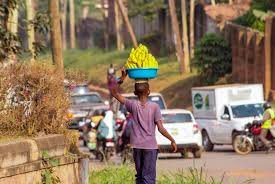
ABUJA, Nigeria – On the scorching asphalt of Nigeria’s capital, childhood begins not with school bells or playground laughter, but with the roar of traffic and the daily gamble of survival. As dawn breaks across Abuja, Lagos and other swelling cities, children weave through gridlocked roads hawking food, sachet water or simply stretching out empty palms. For many, the streets have replaced classrooms, and danger has become routine. In this report, Edino Cornelius captures a grim reality unfolding in plain sight: a surge in urban child streetism driven by deepening poverty, rising inflation and shrinking household incomes. What appears at first glance as an economic struggle is rapidly morphing into a public health emergency with long-term consequences for Nigeria’s future.
A Nation Growing Poorer Despite Reforms
Nigeria’s economic hardship is deepening, even as the government touts’ macroeconomic reforms. A World Bank report released in October 2025 estimates that 139 million Nigerians — more than half the population — are now living in poverty, up sharply from 129 million in April 2025 and just 87 million in 2023.
The report projects poverty levels will hit 61 per cent by 2025, driven by eroding purchasing power, high food inflation and weak job creation. While the Bank acknowledges bold steps such as fuel subsidy removal and exchange-rate reforms, it warns that the benefits have failed to reach most households.
For millions of families, the reforms translate not into relief, but into harsher daily realities — where sending children to the streets becomes a survival strategy.
‘I Saw a Child Die’: The Deadly Cost of Survival
Residents say the growing presence of child hawkers reflects desperation, not parental neglect. Mr Musa, an Abuja resident, described a tragedy that underscores the danger.
“I saw a child between six and eight years old knocked down by a car while hawking,” he said. “The child died immediately. Every day, these children are exposed to danger on the streets of Abuja.”
Such incidents are common yet underreported. Children dart between speeding vehicles, exposed to reckless driving, fatigue and heat — hazards that make every workday a gamble with death.
Growing Up Too Fast
Eleven-year-old Isha is one of thousands navigating this harsh reality. She sells okpa, a popular local delicacy, for her aunt, trekking long distances through congested streets.
“Na my auntie I dey help sell the okpa, and my leg dey pain me well,” she said, describing the physical toll of the work.
For Isha, school is no longer a daily certainty. Long hours on the streets leave her exhausted, and education becomes secondary to income. Like many children in her position, she is growing up far too quickly — learning the language of survival before the lessons of childhood.
Hidden Dangers beyond traffic
The risks facing street-connected children extend far beyond road accidents. Mr. Michael, a retailer in the Pape area of Abuja, warns of hidden threats lurking behind the daily hustle.
“These children are at risk of molestation, especially girls,” he said. “There is also trafficking and kidnapping. They are exposed to many dangers because nobody is properly looking after them.”
Child protection advocates say prolonged exposure to street life increases vulnerability to sexual violence, early pregnancy, substance abuse and recruitment into criminal networks. Emotional trauma often follows, locking children into cycles of poverty that persist into adulthood.
When Poverty Becomes a Public Health Time Bomb
Health professionals caution that the crisis is no longer just social or economic — it is a growing public health concern. Mrs. Mercy, a nurse in Abuja, says poverty is forcing children into environments that endanger both their health and that of the wider community.
“Many of these children are on the streets because their families cannot afford basic living needs,” she explained. “You see them wearing dirty clothes, staying around refuse dumps and polluted areas. They are very exposed to diseases and accidents.”
Poor hygiene, lack of access to healthcare and constant contact with unsanitary environments leave children vulnerable to skin infections, respiratory illnesses and untreated injuries. In densely populated cities, public health experts warn, such conditions can accelerate the spread of communicable diseases.
Children at the Centre of Nigeria’s Poverty Crisis
Data from UNICEF paints an even bleaker picture. A 2025 report reveals that children account for 51 per cent of Nigeria’s multidimensional poor population. The 2024 Situational Analysis of Children and Adolescents in Nigeria, jointly published by UNICEF and the federal government, shows that 67.5 per cent of Nigerian children live in multidimensional poverty, facing deprivation in education, healthcare and basic living standards.
The burden is heaviest in rural areas, where nearly 90 per cent of children are poor, but urban poverty is rising fast — and with it, the number of children pushed into street survival.
Education sacrificed, Future Diminished
Perhaps the most enduring cost of street life is the loss of education. Teachers and education advocates say children who drop out to hawk or beg often struggle to return to school.
Without basic literacy or skills, their chances of escaping poverty shrink dramatically. The gap between them and their peers widens, reinforcing inequality and undermining Nigeria’s long-term development.
Reforms Without Relief: A Policy Disconnect
The World Bank has urged Nigeria to focus on sustained disinflation, efficient public spending and expanded social safety nets, with particular emphasis on curbing food inflation to protect the most vulnerable. Yet the Presidency has reportedly dismissed the poverty figures as “unrealistic”, a response that has drawn criticism from civil society groups.
For families on the streets, the debate feels distant. What they experience daily is not macroeconomic stabilisation, but shrinking meals, rising costs and impossible choices.
What Must Change to Save a Generation
Experts agree that tackling child streetism requires more than piecemeal interventions. Poverty reduction must be paired with robust social welfare systems, strict enforcement of child protection laws and expanded access to affordable education and healthcare.
Community-based support, school feeding programmes, conditional cash transfers and safe shelters for vulnerable children are among measures advocates say could make an immediate difference.
The Price of Neglect
For Nigeria’s street-connected children, neglect carries an unbearable price — injury, illness and stolen futures. As urban poverty deepens, protecting children from hazardous survival strategies is no longer optional. It is a public health imperative and a moral test of national priorities.
The streets should never be a substitute for childhood. Whether Nigeria can reclaim them for its children may well define the country’s social and economic future.
About the Author

 Otamere Gladness
 Koko Maxwella