
South-West Under Siege: How Nigeria’s Safest Region Became the New Frontier for Terror
 Korede Abdullah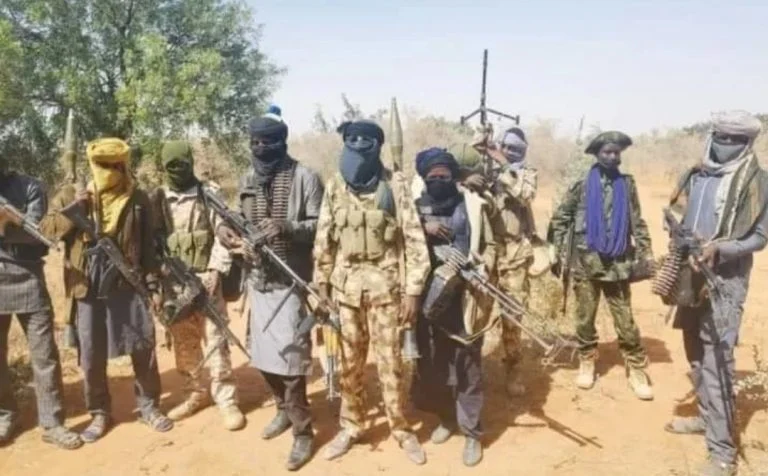
LAGOS, Nigeria – The screams came just after the morning bell faded across Oriire Local Government Area of Oyo State. Pupils had barely settled into their classrooms when gunmen stormed three schools, firing sporadically and dragging terrified teachers, children and school officials into the forests bordering the vast Oyo National Park. By the time the dust settled on May 15, Assistant Headmaster Joel Adesiyan and a commercial motorcyclist lay dead, while dozens vanished into the wilderness. Days later, the murder of abducted mathematics teacher Michael Oyedokun in captivity shattered whatever illusion remained that Nigeria’s South-West was insulated from the violence that has ravaged the country’s northern region for more than a decade. What once seemed distant has now arrived at the South-West’s doorstep, raising urgent questions about whether the region is sliding into a full-blown security emergency. Korede Abdullah, writes.
For decades, Nigeria’s South-West projected itself as the country’s economic and educational heartbeat — comparatively stable, commercially vibrant and largely shielded from the insurgency, mass kidnappings and banditry that plagued parts of the North-East and North-West. But recent attacks across highways, farms, forests and schools are rapidly dismantling that perception.
What alarms many residents is not merely the frequency of attacks, but the sophistication and boldness behind them.
The invasion of schools in Oyo marked one of the most audacious attacks recorded in the region in recent years. Armed men reportedly operated for hours, navigating isolated forest routes and escaping before security reinforcements arrived.
For many observers, the incident exposed dangerous cracks in rural security architecture.
Speaking with Africa Health Report, media practitioner and community leader Mr Femi Amusan described the aftermath as emotionally devastating.
“There was shock, disbelief and deep sadness,” he said.
“Parents were confused about how armed men could invade schools in broad daylight without resistance. There was mourning everywhere, and immediate calls for justice and rescue efforts.”
According to Amusan, the attack exposed the vulnerability of remote communities where security presence remains sparse and response times dangerously slow.
Across the South-West, sprawling forests now form part of a growing security dilemma. From Oyo to Ondo, Ekiti and Ogun states, isolated terrain has increasingly become a refuge for kidnappers, armed gangs and suspected insurgents who exploit weak surveillance systems and porous inter-state boundaries.
Analysts say these forest corridors are gradually transforming into operational routes for organised criminal networks.
Amusan blamed poor forest monitoring, limited policing and worsening economic hardship for accelerating insecurity.
“Attackers understand the terrain better than many security operatives. They exploit isolated communities and disappear into forests before help arrives,” he explained.
Security experts warn that the South-West is now confronting what northern states experienced years ago — a slow but dangerous migration of armed groups into under-secured territories.
The Defence Headquarters identified the Oyo attackers as members of Jama’atu Ahlis-Sunna Lidda’Awati Wal-Jihad (JAS), widely known as Boko Haram, reportedly displaced from northern strongholds by intensified military offensives.
For security analyst Mr Opeyemi Oyerinde, the development reflects a familiar insurgency pattern.
“When pressure increases in one region, armed fighters often disperse into forests, border communities and weaker territories,” he said.
“The South-West can no longer assume it is immune from terrorism. These groups are adaptive and mobile.”
The implications are profound.
For years, insecurity in northern Nigeria disrupted farming, crippled education and displaced millions. Experts now fear the South-West may face similar consequences if authorities fail to act swiftly.
Already, fear is reshaping everyday life in rural communities.
Parents are reconsidering whether to keep children in village schools. Teachers posted to remote areas increasingly feel abandoned. Some communities are demanding armed security around schools, while others are calling for temporary closures.
The Oyo State Government has suspended school field trips as anxiety continues to spread.
Online, emotional videos of abducted victims and distraught relatives have fuelled public outrage and heightened fears across the region.
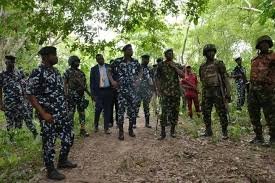
What particularly disturbed security analysts was the reported use of explosives along rescue routes during the Oyo operation.
According to Oyerinde, such tactics suggest strategic planning more commonly associated with insurgent groups than ordinary kidnappers.
“Planting explosives along rescue routes demonstrates organisation and preparation,” he said.
“This was not a random attack. It exposed serious weaknesses in intelligence gathering, surveillance and emergency response systems.”
His warning reflects broader fears that extremist elements may already be attempting to establish operational footholds within the South-West.
Growing public frustration has also intensified pressure on governors across the region.
Stakeholders are urging Governors Seyi Makinde, Babajide Sanwo-Olu, Abiodun Oyebanji, Dapo Abiodun, Lucky Aiyedatiwa and Ademola Adeleke to strengthen the Western Nigeria Security Network, popularly known as Amotekun, and improve coordination with federal security agencies.
Many residents believe fragmented security responses and poor intelligence-sharing have allowed criminal groups to exploit jurisdictional gaps between states.
Youth Organisations Are Becoming Increasingly Vocal
In Ado-Ekiti, the Southwest Youths Forum warned that insecurity is steadily eroding the region’s historic reputation for peace and stability.
Team lead Olumide Fasubaa said attacks were no longer isolated incidents.
“Banditry and kidnappings now affect highways, forests, farms and schools across several South-West states,” he said.
“Words and frameworks must now translate into tangible security improvements that citizens can feel.”
Beyond rhetoric, calls for coordinated regional action are growing louder.
The Yoruba World Forum Organisation has announced plans for an emergency security summit involving governors, monarchs, security stakeholders and prominent regional figures including Sunday Adeyemo, widely known as Sunday Igboho, and Gani Adams, the Aare Ona Kakanfo of Yorubaland.
General-Secretary Olamide Abbas said the summit aims to establish practical strategies for dismantling criminal networks operating within forests.
“We are not just meeting to talk. We want a practical framework to comb the forests and dismantle these networks,” Abbas said.
The worsening crisis has also revived debate over community-based armed security structures.
Sunday Igboho recently urged the Federal Government and South-West governors to approve his proposed Iru Ekun Security Network, insisting his men were “battle-ready” to confront kidnappers and armed groups hiding in forests.
Although officials are yet to formally respond, the proposal reflects growing public desperation and declining confidence in conventional security arrangements.
Yet security experts caution that local security initiatives alone may not solve the crisis without broader institutional reforms.
Analysts argue that intelligence failures, underfunded policing, inadequate surveillance technology and weak border monitoring continue to undermine security operations nationwide.
They also warn that poverty, unemployment and illegal arms proliferation remain major drivers of violence.

Still, many believe Amotekun could become a more formidable force if properly funded, trained and integrated into broader security operations.
According to Oyerinde, collaboration remains critical.
“Governors, traditional institutions and security agencies must work together to improve intelligence gathering and strengthen rapid-response systems across the South-West,” he said.
Amusan echoed similar concerns, noting that local vigilantes often possess valuable knowledge of difficult terrain and suspicious movements within remote communities.
Experts insist that improved communication gadgets, surveillance drones, modern weapons and better welfare packages could significantly enhance forest patrols and emergency response efforts.
But beyond security hardware lies a deeper concern.
The South-West now stands at a crossroads between proactive intervention and prolonged instability.
If authorities fail to contain the spread of armed groups, the region risks sliding into the same cycle of fear, displacement and economic disruption witnessed elsewhere in Nigeria.
For many residents, the Oyo school abduction was more than another kidnapping case.
It was a warning shot.
And across the forests, highways and classrooms of the South-West, that warning is growing louder.
About the Author


 Oluwatobi Adu


 Hope Ajayi