


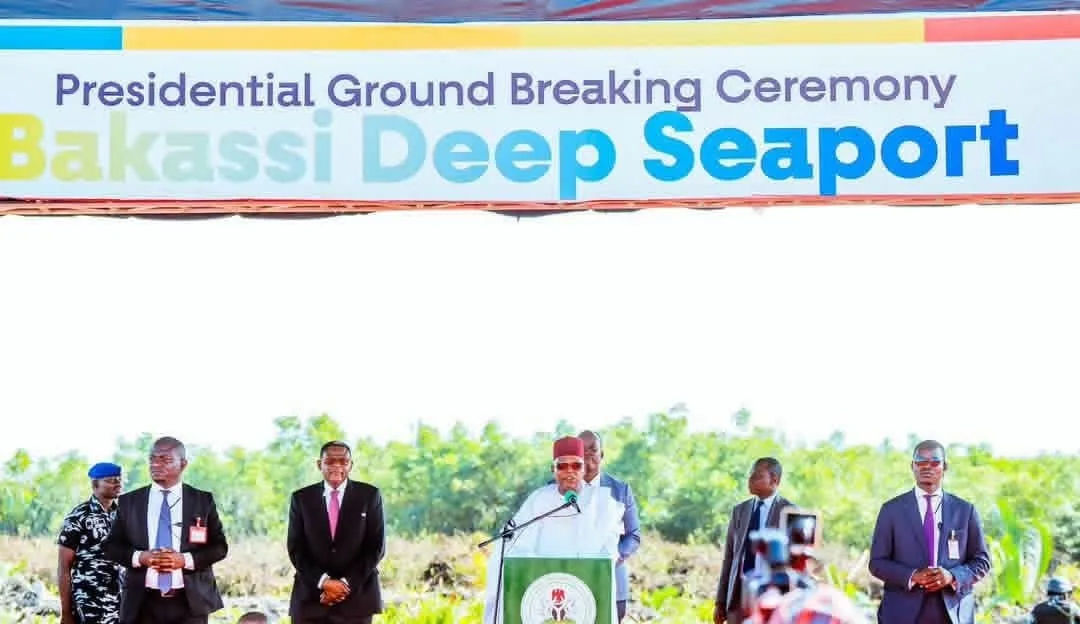
CALABAR, Nigeria – Vice-President Kashim Shettima says the proposed $3.5 billion Bakassi Deep Seaport could strengthen Nigeria’s maritime economy, attract investment and position Cross River State as a major player in the blue economy.
Shettima made the remarks on Saturday, November 14, 2026, following the groundbreaking ceremony for the project in Calabar, Cross River State, where he represented President Bola Tinubu. He described the commencement of the project as a major step towards ending decades of delays surrounding plans to establish a deep seaport in the state.
According to the Vice-President, the development represents an opportunity to expand Nigeria’s maritime capacity and unlock economic opportunities associated with the blue economy. “We mean business this time around. I was not in Calabar to cut a ribbon and dance Ekpe masquerade but to break ground and break a centuries-old jinx,” Shettima said.
He recalled years of uncertainty surrounding the proposed seaport, noting that many people had doubted whether the project would eventually become a reality.
Shettima said the groundbreaking had renewed hopes for Cross River State and Nigeria, expressing optimism that the project would contribute to the transformation of the national economy. The proposed Bakassi Deep Seaport is expected to support maritime trade and create opportunities for investment in shipping, logistics and related industries.
However, the Vice-President’s statement did not provide details of the project’s construction schedule, financing arrangements, expected employment opportunities or completion date. The actual economic impact will depend on the project’s implementation, supporting infrastructure and ability to attract shipping operators and investors.
The groundbreaking marks an important development in the long-running seaport proposal, but further details on construction milestones and delivery timelines will be necessary to assess when the project could begin delivering its expected benefits.


Join the conversation