Northern Nigeria’s Unsung Architects: How Women Are Redefining Agriculture, Economy, and Society
 Hussaini Ibrahim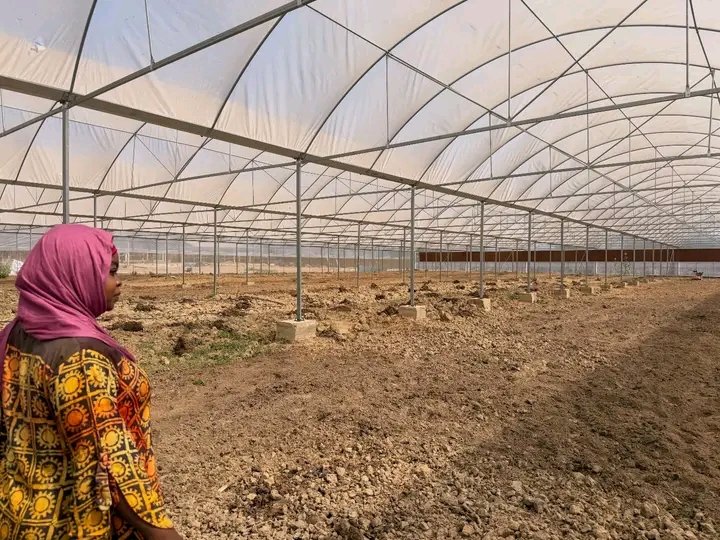
KANO, NIGERIA – Amid insecurity, economic turbulence, and mounting pressure on food systems, a quieter revolution is unfolding across Northern Nigeria — one led not by politicians or technocrats, but by women. They are transforming agriculture, stabilising households, and quietly reshaping centuries-old gender roles, Hussaini Ibrahim, writes.
From smallholder farms to burgeoning agribusinesses, women’s contributions are strategic, consistent, and largely underappreciated. In a region where entrenched patriarchal norms limit access to land, capital, and training, their perseverance tells a story of resilience, ambition, and transformative potential.
A 2018 TechnoServe gender assessment highlighted that women in Kano and Jigawa owned only 34 per cent of farmland, while domestic duties consumed an average of three hours daily — reducing time for productive farming. Yet, in communities where targeted support programmes exist, the results are striking. Improved agronomic practices and cooperative farming approaches have doubled yields, increased household incomes, and strengthened food security, according to AHR findings.
Perseverance in Practice: Dr. Zainab Gwadabe
Few stories capture this transformation better than that of Dr. Zainab Gwadabe, Chief Executive Officer of SeedPro Africa. In an exclusive interview with AHR, she recounted the challenges and triumphs of establishing Nigeria’s first vegetable seed processing facility — a milestone year in the making.

“This facility represents perseverance. We faced funding constraints, infrastructure limitations, and scepticism about whether a locally driven seed company — particularly one led by a woman in Northern Nigeria — could compete at scale. But we remained focused,” she told AHR.
Dr. Gwadabe traces the company’s roots to her father, Lawal Gwadabe, who founded the business when structured seed development in Nigeria was still in its infancy.
“My father started this company from scratch with discipline and a strong belief in local capacity. Continuing that legacy has required resilience. Being a woman in a largely male-dominated sector means you must constantly prove competence,” she said.
Her journey mirrors the experiences of countless women farmers across the region.
Breaking Barriers: Rahma Umar’s Journey
Take Rahma Umar, a 25-year-old rice farmer from Jigawa. Dependent on her husband for financial support, she struggled to meet her household’s needs. Initially discouraged by family, who told her, “Farming is not for women,” Rahma found opportunity through the Businesswomen Connect programme, which provided access to farmland, financial literacy training, and cooperative farming structures.

“Working together has improved our confidence and self-reliance. I feel fulfilled owning my own farm, earning my own income, and helping in the development of women in the community,” Rahma told AHR.
Through the programme, Rahma’s cluster adopted Good Agronomic Practices (GAP), increasing average yields from 2.9 tons per hectare to 5.1 tons per hectare.
The Ripple Effect: Economic and Social Impact
Economist Abdulnaseer Turawa Yola, a lecturer at the Federal University Dutse, Jigawa, highlighted the broader implications of women’s empowerment in agriculture.
“It’s easy to overlook women’s work because much of it happens quietly on family farms, in local markets, or within cooperative groups. But the reality is clear: when women gain access to land, training, and finance, it transforms not just their lives, but entire communities,” he told AHR.
According to AHR findings, enhanced access to inputs, financial services, and training can increase agricultural output by at least 20 per cent in rural areas. Yola added:
“Women who were previously dependent and struggling to meet basic needs, once trained in agronomic practices, financial literacy, and encouraged to work in clusters, were able to double their yields, save money, invest in small businesses, and mentor others. The ripple effect is measurable and impactful, demonstrating how economic empowerment and social progress are closely linked.”
Dr. Gwadabe stressed that these changes go beyond income: they are shifting household dynamics.
“When women gain access to the right tools, training, and financial inclusion, productivity increases. It is not about ability; it is about opportunity,” she explained.
Looking Ahead: Seeds of Change
SeedPro Africa plans to release six new tomato and pepper varieties by 2026, including heat-tolerant and bio-fortified options designed to improve nutrition, strengthen food security, and buffer farmers from currency fluctuations and import dependency.
Yet the gender imbalance in Nigeria’s seed industry remains stark. Women represent less than three per cent of registered seed companies nationwide.
“Nothing is impossible. Yes, cultural expectations can limit women. Yes, access to finance is harder. But Northern women are already contributing immensely — often without recognition,” Dr. Gwadabe said.
The stakes are high. Food security, youth employment, and economic resilience are intimately tied to women’s participation in agriculture and small enterprise.
“Policy alone is not enough. Deliberate support for women — including access to credit, land, equipment, markets, and knowledge — is necessary. When Northern women are given these opportunities, they do not just survive; they lead. They stabilize households, strengthen local economies, and contribute to a more resilient region,” Yola told AHR.
Through the lens of Dr. Gwadabe’s entrepreneurial journey, Rahma Umar’s personal struggle, a powerful narrative emerges in Northern Nigeria, women are not just participants in economic life — they are architects of growth, stability, and social progress.
About the Author


 Korede Abdullah