Oluwatobi Adu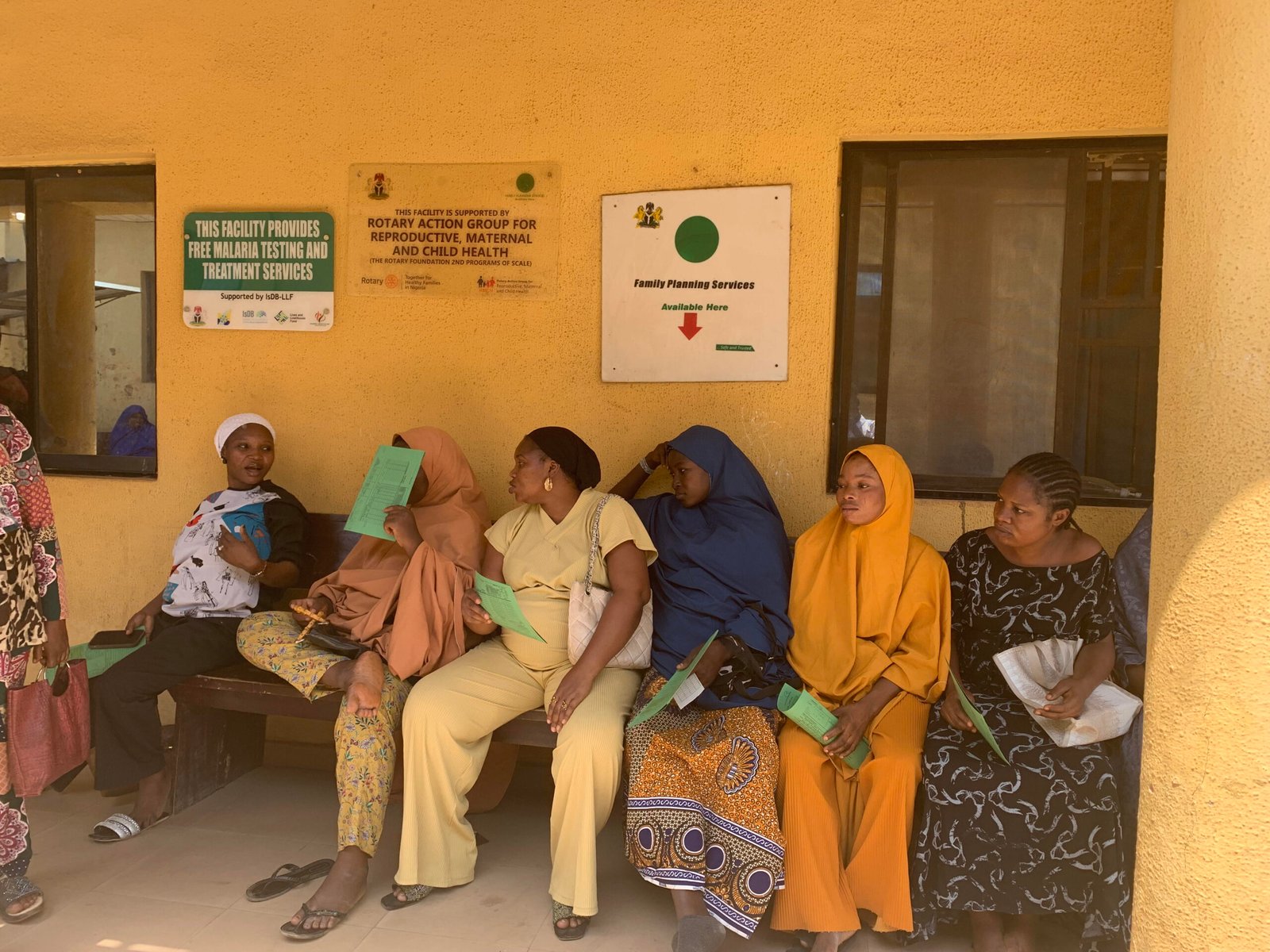
Expectant mothers attending antenatal clinic in Abuja
IBADAN / ABUJA – When Nigeria’s health minister stood before cameras and declared that no woman should die because she could not afford a Caesarean section. In a country where childbirth can still be a deadly gamble, the policy sounded like a turning point. More than a year on, however, interviews with health workers and expectant mothers across Ibadan and Abuja reveal a stark truth: many women are still paying — with cash, delays and fear — for a surgery the government says should cost them nothing. Oluwatobi Adu, writes.
A Promise Meant to Reach the Poorest
In November 2024, Nigeria’s Coordinating Minister of Health and Social Welfare, Muhammad Pate, unveiled a flagship maternal health policy during the launch of the Joint Annual Health Review and the Maternal Mortality Reduction Innovation Initiative (MAMII). The announcement was clear: Caesarean sections, often the difference between life and death in complicated births, would be provided free of charge, especially for poor and vulnerable women.
“No woman should lose her life simply because she can’t afford a C-section,” Pate said.
The pledge formed a central pillar of MAMII, a sweeping programme led by the Federal Ministry of Health and Social Welfare to tackle one of the world’s worst maternal mortality crises. Officials said more than ₦45 billion had been allocated to strengthen over 8,000 primary healthcare centres, alongside more than $3 billion in partner support, targeting 172 high-burden local government areas.
Yet, from clinics to maternity wards, the policy remains elusive.
A Crisis Measured in Lives
Nigeria accounts for a significant share of global maternal deaths. Estimates by the World Health Organization and the World Bank put the country’s maternal mortality ratio at about 993 deaths per 100,000 live births in 2023 — far above global averages and vastly higher than figures in high-income countries.
Most of these deaths are preventable. Delays in reaching care, delays in receiving treatment and the cost of emergency interventions — especially Caesarean sections — remain among the deadliest factors.
The free C-section policy was meant to break that chain. The Africa Health Report findings shows that it has yet to do so.
Clinics Where the Policy Disappears

“I have heard about the initiative and that the government selected a few primary healthcare centres that offer free C-section,” he said. “But we don’t have it here in our own primary health centre.”
Women who develop complications during labour are routinely referred to larger facilities such as Jericho Nursing Home or Adeoyo Teaching Hospital. By the time they arrive, families are often told to prepare for surgery costs — or to wait.
Similar patterns emerge in Abuja, Nigeria’s capital. At Gwarinpa Primary Health Care Centre, the officer-in-charge, Mrs Comfort, said she had never heard of any free Caesarean policy.
“Any patient with complications, we normally refer them to hospitals in Jabi or Life Camp,” she said. “We only handle normal deliveries.”
At Kuchingoro Primary Health Care Centre, staff said they had never handled Caesarean cases and were unaware of any such federal initiative. The story was the same at Karon-Majigi Primary Health Care Clinic, where the officer-in-charge dismissed the idea altogether, saying no such programme existed at the facility.
“Oh wow — free C-section?”
Among expectant mothers, awareness is even lower.
“Oh wow, free C-section?” said Solomon Margaret, pregnant with her third child, during an antenatal visit at Kuchingoro PHC. “I have never heard of that before.”
Mrs Adamu, a first-time mother attending the same clinic, echoed the surprise. “I have never heard of it,” she said. “And I hope I won’t need it.”
For health advocates, such ignorance is dangerous. Women who do not know that life-saving surgery should be free are unlikely to demand it — or to seek help early enough.
Staff shortages and silent wards
Even in facilities designated to handle complicated deliveries, shortages of doctors and nurses undermine care. Midwives often shoulder responsibility far beyond their remit, while doctors are stretched across multiple wards or absent altogether.
At Kubwa General Hospital in Abuja, doctors on duty declined interviews, citing workload pressures and a recent patient death. The scene underscored a wider problem: policy announcements have not been matched with sufficient staffing, training or equipment.
For women in obstructed labour or with fetal distress, every delay matters.
Expert View: Policy Without Monitoring
Public health analyst Musa Abdullahi Sufi, who works closely with maternal and child health initiatives in Kano State, says Nigeria has no shortage of good policies — only weak execution.
“The Nigerian government and even state governments are actually trying to see that maternal and child health are free,” he said, pointing to schemes such as the National Health Insurance Authority and the Basic Health Care Provision Fund.
But he warned that without strict monitoring and coordination, patients remain vulnerable.
“Everything needs to be human-centred services,” Sufi said. “We need strong collaboration between government and private providers so people are not exploited with unnecessary charges.”
On Caesarean sections, his language turns urgent. “We call it an emergency,” he said. “A lot of women are giving birth through Caesarean sections, and a lot of them are losing their lives.”
Free on paper, costly in practice
For families, the promise of “free” often collapses into hidden costs: transport to referral hospitals, blood donations, surgical supplies, informal payments and days lost from work. For women, the cost is measured in anxiety — and sometimes in survival.
Health workers say the referral system itself can be deadly. A woman may be referred from a primary clinic to a secondary hospital, only to be sent onward again because of staff shortages or full theatres. By the time surgery is available, it may be too late.
Bridging the Gap
Experts and frontline workers point to four urgent steps if Nigeria’s free C-section policy is to mean anything:
Awareness: Women, families and health workers must know where and how the policy applies.
Facility readiness: Designated centres must be equipped and staffed around the clock.
Clear referrals: Emergency pathways must be seamless, not improvised.
Accountability: Monitoring must ensure that “free” truly means free.
Until then, the policy risks remaining what many women already experience: a promise heard on the radio, but not in the delivery room.
Nigeria’s maternal health crisis does not lack plans or pledges. What it lacks is consistent delivery. Until the gap between policy and practice is closed, women will continue to pay — despite the promise that they should not.
About the Author


 Oluwafunbi Bello
 Koko Maxwella
 Hussaini Ibrahim